- Developer: Square Enix
- Publisher: Square Enix
- Available On: PS5
- Reviewed On: PS5
Ever since Final Fantasy XVI was announced I’ve been eager to experience a new story in the iconic franchise and see how it continues to evolve. With a more “mature” story, a much stronger focus on real-time action, the promise of over-the-top setpieces, and an acclaimed development team behind it, I had pretty high expectations. And while Final Fantasy XVI managed to meet and even exceed some of those expectations, eventually the luster wore off and one truth revealed itself: that Final Fantasy XVI is simultaneously a fun and boring game to play.
As with many Final Fantasy games, the main story is its strongest aspect. Taking place in the realm of Valisthea over roughly 20 years, the world and narrative of Final Fantasy XVI are fascinating. Giant Mothercrystals are spread across the realm and controlled by the five different nations for the gift of magic they provide the people of the world. Eikons and their human avatars called Dominants are viewed as either people worthy of power and influence, or monsters that bring nothing but chaos and destruction. Then there are those called Bearers who are born with the innate ability to use magic without a crystal. Seen as abominations by the world, they’re forced into slavery and made to use their magic until they die.
At the center of it all is Clive Rosfield, prince of the empire of Rosaria. A pivotal event during his teenage years sets Clive down the path of revenge, and eventually, onto a greater mission of liberation for not just the Bearers, but the people of Valisthea as a whole. Everything about the main story had me hooked from the moment it began to the end of the final cutscene. Starting with the cast, it’s a stellar group of characters. Clive’s an excellent protagonist, and it’s wonderful to see him grow from being a tortured soul haunted by his past, into a freedom fighter determined to achieve a goal that’s bigger than himself. Alongside Clive in this mission are his many allies, with the most important ones being his childhood friend Jill, the outlaw Cid, the reliable scout Gav, and Clive’s loyal wolf Torgal.
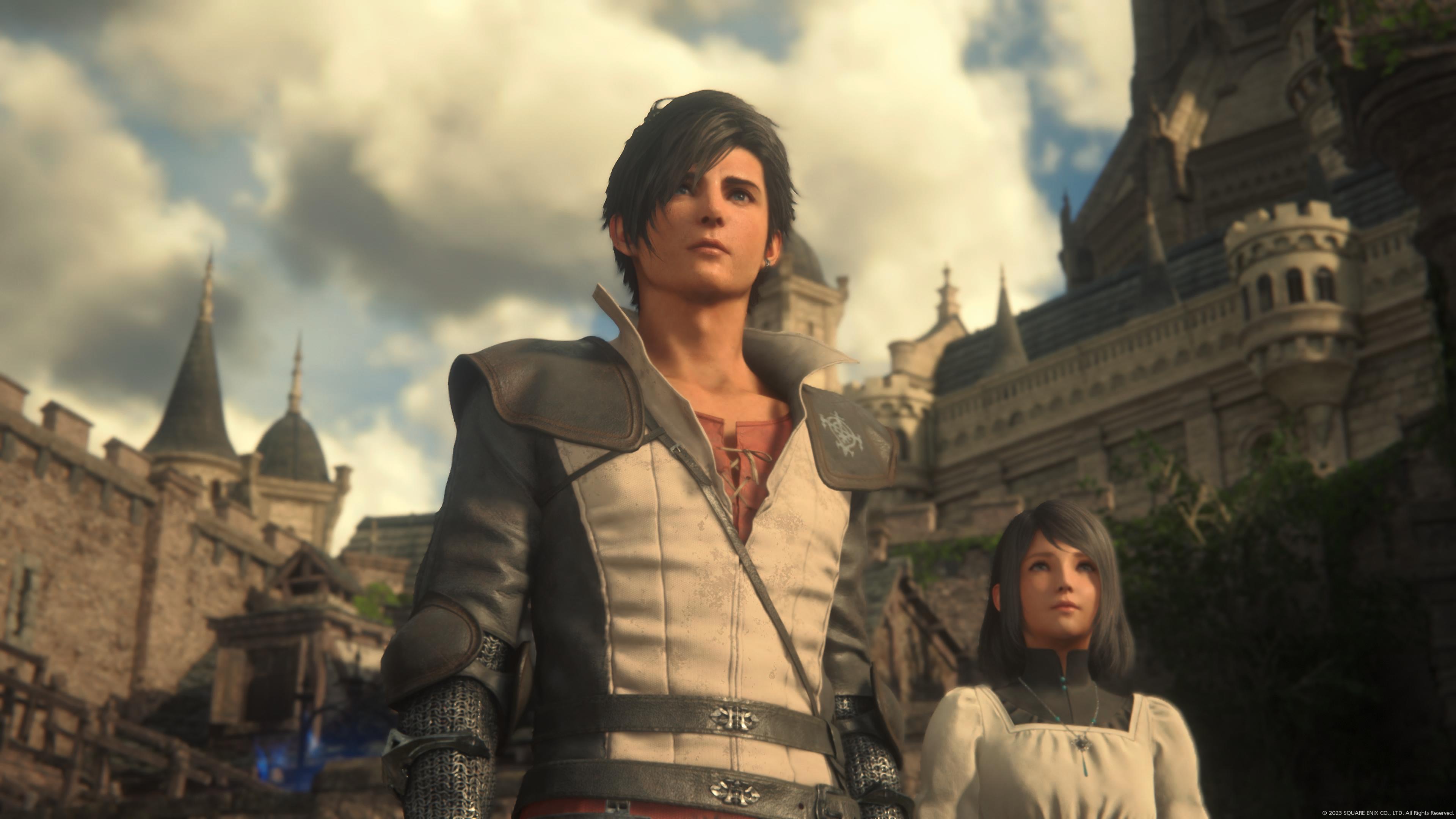
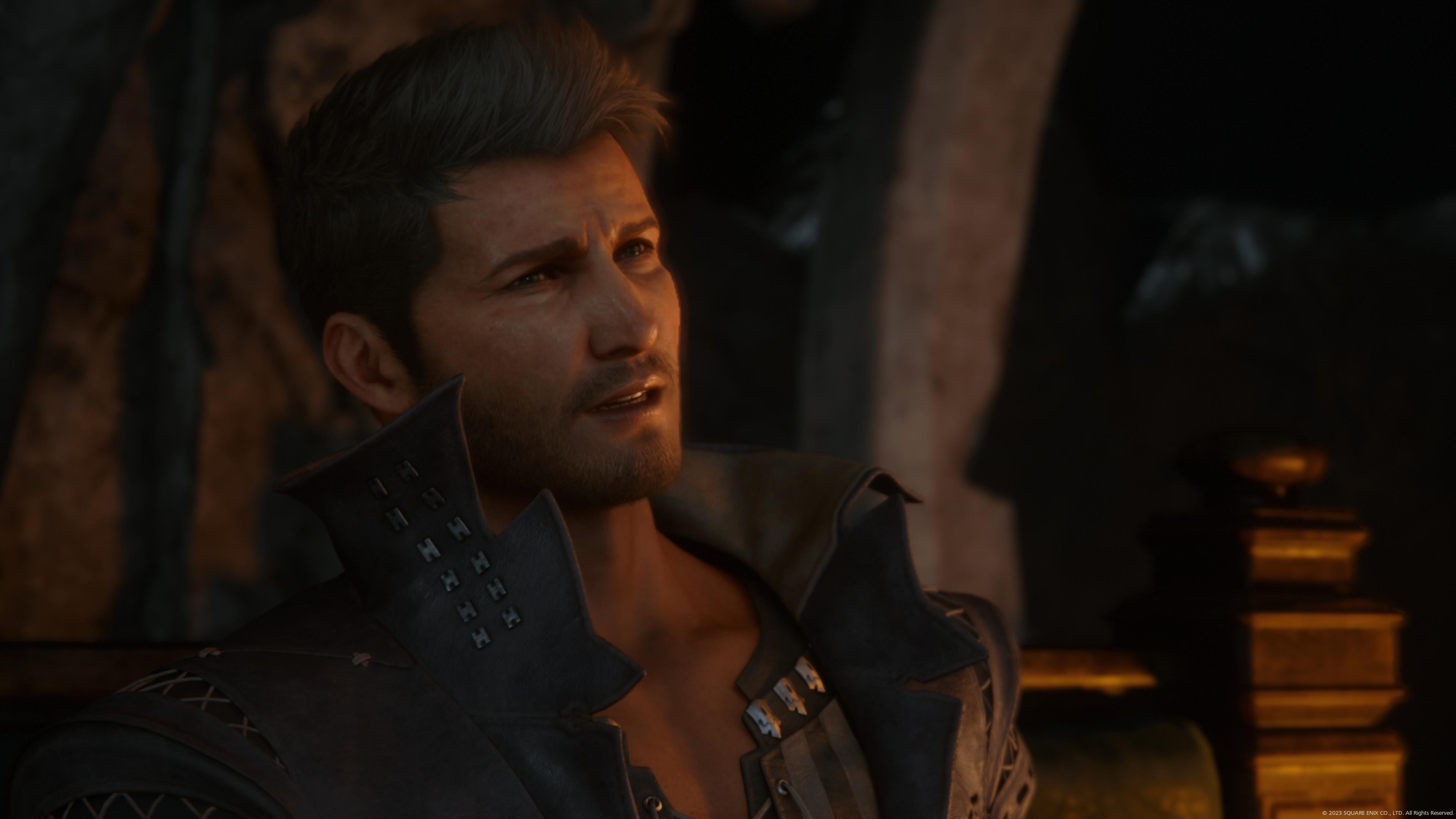
Jill’s a trusted confidant for Clive, and his equal both on and off the battlefield, so I enjoyed watching their relationship evolve as the story progressed. Cid, meanwhile, is one of my favorite characters and definitely my favorite incarnation of the character. He has a certain charm that makes him hard to resist, and on top of that, his conviction in fighting for those who can’t fight for themselves is inspiring. Gav is another of my favorite characters thanks to his unwavering loyalty and his ability to bring some much-needed levity to the story. As for Torgal, he’s just the best hound a guy can ask for.
Clive’s allies continue to shine outside of this core group too, but Final Fantasy XVI’s other key characters are the Dominants from each of the other nations. Some get far more time in the spotlight than others, but they’re all compelling characters who had me wanting to spend more time with each of them so that I could learn more about them. And thanks to the fantastic vocal performances and visuals, every character is wonderfully brought to life, making me even more enamored with them.
Something I didn’t expect was how engrossed I would be in the political side of Final Fantasy XVI’s story. I couldn’t get enough of the betrayals, royal schemings, or the intricacies of Clive and friends’ plight to liberate Valisthea from the oppressive people in power. The story is at its best when Final Fantasy XVI is focused on these elements, but unfortunately, it slowly starts to shift away from these topics in the back half of the story until it’s all about something else in the final stretch. This section of the story is undoubtedly the weakest part, but the strong character work and world-building that was done up until then keep it from completely losing its way.

As the first M-rated mainline entry in the series, it never feels like Final Fantasy XVI is allowing itself to be influenced by its rating; in fact, it’s much more the opposite. Final Fantasy XVI approaches its characters and storytelling with a level of maturity that matches the topics at hand. The writing handles everything with the respect that it deserves and doesn’t try to sweep anything under the rug.
Going hand-in-hand with this M-rating, (as well as the clear Game of Thrones inspiration), there was concern that the mature label would just mean needlessly brutal violence and excessive swearing, but that’s far from the case. The instances of extreme violence are used to heighten the intensity of moments throughout the story, and any swearing that happens feels like natural adult dialogue. As I worked my way through the story, I couldn’t help but imagine what previous games in the series would’ve been like if they were allowed to have the same restrictions lifted, and I hope that future mainline entries also allow themselves to experiment with it as well.
While it’s straightforward on paper, Final Fantasy XVI’s story is actually very dense. With multiple important characters and a strong focus on the ever-changing politics of the realm, there’s a lot to follow and keep track of. Thankfully, there are multiple ways to refresh yourself on something that you may not be that clear on. You have the loresman Harpocrates, who keeps a record of everything you’ve encountered throughout the story and how they’ve all changed. Supplementing him is Vivian Ninetales, who provides a handy visual that shows the state of the realm at any given point in time.
The best feature though is the Active Time Lore system. By simply holding the touchpad at any point, you can get quick information on characters or locations that are relevant to your current situation. This can even be done during cutscenes which is a godsend. It’s a smart quality-of-life feature that I can’t believe we’ve lived without for so long, and I hope that other developers take note and find ways to implement a similar feature into their games.

Without a doubt, the best part of not just the story, but Final Fantasy XVI as a whole, are the showstopping battles with the Dominants and their Eikons. I’m not exaggerating when I say that these are arguably the best boss fights I’ve ever experienced in a video game, with the story, gameplay, and music all coming together to create some incredible moments. As the capstones for each of the story’s different arcs, they come with a narrative weight that makes them immensely satisfying to play through. Each fight also adopts a different gameplay method, so no two feel quite the same.
The first Eikon battle as Phoenix plays like an on-rails shooter, whereas a later fight against Titan turns into something out of a shonen anime as you scale his massive body while dodging boulders, all with a heavy metal song playing in the background. I’m not sure how the team pulled it off, but every single fight somehow manages to top the last one. They may not always be the biggest challenge, but they’re a hype-inducing, adrenaline-pumping, cinematic spectacle that gives games like God of War III and Asura’s Wrath a run for their money.
Where Final Fantasy XVI’s main story falters is in its pacing. Throughout the story, you’ll frequently make stops at your Hideaway, which functions as your central base of operations where you can restock on supplies, pick up some side quests and hunts, and chat with the people who live there. It’s a cozy place that evolves over time and feels like home. The problem is that you return here after completing most main missions, which effectively takes the wind out of the sails of anything that’s happening in the main story.
It might not be as big of a problem if there were more substantive things to do at the Hideaway every time you returned, but there aren’t, and many things that can be done are over fairly quickly. Having more main missions to complete before returning to the Hideaway would also alleviate this issue. In the first six-to-seven hours of the story, things are more linear and there’s a stronger sense of forward momentum, so you don’t return to the Hideaway too often. After that point though, it became a repeated start-and-stop cycle that made me begin to dislike the Hideaway entirely.
While the main story is largely great from start to finish, the side quests in Final Fantasy XVI are much weaker across the board. There’s quite a lot of them and the quality is hit-or-miss for multiple reasons. For one, there’s the issue of side quests feeling like busywork. While I don’t expect every single side quest to be a winner, a majority of them are simply not interesting at all. Whether it’s a fetch quest to get an item for someone or a trip to clear out an enemy that’s causing people trouble, these kinds of side quests are plentiful and lack anything to get you invested and make you care about what you’re doing.
On the other end of the spectrum are the quality side quests that actually tell memorable stories. These can range from helping a town retain some of its independence from Imperial rule, to working alongside an ally as they face someone from their past. One of my favorite side quests involved helping a girl find her pet, Chloe. I won’t spoil the result of this quest, but it left a mark on me for the rest of my time in Valisthea. While this side quest comes early on in Final Fantasy XVI, many of the more memorable ones like this are unfortunately reserved for the back half of the story, and in a game that takes roughly 60 hours to complete if you’re doing all the side content, that’s a long time to wait to get to all the good stuff.
No matter the quality of the side quest, the bigger issue that’s consistent across them all is the fact that they struggle to be engaging, which, in turn, makes them a slog to complete. They have a very repetitive and cyclical structure that when combined with the low difficulty, made completing the side quests fairly mindless and caused me to become bored playing through them, even when the story being told was actually interesting. It doesn’t help that going around to chat with the different people involved in the quests is a chore since there’s no sprint option and Clive runs at a light jog when in a town.
It’s a shame that Final Fantasy XVI struggles so much with its side quests because many of them, both good and bad, aim to provide a better appreciation for its world and characters. The main storyline is filled with so many narrative and gameplay highs, but the major lows of the side quests completely bring down the experience and made me want to skip over them entirely.
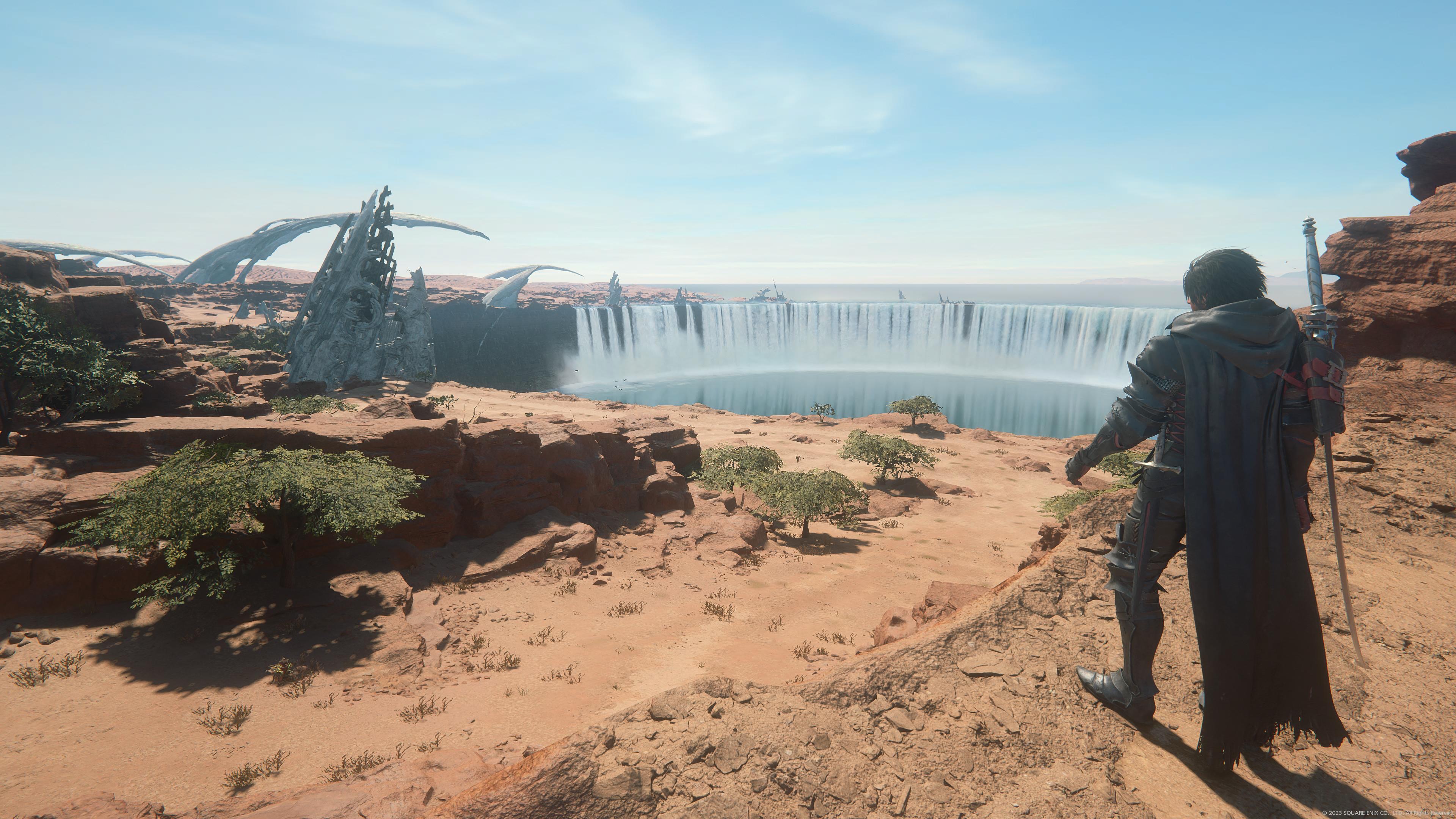
I’m glad I completed all the side quests though since aside from the rewards I got for doing them, they allowed me to really take in all the sights that Valisthea had to offer. From the marshes of Rosaria to the arid deserts of Dhalmekia, or the tranquil forests and fields of Sanbreque, each region of the world has its own vibe that makes it unique. They start off small, but as you complete quests, they grow to be pretty sizeable with multiple interconnected areas that you can explore. The only way to change regions is through the map screen, but fast load times mean this takes practically no time at all.
The most controversial aspect of Final Fantasy XVI has been its battle system as it continues the series’ shift towards real-time action, with singular control of Clive, and a heavy emphasis on being as aggressive as possible while performing flashy combos. If you think that sounds like character-action games such as Devil May Cry, Bayonetta, or Nier Automata you’d be right to make that comparison since Final Fantasy XVI is very clearly inspired by these titles. For some longtime fans that’s sure to be an understandable turn-off, but if you’re into that kind of combat you’ll likely have a blast.
Combat is fluid and fast-paced as you dash around the battlefield, bombarding enemies with a mix of melee attacks and blasts of magic. Parries and precision dodges reward well-timed attacks or evasions with a small window to get in a few extra hits, and you also have the ever-reliable Torgal that you can command to attack enemies in order to capitalize on a combo. Torgal is the only member of your party who you can give direct commands to since the rest of your allies fight on their own. I don’t mind this, but I do think it’s a missed opportunity to not have more coordination with your party members, such as in the form of team attacks. Thankfully, no one in your party is able to die during fights, which is something that I appreciated since fights can get very hectic.
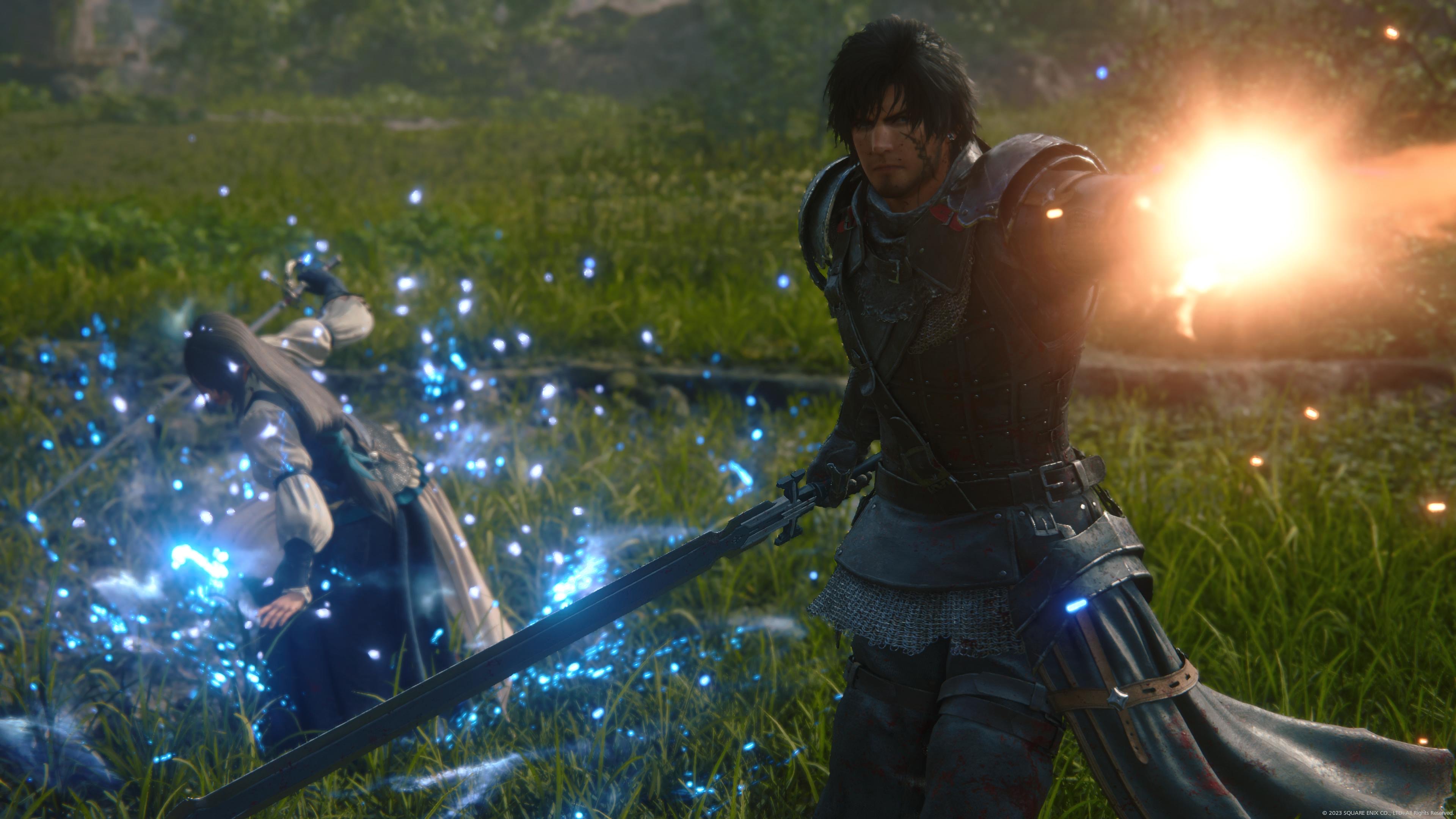
What brings your move-set together are your Eikon abilities. These moves are the special seasoning in your arsenal that add some power and flair to your combos. You can equip Clive with three Eikons that can be swapped on the fly during combat, and each Eikon comes with its own suite of abilities. They all have an innate ability that’s always active, and a few other moves that are on a cooldown, of which you can only pick two. So if I choose to equip Garuda, for example, I’ll always be able to use her built-in Deadly Embrace ability to grab distant enemies, but I’ll have to pick from two of her other four abilities to fill out her kit. Upgrading your Eikon abilities makes them a bit stronger and mastering them eventually allows you to mix and match Eikon abilities from different sets, unlocking a world of possible combinations.
Picking your Eikon abilities requires some careful planning since you want to pick ones that complement your playstyle, but will also be versatile for anything you come across. Every Eikon has its uses, though I personally favored the Phoenix, Garuda, and Titan trifecta for most of my playthrough since it gave me a healthy balance of speed, offensive, and defensive options that I could rotate between and use in just about every scenario. Whenever I was in a fight and effortlessly mixing up normal attacks with my different Eikon abilities, Final Fantasy XVI’s combat shined and would make me feel like a powerful badass. It’s easily the closest the series has gotten to realizing its dream of making fights feel and look as cool as they do in their CG cutscenes and feature films.
The thing is that it takes some time for the combat to get to that level. You unlock new Eikons as you make your way through the story, so for about the first seven hours, the only tools at your disposal are Clive’s basic four-hit combo, magic, and some of his Phoenix Eikon abilities. While the Phoenix abilities are fun to use, they aren’t enough to keep the combat from feeling very basic for this lengthy segment. This meant that as I made my way toward Final Fantasy XVI’s first major boss fight, I found myself progressively getting more and more bored with fights. Once I unlocked my second Eikon and had access to a new set of moves, combat was reinvigorated and became significantly more enjoyable.
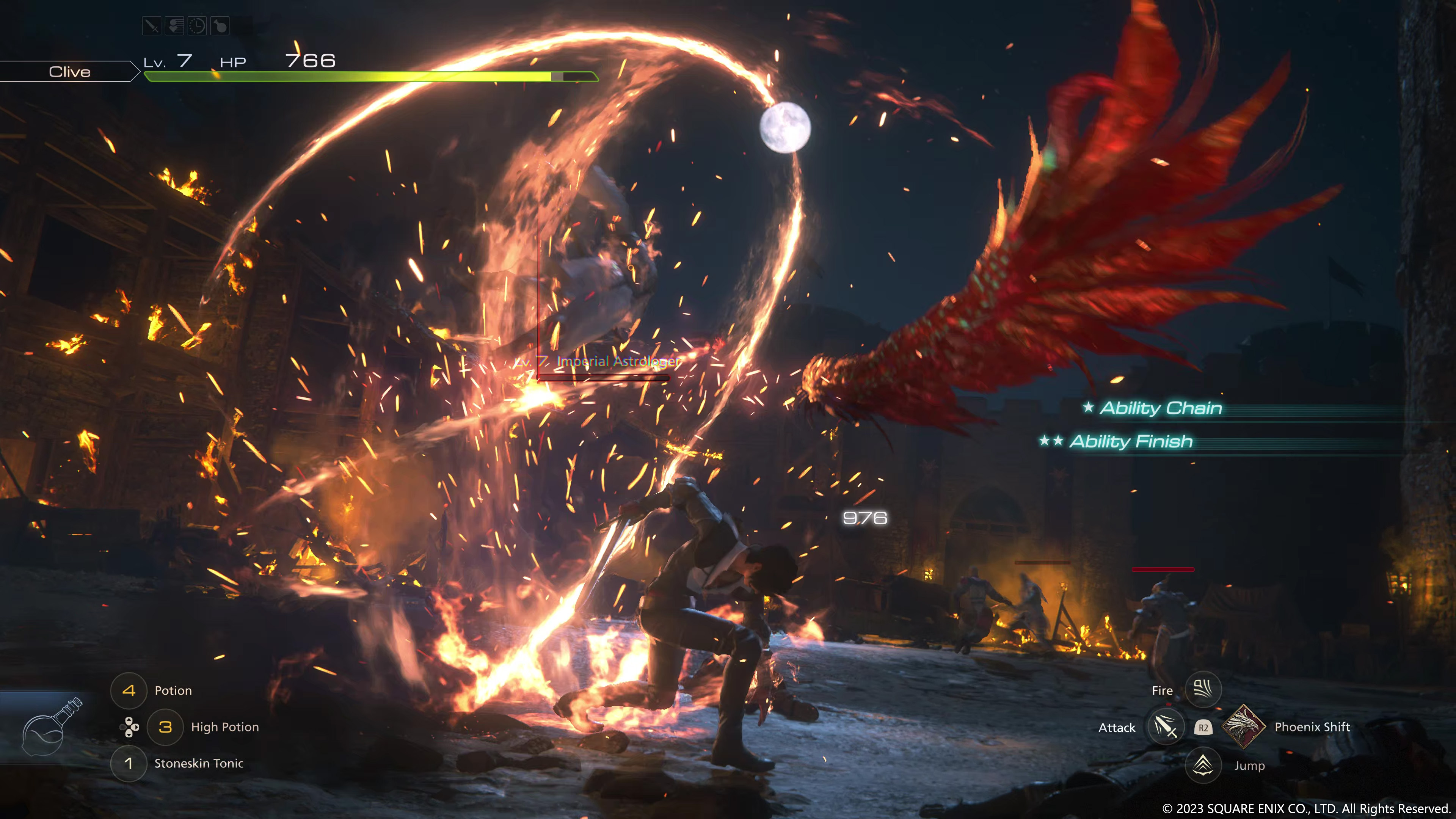
Conversely, fights become much easier as you gain new Eikons. Final Fantasy XVI is already a pretty easy game on its action-focused difficulty, and although there are some challenging fights that you’ll encounter (mainly in the form of certain boss encounters or high-level hunts), the core difficulty never really rises to meet your increasing power level. This led to me more-or-less going on auto-pilot whenever I was in combat since I didn’t have to think too hard about the fight in front of me. Take out the rank-and-file enemies, then wail on the stronger one until it’s staggered, unleash all my attacks to do as much damage as possible, and then repeat until they’re down. Completing the story unlocks the Final Fantasy difficulty for New Game Plus, raising the level cap to 100 and giving you harder enemies at the start of the game. It’s a welcome challenge and will probably be preferred by many who find their initial playthrough to be a cakewalk.
It also has to be said that for as much as Final Fantasy XVI is influenced by some of the best in the character action genre, it never feels quite as good as its inspirations. The lack of more than one basic combo turns combat into a repetitive dance that I’d perform as I waited for my different abilities to come off their respective cooldowns. There’s also a level of fluidity and precision that it can’t quite match when it comes to combos, creating a disconnect between what I wanted to do and what Clive actually did.
I was also disappointed by the watered-down RPG elements. You have a number of different stats that increase as you level up, but the only ones that actually matter are your health, attack, defense, and stagger. New gear can be purchased or crafted from your blacksmith and other merchants, but thanks to the healthy amount of Gil and crafting items you receive from doing quests, there’s never any push and pull with choosing what to buy. Simply pick whatever gives you the best stats and move on. Choosing which accessories to equip may take a bit longer since many of them affect the damage and cooldown length of your different Eikon abilities, so you’ll want to choose what works best with your setup, but it’s nothing too deep. All in all, with the shift towards being more of a straight-up action game, the elements that RPG fans enjoy from Final Fantasy sadly require so little thought that they’re almost inconsequential.
Overall
After finishing Final Fantasy XVI I’m left feeling surprisingly mixed about it, even though overall, I did genuinely have a good time playing through it. I think the main story is great, delivering a world and cast of characters that stand tall alongside some of the series’ best. The battle system is fun and excels at giving you the power fantasy that the series has been chasing after for some time now. And the Eikon fights will go down as some of the most unforgettable moments in all of gaming.
But at the same time, I had to push past the growing boredom I felt in order to get to Final Fantasy XVI’s best parts. The RPG elements became less interesting, the fights became less exciting, and progressing through the story became more of a chore because of the side quests and rocky pacing, making the experience much less enjoyable than I hoped it would be. These things don’t make Final Fantasy XVI a bad game, but rather a good game that falls short of greatness.
 TheComfySpot