- Developer: Bethesda Game Studios
- Publisher: Bethesda Softworks
- Available On: Xbox Series X|S, PC
- Played On: Xbox Series X
Ever since its announcement in 2018, Starfield has been one of my most anticipated games. A brand new IP from Bethesda Game Studios that brings their classic brand of RPGs into outer space was all I needed to hear to be on board with it, and now that it’s here I’ve been trying to sink as much time into it as I possibly can. I’ve only managed to log a solid 25 hours into this massive new adventure and so far I’m enjoying my journey across the stars. That said, there are some key aspects that have left me disappointed.
Let’s start with the story. I’ve never placed too much importance on the main quest in Bethesda RPGs since to me, while they’re interesting, they’ve always played second fiddle to the world itself and the side quests. That still rings true in Starfield, but to an even stronger degree, as I’m intrigued by the main quest to discover the purpose of this mysterious artifact that kicks things off, but I’m not all in on it just yet. It’s not that I think the story is bad, rather it just hasn’t grabbed me in the same way that the main quest in Skyrim and Fallout 4 did after playing for the same amount of time. I do like the members of Constellation that I’ve met so far though, with the smooth-talking Barrett and Constellation’s CEO Sarah being favorites of mine. The world-building is also impressive and it’s been utterly fascinating to learn about the history of this brand-new universe.
Speaking of stories, the character creator offers a litany of options to give your character a backstory of some sort. You can choose an initial role that automatically gives you three separate skills from the skill tree, and then three other traits that each have their own pros and cons. I chose to be a soldier who was born in the United Colonies, still keeps in contact with his parents, and is an empath. This means that I start out skilled with certain weapons and boost packs, have access to special United Colonies dialogue, can see my parents whenever I want, and am more effective in combat when I do things that make my companions happy. I’ve been doing my best to really role-play as this character I’ve created and as such, I feel like it’s made my time with Starfield more immersive than it would’ve been otherwise.
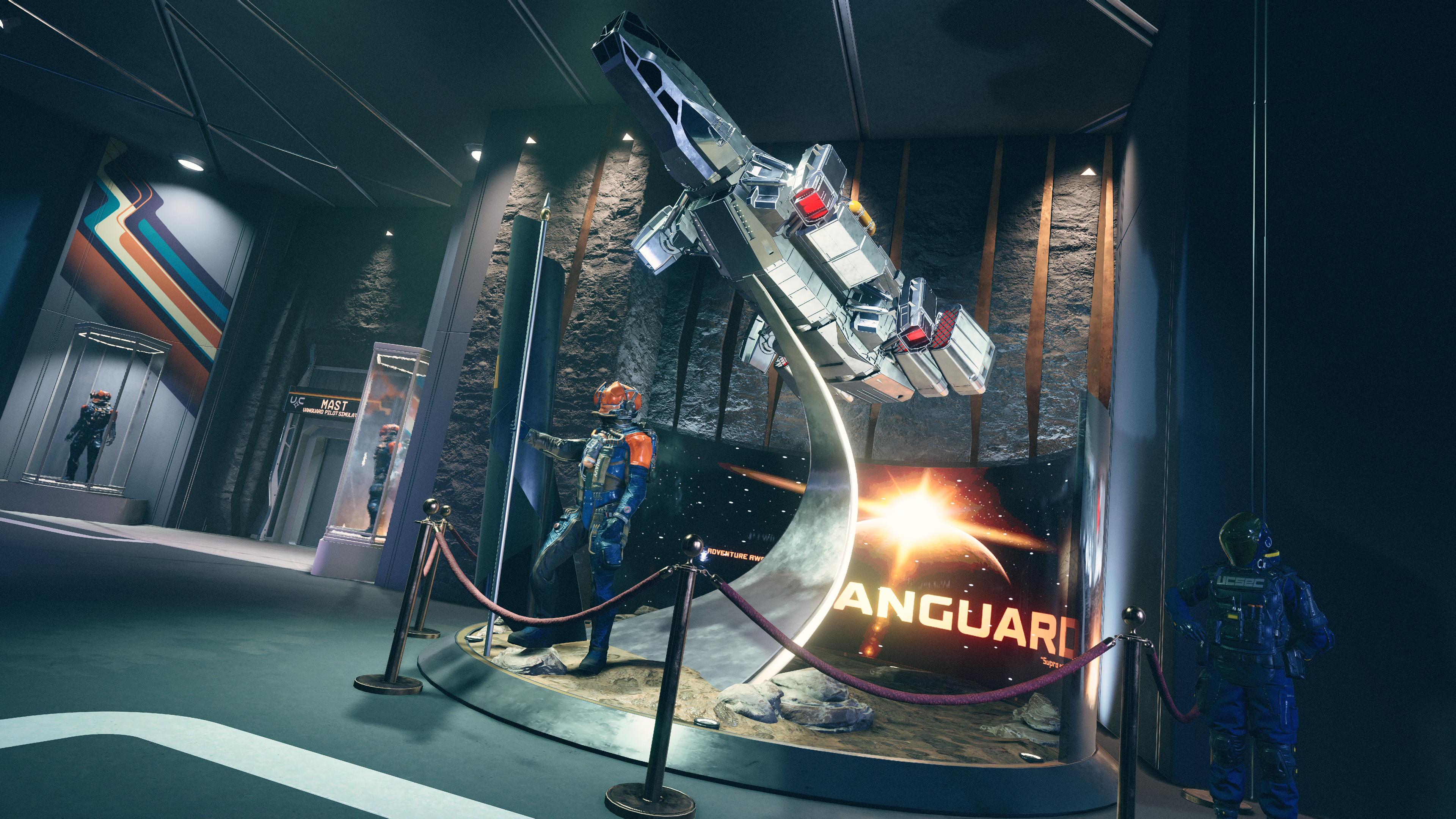
So far the side quests have generally been strong and have had me more invested than the main story. One side quest saw me working down in The Well in New Atlantis and teased a shadier side to the Trade Authority than their outward appearance gives off, which is something I’m looking forward to digging into more. My favorite set of quests so far has been related to the United Colonies faction. What starts off as a simple delivery job to become an official member of the group turns into a mission to prevent countless deaths across the settled systems as I work alongside a formerly disgraced member of the UC military. Their backstory is captivating and I’m enjoying working with them to accomplish this task. This storyline sank its hooks into me almost instantly but it’s not the only narrative thread that I can follow with the UC right now, so I’m eager to see where these other stories take me as well.
As I said before, the worlds in Bethesda RPGs are typically what I enjoy the most. If I’m fully immersed in their worlds, everything else just tends to fall into place for me. So when Starfield presented me with a universe that has multiple solar systems to visit, my mind went wild at the thought of getting lost and immersed in each one. At first, that’s exactly what happened. Walking amongst the people of New Atlantis and hearing their conversations in passing made the city feel full of life. Running across the surface of Mars and enjoying the lower gravity (something that I’ve only dreamt of doing in reality) brought out my inner child. Harvesting resources and scanning the local flora and fauna from different moons and planets made me feel like a real explorer discovering the unknown. I was in awe of the places that lay before me and couldn’t wait to see what else Starfield had in store for me.
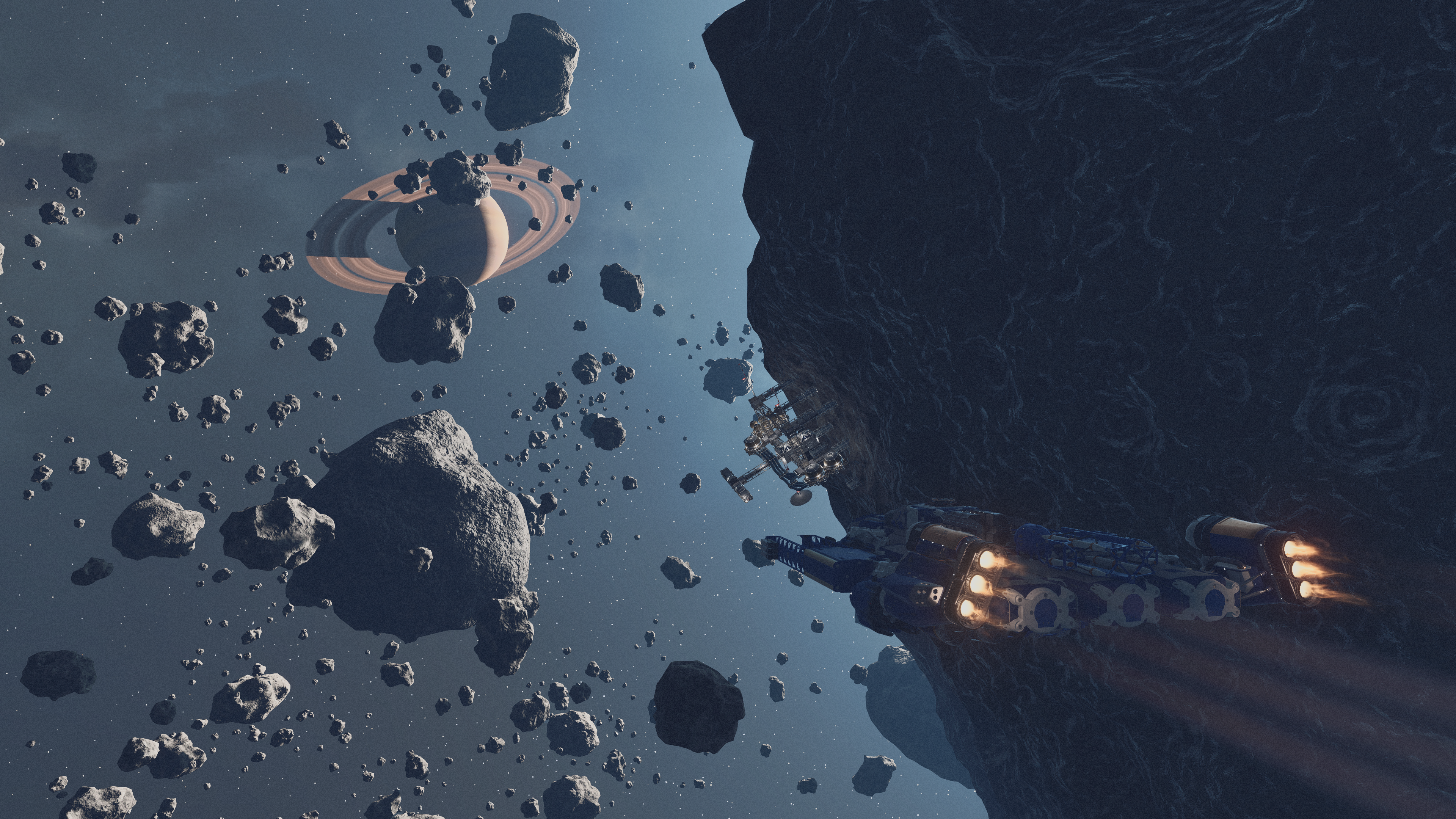
The same can be said for my adventures in the cold expanse of space. Flying through space leaves me wowed as I soar through asteroid fields with a star shining bright in the distance or a planet calling my name from afar. I’ll never forget the fear I felt when I left a planet and was met with House Va’Ruun ships that instantly came after me. One time I got into a dogfight that resulted in me incapacitating the enemy ship, boarding them, eliminating the crew, and then stealing their ship; it made for such a thrilling experience. Another memorable situation came when I docked onto a space station only to find that it had been taken over by pirates. This would’ve been a normal enemy encounter, but the fact that we constantly went in and out of zero gravity due to the station being damaged made it a much more interesting and exciting one. The ship customization feature is also something that I didn’t expect to get sucked into, but I spent two hours tinkering with the tools at hand and ended up with a ship that I’m proud to call my own.
Unfortunately, as I started freely exploring Starfield’s universe, the feeling of awe that I felt for exploration started to come and go due to how disconnected the galaxy felt. When in space, there are a lot of menus that you have to navigate in order to pick your next destination, and once you do so, it can be confusing to know whether or not you’ll be given the option to fast-travel there, or grav jump yourself. It’s an important distinction since fast traveling causes you to miss out on random encounters and just isn’t as immersive. Flying from one solar system to another understandably requires you to grav jump, but flying from planet to planet in the same system is unfortunately not a feasible task, which means that you’ll be watching a short cutscene of your ship flying through space as it fades to black and brings you there.
Because you can’t directly fly between planets and space, you have to sit through another short cutscene after you pick your landing spot. Once you land on the planet, there’s yet another brief loading screen when going from inside your ship to outside on the planet’s surface. I don’t mind that you can’t fly and land on a planet yourself, but for me, the way it’s presented adds to the disconnect in immersion that Starfield left me feeling due to the frequency with which these breaks happen. Instead of it feeling like a unified experience with a seamless transition from space travel to being on foot, I’m reminded that I’m playing a video game with multiple loading screens that take me out of the experience. It’s in stark contrast to the way that Skyrim and Fallout present their worlds as interconnected places that you can get lost in with minimal loading screens.
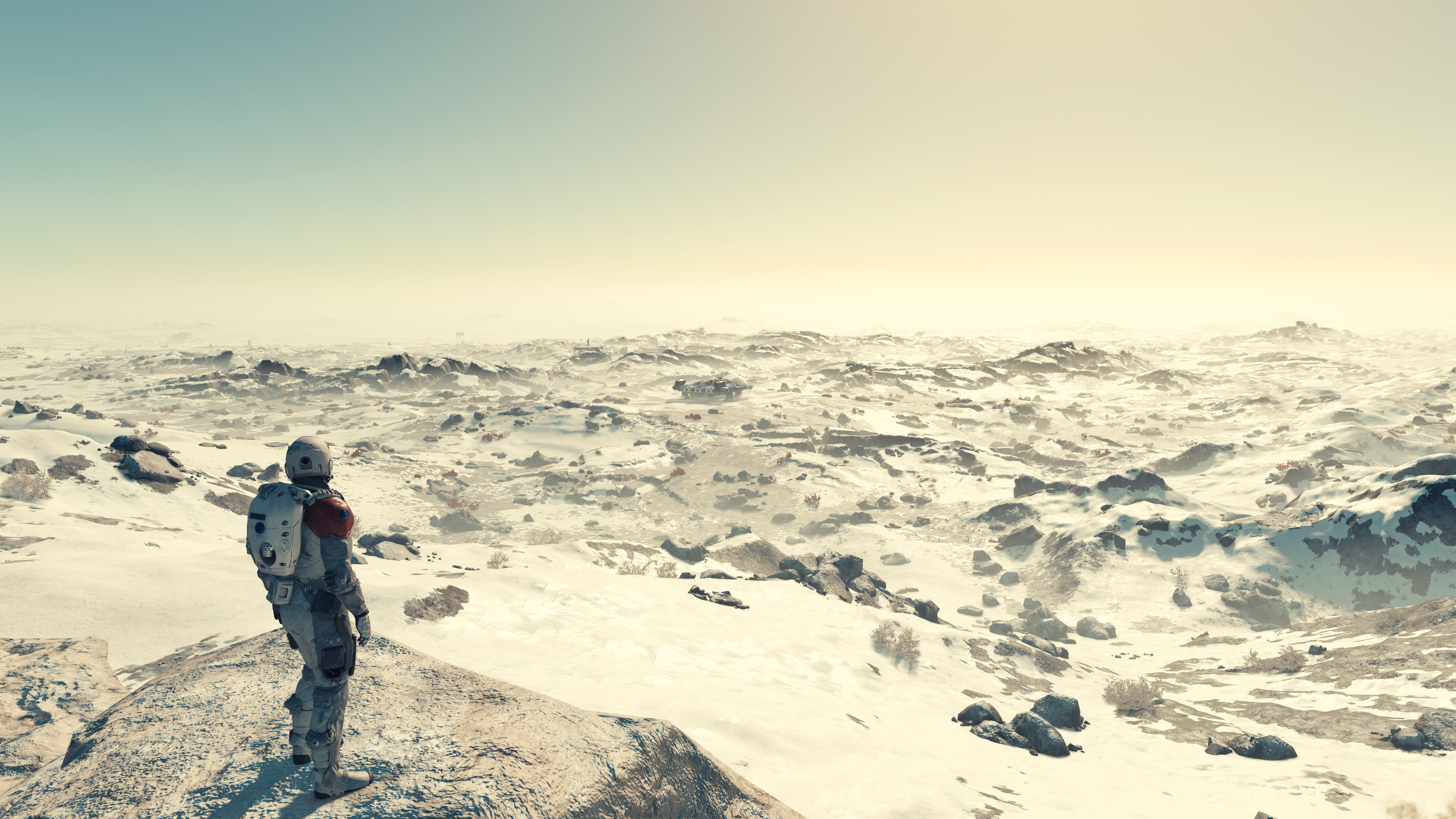
When I’m on the planets and exploring them, that immersive feeling I crave from Starfield briefly returns as I acclimate myself to a new environment and take in the sights. The planets and moons that I’ve been to look visually great and are home to some lovely vistas. Unfortunately, the things that I can do on them have slowly become less interesting the more I’ve played. I may find an outpost with settlers that offer a mission or trade items, or I can find caves that are rich with resources. Abandoned outposts or factories will be home to pirates or Spacers, but I’ve already come across more than a handful of repeated layouts for these locations in these first 25 hours, with some of them happening before I even started doing a lot of exploration. Now I don’t expect every building to have its own unique, hand-crafted layout, as Skyrim and Fallout 4 weren’t free of this problem either, but I certainly never noticed it as much. Even when I did, it didn’t really matter to me because I was deeply immersed in their respective worlds, so it didn’t break my immersion as much.
These issues all come together to make each planet or moon really feel like the procedurally generated places that they are. When combined with the way traveling from planet to planet is handled, exploring the galaxy in Starfield feels like going to separate instanced levels for a brief time instead of adventuring through an interconnected world. It’s left me feeling conflicted as well because when I’m engaging in Starfield’s hand-crafted content or admiring the stunning views, my immersion is at an all-time high. But once I go off the beaten path it starts to fluctuate, and that’s not the kind of experience I want to have with Bethesda’s RPGs.
When it comes to combat, enemy encounters are pretty fun. The gunplay in Starfield might be the best it’s ever been in a Bethesda RPG. It feels tighter, more refined, and more fast-paced than in Fallout, injecting fights with a level of energy that’s much appreciated. I also like the wide range of weapons on offer. They all feel great and thanks to the different weapon classes, each one has its own identity that’s left me with a nice selection of favorites to rely on in different scenarios. It is a shame though that the enemy intelligence isn’t the best in Starfield. They’ve never been that great in prior Bethesda games so that may not be much of a surprise or sticking point for some, but I was hoping for more from them.
Ship combat is also a fun time, though it has a strong learning curve to it. You have to take out an enemy’s shields before you can properly damage their hull, with certain weapons doing this better than others. At the same time, you have to manage the way you allocate your ship’s power so that you’re staying nimble, doing enough damage, and keeping your shields as powered as possible. It’s not the easiest balancing act, so early fights were a bit of a struggle, but once I got the hang of it, getting into dogfights was more enjoyable.
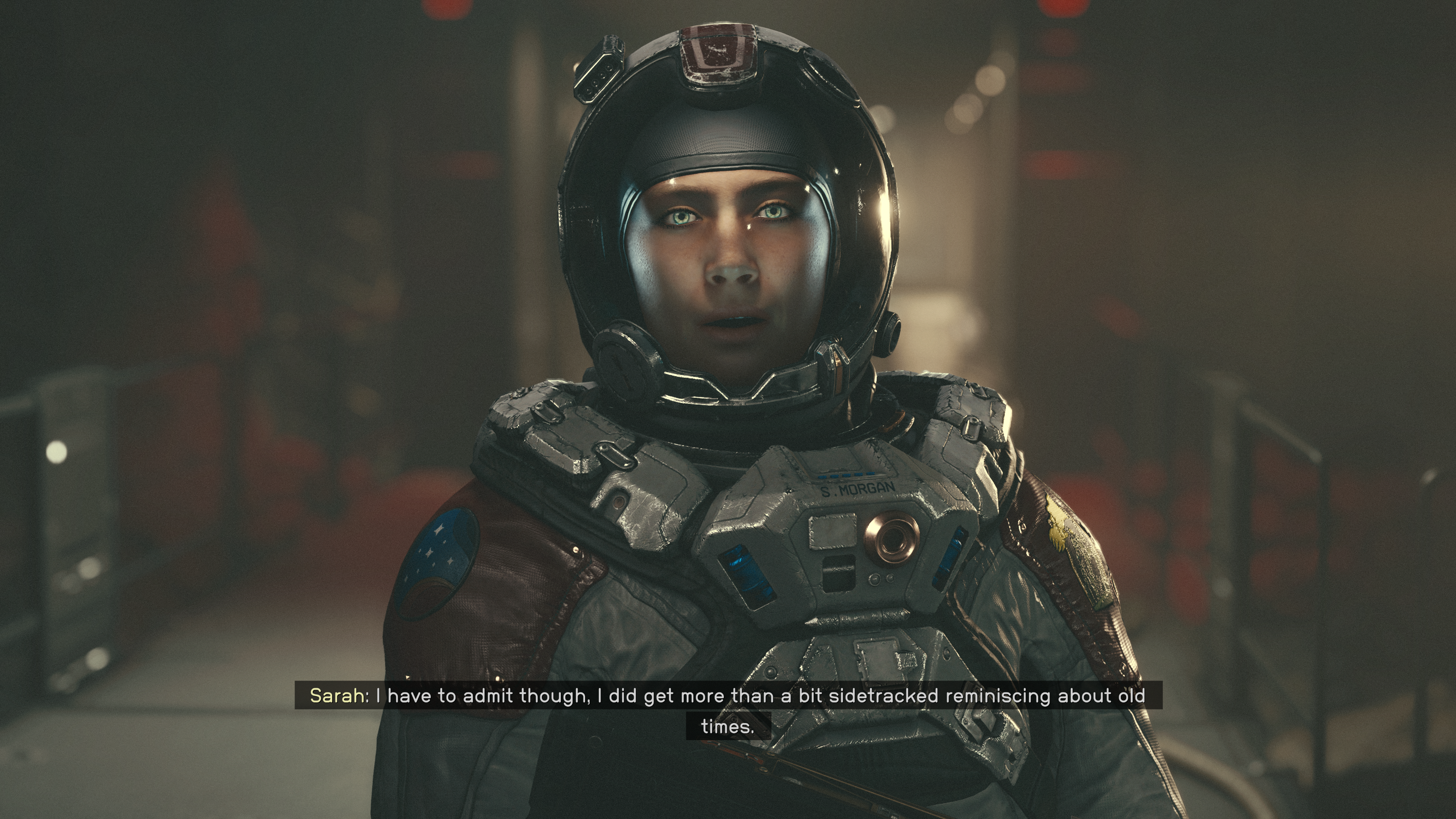
This being a Bethesda game, bugs are bound to be present and I’ve experienced a few so far. Some have been humorous, such as my companion being frozen in the air, but others, like having to fight an invisible enemy, have not. I’ve also had some annoyances in conversations with other characters. It’s common for them to be looking a completely different way when talking for extended portions of our conversation before finally deciding to actually face the correct way. Ordinarily, I might ignore this, but it happens often enough and takes me out of the conversation every single time, so I simply can’t. This is especially annoying since the facial models and animations are great and a major step up from Fallout 4.
After 25 hours with Starfield, I would say that I’m enjoying my time in this brand new universe that Bethesda’s created, with some caveats. It’s a good game so far and I’m looking forward to seeing what else it has in store for me as I continue to meet new characters, progress through more storylines, and discover more locations. The disconnect in its structure is keeping my immersion and overall enjoyment from reaching the heights that I thought they would, but I’m hopeful that things will turn around for me because if that element clicks into place, Starfield could become a truly special game.
 TheComfySpot