Kingdom Hearts is a special series to me. Not only has it played a key role in molding me into the person I am today, but it’s also been a constant source of comfort for me throughout my life. With that in mind, I decided to go back to six key games from the franchise, some of which I haven’t played in a long time, in a series I call Revisiting Kingdom Hearts to see what I think of them in the year 2024. Have my feelings changed about each game over the years? Am I able to take away anything new from them that I didn’t before? How does any one game compare to the rest of the series? These are the kinds of questions I’ll be asking myself as I work my way through the franchise. With all that said, there’s no better place to start than with the very first entry.
The original Kingdom Hearts is a childhood classic of mine. Its creative fusion of Disney and Square Enix characters, combined with its action RPG gameplay blew my mind when it first came out as it was something I could never have dreamed of before. At 22 years old, its age is apparent in more ways than one, but the amount of heart and charm it has makes it nothing short of timeless.
When I think about Kingdom Hearts as a series, what immediately comes to mind are the characters and the story. Above all else, they’re the beating heart of the series that keeps me coming back for more. The original Kingdom Hearts is when both are at their most pure, so I’ve always held a soft spot for it in this regard. Being a lifelong fan of the series, I’ve enjoyed the increasingly intricate story that’s been told as it’s progressed as well as the new characters that have been introduced, but it’s been so refreshing to go through a Kingdom Hearts story that’s as simple and clean as this one is. Additionally, it’s also given me a stronger appreciation for a few key things about the characters and narrative in the first Kingdom Hearts.
One of those things is what I call the Council of Disney Villains. Consisting of Maleficent, Jafar, Captain Hook, Hades, Oogie Boogie, and Ursula, they’re all aware of each other and working together to achieve a common goal, but this is something that barely happens in subsequent games. Sure Pete and Maleficent interact with several Disney villains in Kingdom Hearts II, but it’s always done in a way that allows the plot of that Disney movie to play out as intended, and never anything more than that. Maleficent seeks out Hades for answers in Kingdom Hearts III, but the collaborations start and end there. It’s a tad disappointing how short-lived the Council was because it’s not just exciting to see these characters from separate worlds working alongside each other on a shared mission, it ultimately makes them feel more important to the central story than they are as the series goes on.
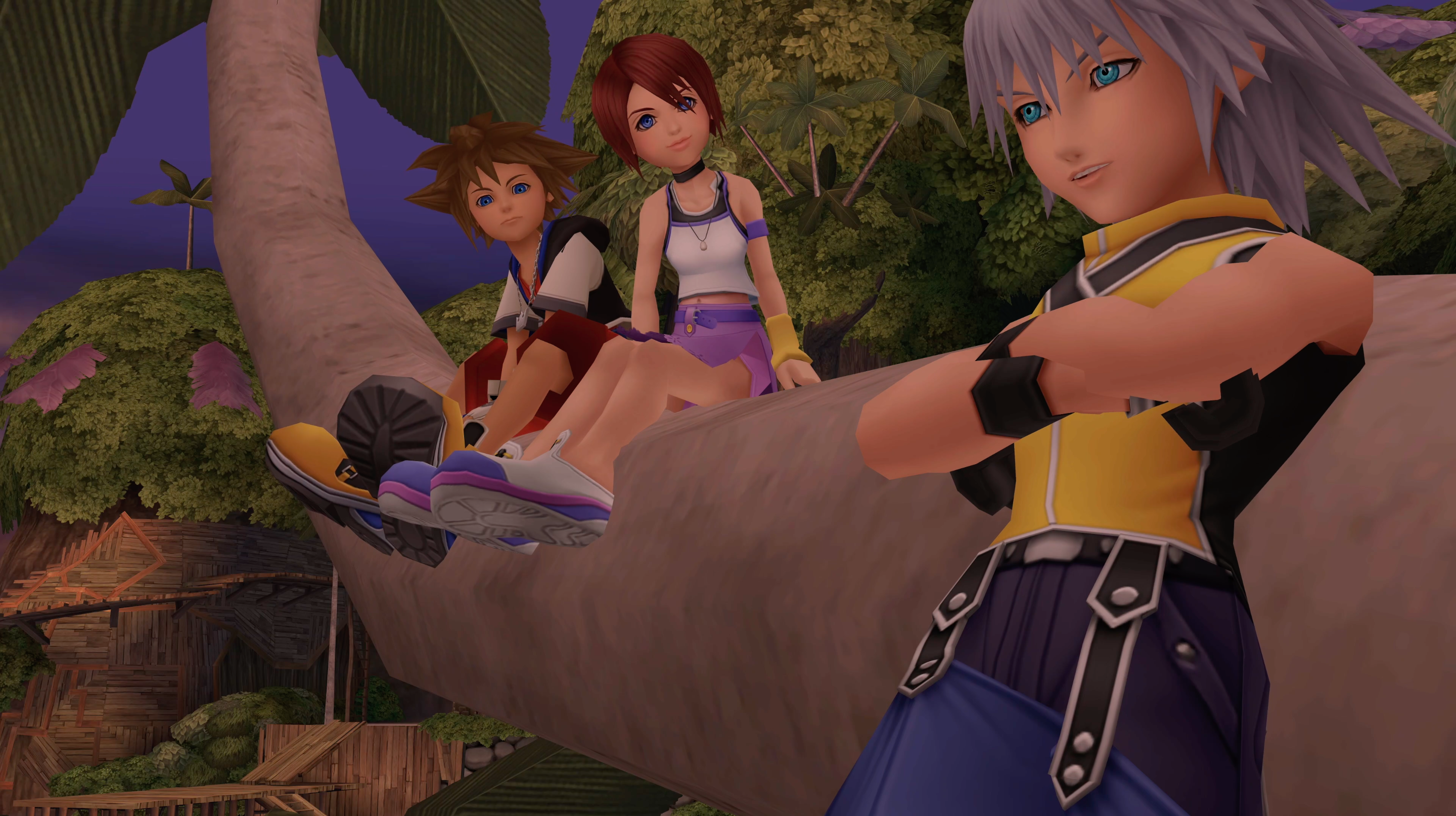
On a more serious note though, what I can appreciate the most about the original Kingdom Hearts is how wholesome and relatable it is thematically. At its core, the game is about two things, the first of which is the magic of venturing out into the unknown and discovering a world that’s bigger than one could ever imagine. It’s something that we can all relate to as a kid, but it’s still something that I find myself relating to now in different ways.
As a kid, it was me fantasizing about losing myself in fictional places that I could only dream of. As an adult, it’s me understanding that everything I thought I knew about the world was only a fraction of what it had to offer and that there’s so much out there to discover. That can range from the wonder of traveling around the world and seeing how different people live to the satisfaction that comes with stepping out of my comfort zone and opening myself up to something new, or the sense of dread that comes with all the responsibilities of being an adult. No matter the revelation, there’s a certain magic attached to gaining knowledge as an adult that matches the excitement I’d get from my childhood fantasies.
The bigger theme that’s central to not just the first Kingdom Hearts, but the series as a whole, is the power of friendship. Seeing the bond that Sora shares with Kairi, Riku, Donald, and Goofy is heartwarming and makes moments such as Sora’s sacrifice to save Kairi or Donald and Goofy standing up for Sora just as impactful as the first time I played this game. It’s a friendship built off love and compassion, where no matter the distance that separates them or the problems they may have with one another, they’re always there for each other and will do whatever they can to have each other’s back. I’ve always held my friends close to my heart, and although I’m not the best at staying in touch with them, I know that I have their support with whatever I need. And when the going gets tough, sometimes just knowing you have that kind of support behind you is all the motivation you need to keep going and push on through the darkest times in life. It’s like Sora said, my friends are my power.
These two core themes are at the foundation of the whole series, but I feel like they’re at their strongest in this first game since they aren’t bogged down or overshadowed by an overly complex story. As such, they’re able to shine brighter and provide a timelessness that can be felt by anyone at any point in their life. I may have connected with them to some degree as a six-year-old playing for the first time, but as a 27-year-old adult, I’m able to see that there’s more heart underlying the characters and narrative than I previously thought, and can take deeper meanings and understandings from them.
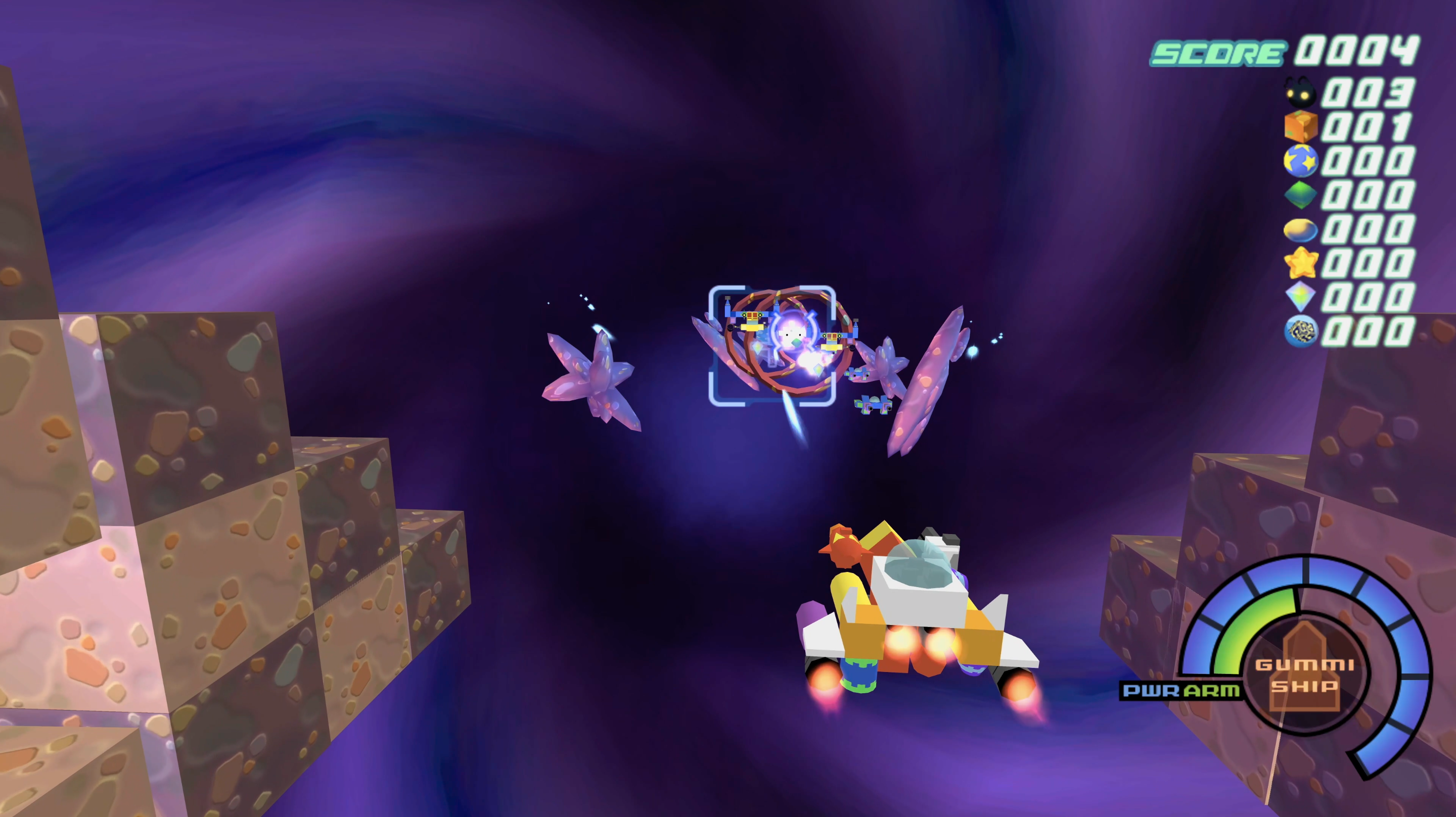
The charm of Kingdom Hearts can also be found all over its different worlds, and it starts with the Gummi ship. Picking a world and traveling to it is basic and boring (something I’m glad was changed in future releases), but between the music, the gameplay, and the ship designs, there’s something undeniably likable about it being so simplistic. Once we get to the worlds, interacting with their respective characters is something that never gets old, but what elevates the worlds in the first Kingdom Hearts is how they’re designed. While each of the individual rooms tends to just be small boxes, the worlds themselves can feel a bit sprawling due to the complexity behind the layout of the world.
Take Atlantica for example. The world itself isn’t the biggest, but the number of rooms it has combined with the different tunnels and shortcuts that connect them all cause it to feel more expansive than it is. On a larger scale, you have Hollow Bastion. It’s massive, with multiple levels and rooms to explore. There are numerous ways to reach most sections of the world, whether that be through direct routes such as the lifts and following the main path, or by jumping off the castle from higher points to more quickly reach lower points. These are just two examples of a world layout that allows you to loop around different parts of it through multiple pathways, but it’s something that can be seen in a majority of the worlds.
Make no mistake, this complexity can make for a confusing experience at times when trying to get from Point A to Point B, especially since there aren’t any maps. One has to look no further than Monstro or the Cave of Wonders in Agrabah for examples of how easy it is to get turned around because of a confusing world layout. So, with that in mind, I do enjoy the more straightforward and linear levels of later games, but in gaining understanding through simplicity, the worlds lost that feeling of true exploration.

Platforming is also a key part of the traversal and level design in the first Kingdom Hearts and admittedly, it’s a bit janky thanks to how stiff and imprecise it can feel at times. Even still, the platforming is notable because it feeds into the fantasy of a child going on an adventure to magical new places that’s at the foundation of this first game. The platforming makes the worlds feel like distinct playgrounds, and while I’m fine with it more-or-less being removed in later games because of how janky it is, I’d be lying if I said that I didn’t feel like the series lost some of its charm in the process. The way Sora jumps, swings, and clambers around environments exudes a childlike energy that’s specific to this game, and I can’t help but smile when I see it.
Something else that’s present in the worlds of the first Kingdom Hearts but practically nonexistent in each subsequent game is actual interactivity with the worlds themselves. Some of this interactivity is overt such as with the many Trinities you can find, the different items in Wonderland that can change your size, or the tree surfing in Deep Jungle. But some of the more impactful examples of this interactivity are less blatant. It’s how you can extinguish all the flames in Olympus to receive an item. It’s the way that pulling the chain on a random house in Halloween Town three times will also reward you with an item or using the tools at the campsite in Deep Jungle will create a potion. Even smaller touches like lighting the fireplace in the Traverse Town accessory shop or opening the clams in Atlantica with either melee attacks or magic to reveal items or save points add something to the experience of visiting that world.
Between the world design, the platforming, and the interactivity, the worlds in the first Kingdom Hearts feel more like actual places that you’re visiting and exploring as opposed to just set dressing for the linear spaces you’re moving and fighting through. And this is all without even mentioning the stellar music that the series is known for which also contributes to the magic of each world. Each element works in tandem with the others to create this overwhelming sense of place for each world that’s simply unforgettable.
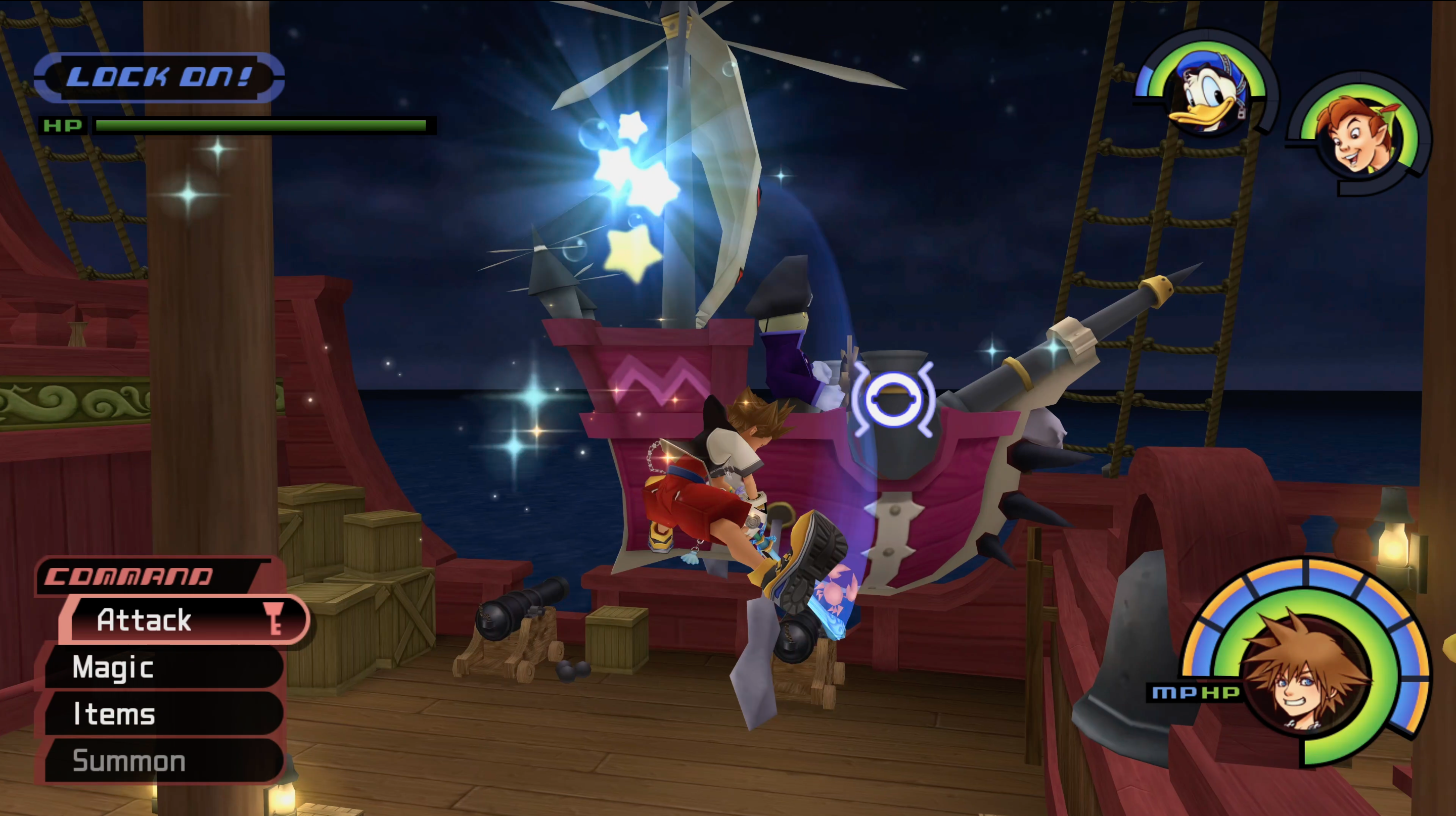
The one area where I feel the original Kingdom Hearts has aged the most concerning its gameplay is in its combat. It’s not something I tend to remember until I replay this game, but combat is fairly basic and doesn’t feel as great as my memories make it out to be. Don’t get me wrong, it’s not bad by any means, but just like with the platforming there’s a fair amount of jank here. Combat lacks the finesse and fluidity that the rest of the series largely has, causing it to feel stiff and imprecise in comparison. I can’t emphasize enough how annoying it is that Sora’s Sliding Dash attack is slow and inconsistent in its activation, or for his swings to repeatedly fall short of enemies, something that’s especially a problem in Atlantica where his combat abilities are severely limited. Things aren’t helped by the fact that the camera’s placement and movement get in the way more than it helps.
But as with the platforming, there’s a certain charm that comes with the jank. For all intents and purposes, Sora’s a novice when it comes to fighting with a weapon. All he’s known is fighting against his friends with a wooden sword, so it makes sense that his fighting style is a bit rough and tumble throughout this game. It may be frustrating when Sora’s Keyblade swing falls short of an enemy, but deep down there’s a part of me that finds it a bit funny because of how inexperienced Sora is when it comes to actual combat. His form may not be the most refined, but he has the talent and heart to hold his own and take out his opponents.
If I take another step back when looking at the combat, its simplicity is also something that I find charming, with the trimmed-down ability list and the lack of any real spectacle in combat standing out from the rest of the series. This simplicity means that the focus can be purely on taking down the enemies in front of you instead of also worrying about using form changes or waiting to use a unique action command. Do I vastly prefer the way that combat has evolved throughout the series to become more flashy and exciting with plenty of depth to it? Yes, without a doubt. But there’s comfort in the absence of those things that still make it fun, and experiencing this combat system with the newer, more refined ones in mind allows me to appreciate it even more.
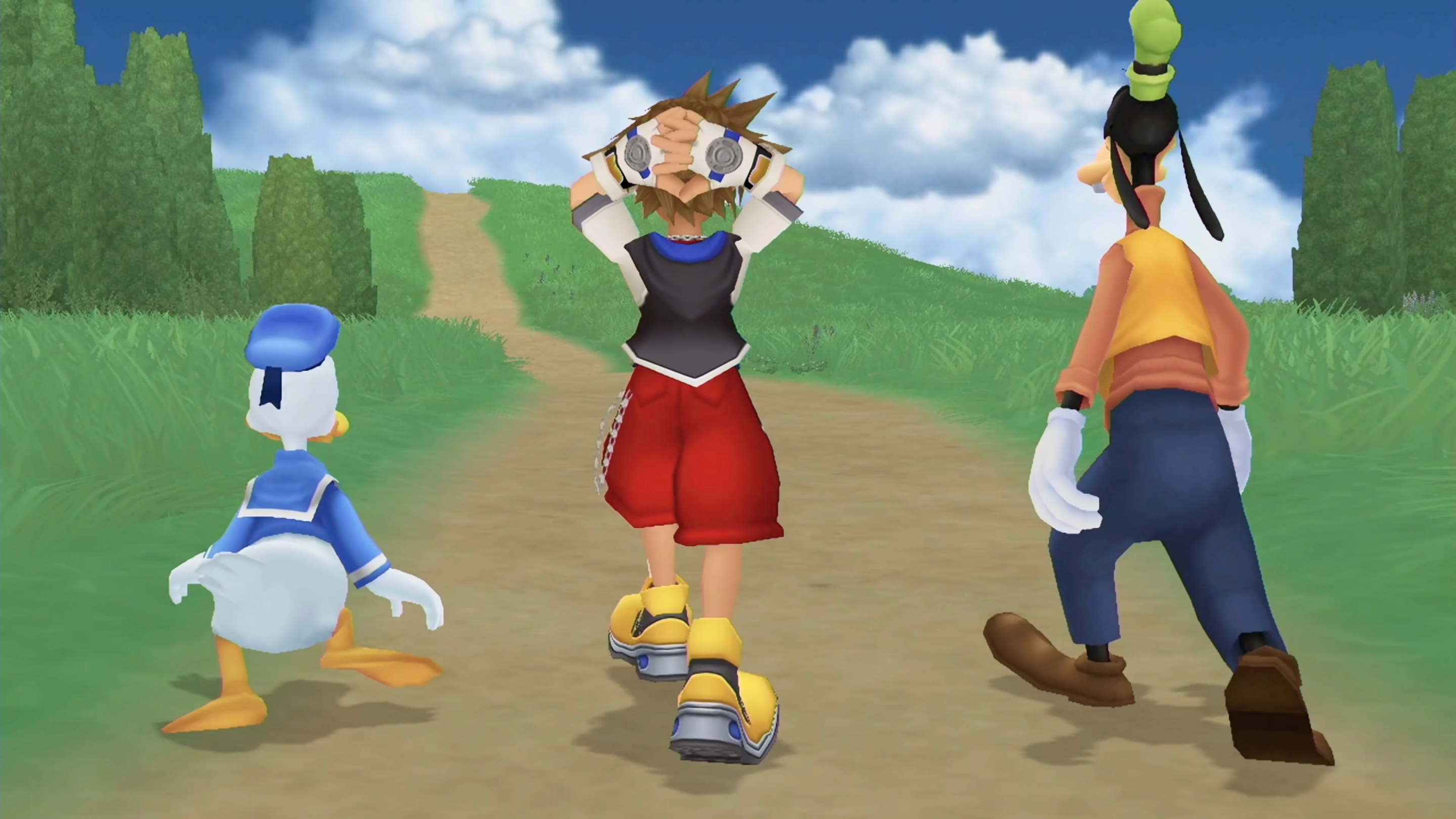
Going back to the first Kingdom Hearts in 2024 was an enlightening experience. It’s a sort of escape from adulthood as I’m reminded of a simpler time when life was easy and not burdened by the trials and tribulations of adult life. There aren’t any flashy combat mechanics, nor is there an intricately layered story. Instead, it’s fairly simple and basic, but that isn’t a bad thing. Even though that simplicity results in some flaws, I find it to be a refreshing change of pace from what the series eventually became in later entries. That simplicity gives way to a greater appreciation for the charm of what it did back in 2002, as well as shines a light on ideas at the heart of the game that I didn’t have the knowledge or perspective to dig into. In doing so, it lays bare what makes Kingdom Hearts a special game that can stand the test of time.
 TheComfySpot