Kingdom Hearts is a special series to me. Not only has it played a key role in molding me into the person I am today, but it’s also been a constant source of comfort for me throughout my life. With that in mind, I decided to go back to six key games from the franchise, some of which I haven’t played in a long time, in a series I call Revisiting Kingdom Hearts to see what I think of them in the year 2024. Have my feelings changed about each game over the years? Am I able to take away anything new from them that I didn’t before? How does any one game compare to the rest of the series? These are the kinds of questions I’ll be asking myself as I work my way through the franchise. In part three of this series, I’ll be talking about the franchise’s golden child, Kingdom Hearts II, and how its exploration of identity makes it a defining moment in the series.
Of all the games in the series, Kingdom Hearts II has long been a standout for me. Between its story, combat, selection of worlds, and so much more, there are many reasons why I consider it to be one of the top two games in the franchise. Everything about it resonated with me so strongly that it became my sanctuary whenever I wanted a comforting escape from my day-to-day life. While the seeds for the series’ evolution into a franchise known for its complicated story and flashy action could be seen in the first game, it’s in Kingdom Hearts II that the series takes a look at itself in the mirror, decides what it wants to be, and starts to come into its own. This idea of discovering and establishing your identity is central to Kingdom Hearts II and trickles down to every aspect of it.
When it comes to the narrative, Kingdom Hearts II has always been one of my favorite stories in the series. A good portion of my love for it stems from the fact that it sees the series moving on from the more simplistic and whimsical plot of the first game in favor of a story with bigger stakes and more complexity. We’re introduced to the concept of Nobodies and are given a proper introduction to Organization XIII. King Mickey and Riku are enigmas for most of the story, with their activities being shrouded in mystery. There’s also the reveal of Ansem the Wise and how much everything up to this point ties back to him. While I don’t find it to be too hard to follow, I understand why some people get confused by the things that happen here as it’s a layered story that’s undeniably the start of the series being more intricate with its storytelling and deepening its lore.
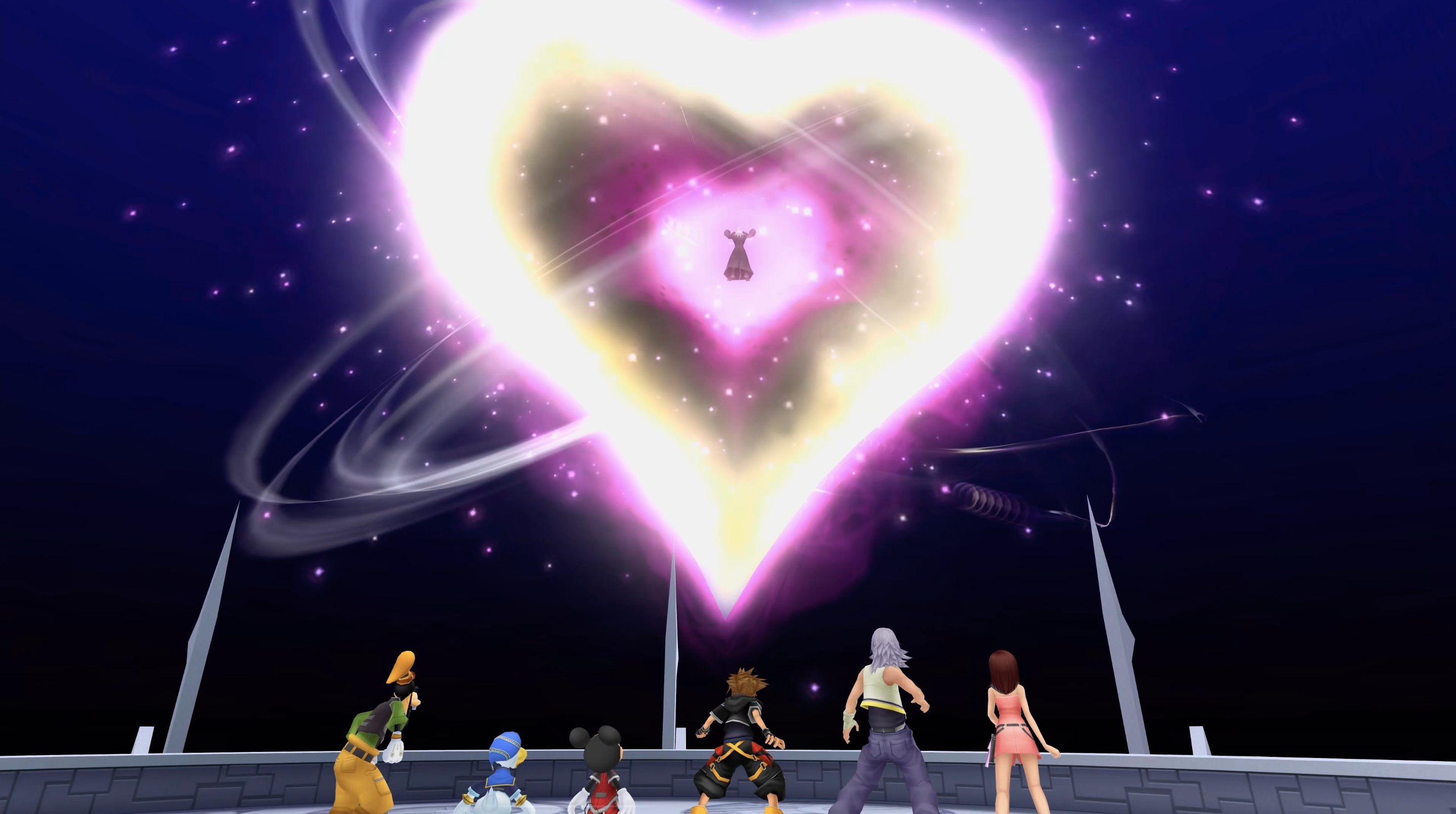
This complexity contributes to the wide-reaching sense of maturity that the narrative in Kingdom Hearts II exhibits, making it feel like the series is “growing up” with its characters and its fans. Every appearance by Organization XIII brings a sense of dread that makes most of the villains from KH1 seem like child’s play. The epic scale of the battle of Hollow Bastion cemented it as one of the most iconic moments in the series. Both of these elements were fundamental in setting the stage for the series to get darker and grander with its narrative. Subtle touches like the way cutscenes are composed with more of a cinematic flair than the first game also played a part in this as it made them more engaging to watch.
There’s also the way the characters are portrayed here that makes them so memorable. Mickey Mouse went from being a fun mascot to a straight-up badass. And while Sora’s still the fun, loveable goofball we met on Destiny Islands, he’s also grown into a more confident and brave young man who would become a lifelong inspiration to me.
Speaking of growing up, the transition from the prologue in Twilight Town to the start of Sora’s journey at Yen Sid’s tower is almost like the game is saying “Hey, it’s time to grow up,” except it’s not only talking about itself here. Similar to real life, the early stages of Kingdom Hearts II are a relaxing and wholesome experience that you just want to live in forever. We know what lies outside of this peaceful bubble, and want to ignore it so we can enjoy the easygoing vibes we’re basking in. Things get serious again once we leave and have to face the reality of the world, but the safe space that we’re leaving behind is never truly gone and will always be around for us when we need it. As an allegory for the transition from childhood and adolescence to adulthood, this scene never fails to hit me right in the feels as I get older and enter different phases of my life.
This is just one example of how the narrative’s increased maturity enhances the heart and charm that’s inherent to the series, resulting in some of its best moments, and there are others too. The beautifully executed reunion of the Destiny trio comes to mind, as well as the game’s ending, which I believe to be perfect and one of the best endings I’ve experienced in any medium. So in a game like Kingdom Hearts II that’s starting to take the series in a more serious direction narratively and tonally, moments like these remind us of what we love about this series and show that no matter how serious things get, it’ll never lose sight of what makes it so special.
The identity-centric theme of Kingdom Hearts II isn’t just related to the narrative and tonal transformation the series undergoes with this entry, but also to the very story that’s being told. I’m not just talking about how Organization XIII’s entire plan revolves around filling the void inside them and becoming whole beings again. Identity is a fluid topic with many different ways of discovering and establishing it, and the story explores this from a few different, yet interconnected, angles.
First is the idea of staying true to ourselves and not changing or losing sight of who we are deep down to seemingly appease others, ourselves, or for any other reason. Riku adopts Ansem’s identity because he thinks that’s what’s necessary to help his friends and becomes ashamed of this. Although he struggles somewhat with this shift in identity, it’s his friends and his grasp on his sense of self as someone who’s a loyal friend and protector that keeps him from fully giving into the identity of Ansem and the darkness within. This idea of staying true to ourselves comes up again during Riku and Sora’s final conversation at the Dark Margin as they both express how they always wanted to be like each other growing up and ultimately come to the conclusion that they’re both just fine the way they are.
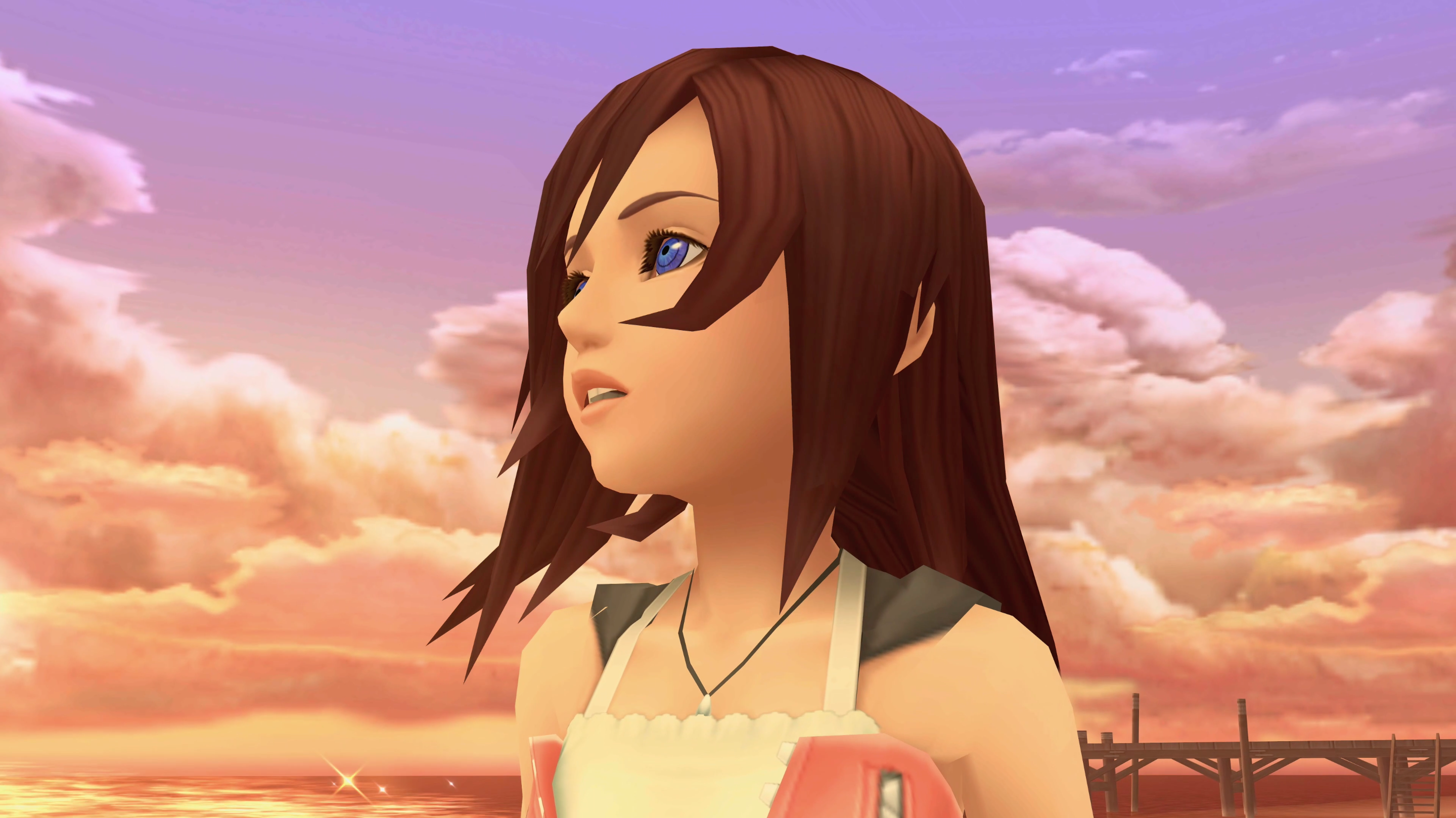
The second angle is the idea of becoming who we want to be by growing as a person into a better version of ourselves for ourselves and others. I feel like this idea is best seen in the main narrative with Kairi. Throughout the first game, she’s either captured and comatose or stuck on the sidelines, and while she starts Kingdom Hearts II in the safety of Destiny Islands, she doesn’t want to sit and wait for Sora and Riku to come home anymore. She actively chooses to search for them and then fight alongside them later. Sure she does end up being a damsel in distress again for a bit, and the promise of her growth here sets the stage for the most exciting and frustrating bit of character development in the series, but her actions here instantly make her a better character than she was before.
These two approaches to exploring identity are applied to the stories of the Disney worlds in Kingdom Hearts II as their respective characters typically face some sort of identity crisis. Simba struggles to assimilate into his role as king of the Pride Lands as he tries to be his father instead of being himself. The Beast fights internal and external forces to become the compassionate, loving person that Belle and his servants know he can be. It’s a shame that our trips to the Disney worlds largely end up being abridged versions of the movies without any importance to the main story surrounding the Organization since their narrative importance is part of what made the first Kingdom Hearts special, but their thematic relevance does make up for it. Shoutout to Space Paranoids though for containing perhaps the most narrative and thematic relevance of all the Disney worlds since it’s connected to Ansem the Wise and is the reason Hollow Bastion regains its original identity of Radiant Garden.
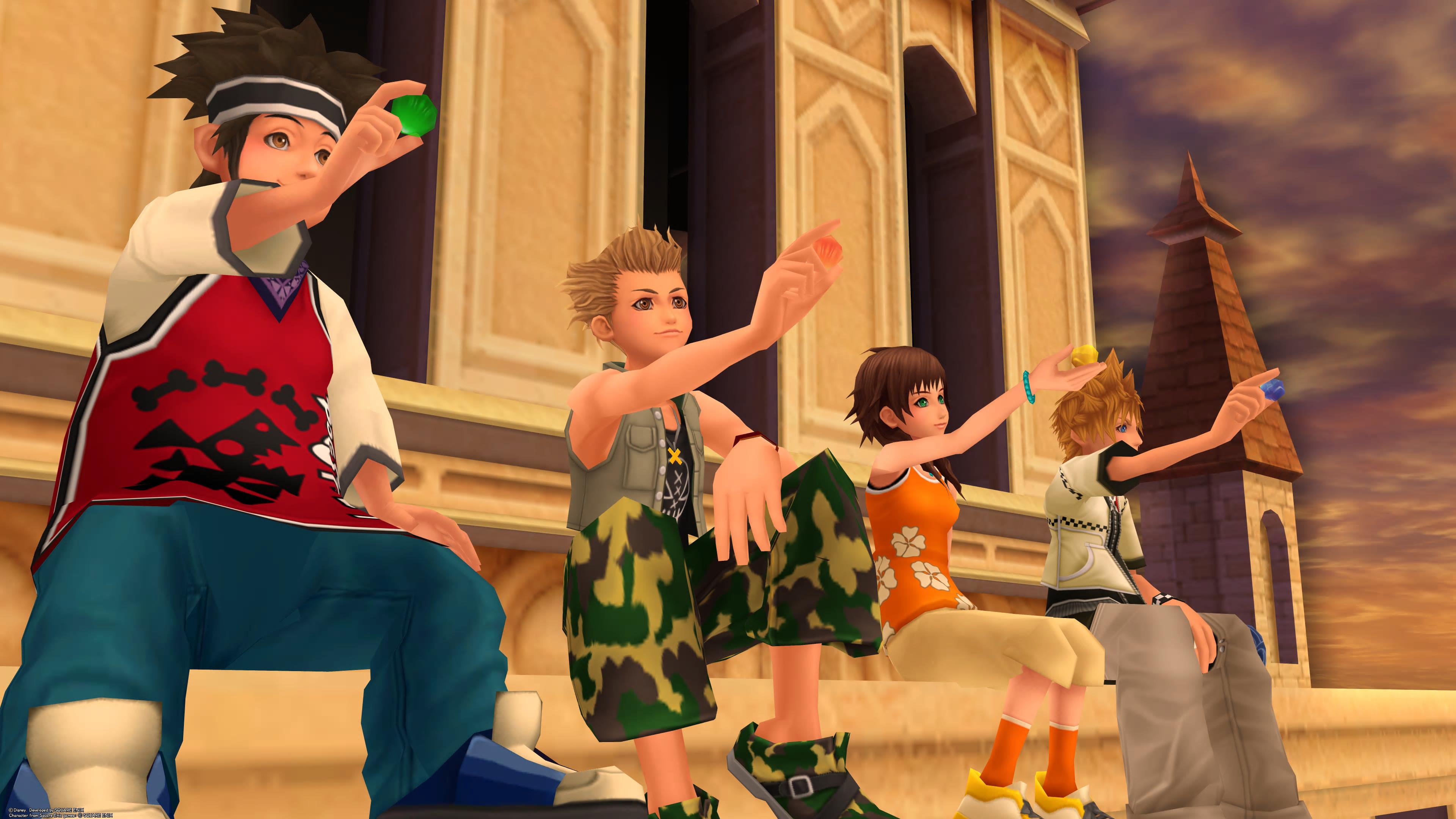
This all brings me to angle number three: the search for purpose in our lives and the identity that comes from it. For most of the story, Kingdom Hearts II positively frames its exploration of identity, where discovering and establishing one’s identity is a good thing for everyone involved. The one aspect of the story where it’s not that straightforward is also the one that I feel is the most relatable. I’m talking about Roxas and his character arc in this game as it completely revolves around his drive to find his purpose in life and a desire to establish his place in the world.
On one hand, you could say that he accomplishes this by discovering the truth of his connection to Sora and sacrificing himself for the greater good because he’s selflessly returning to where he came from and becoming who he needs to be. On the other hand, you could say that he doesn’t accomplish his dream because becoming one with Sora deprives Roxas of the life and identity he had for himself in the digital Twilight Town in service of giving Sora the one he lost.
This idea of giving up your dreams of who you want to be for some bigger purpose is bittersweet because of how relatable it is. Sometimes it’s because we have to prioritize other aspects of our lives. Other times it’s because no matter how badly we want those things, the chips are simply stacked against us and it’s just not meant to be. These dreams help us form our identities, so no matter the reason, we’re giving up the identity we want in service of one that we don’t, even if we come to accept it and grow into it. I can personally relate to this as I’ve struggled in recent years with figuring out who I am and who I want to be in life ever since I pushed my biggest dream to the side.
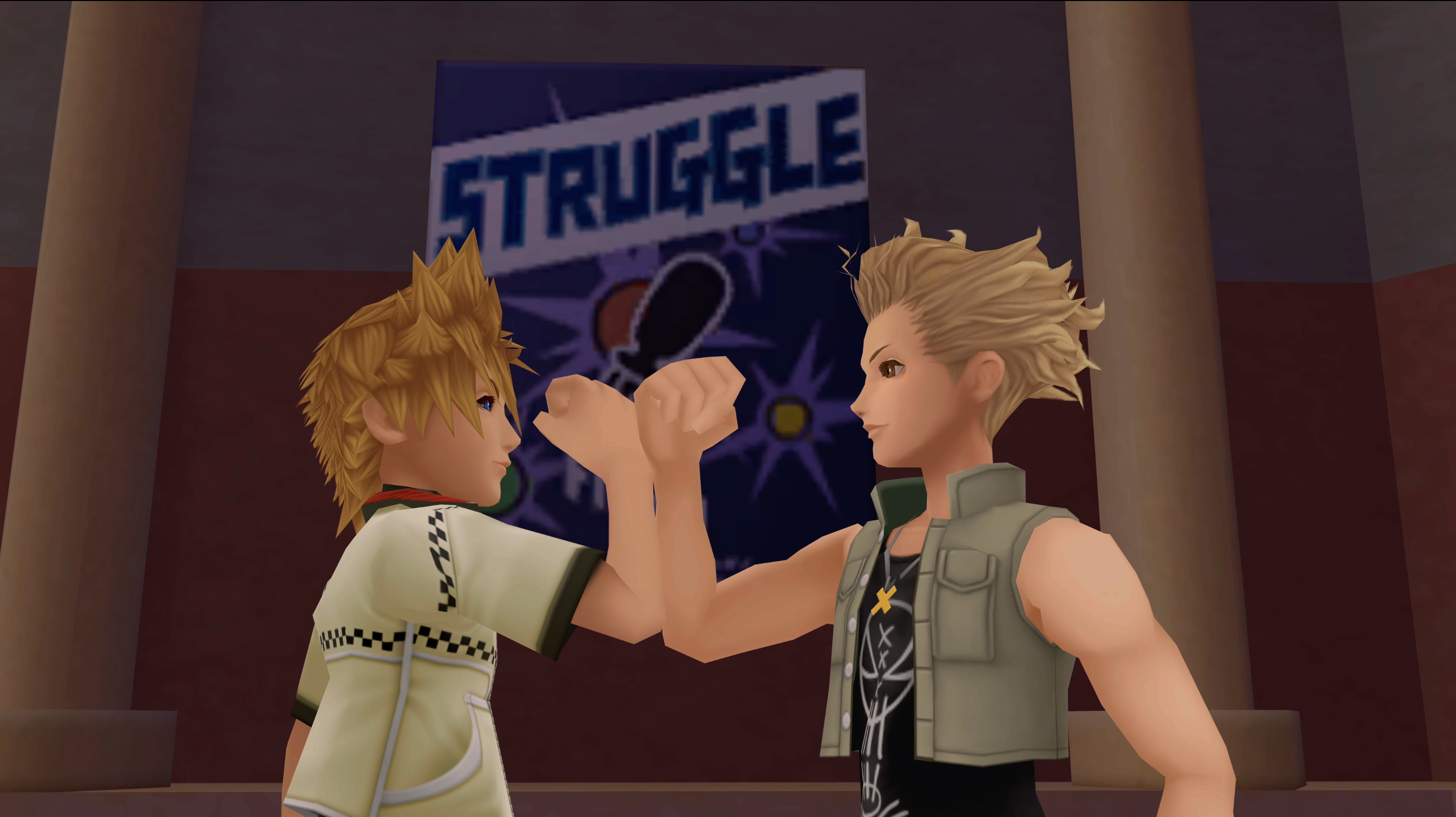
What I feel is important is that even if we push those dreams to the side and gain a new identity out of necessity, we can’t entirely give up on them and lose the identity that matters to us most. It’s a sentiment that Naminé expresses when she tells Roxas that they’ll still be able to spend time with each other after he becomes one with Sora, and he continues to share it in his final conversation with Axel as he believes Sora will find the answer to whether or not Nobodies have hearts and are their own person.
Identity is a tough subject to tackle because of how nuanced it is, and the story in Kingdom Hearts II gets surprisingly deep with it. On the surface, the game’s approach is pretty light and easy to gloss over, but taking the time this playthrough to think about how the story handles the topic has made it richer for me. With this story, the series is taking its first major step toward handling more complicated and hard-hitting themes and making it clear that it’s not afraid to do so.
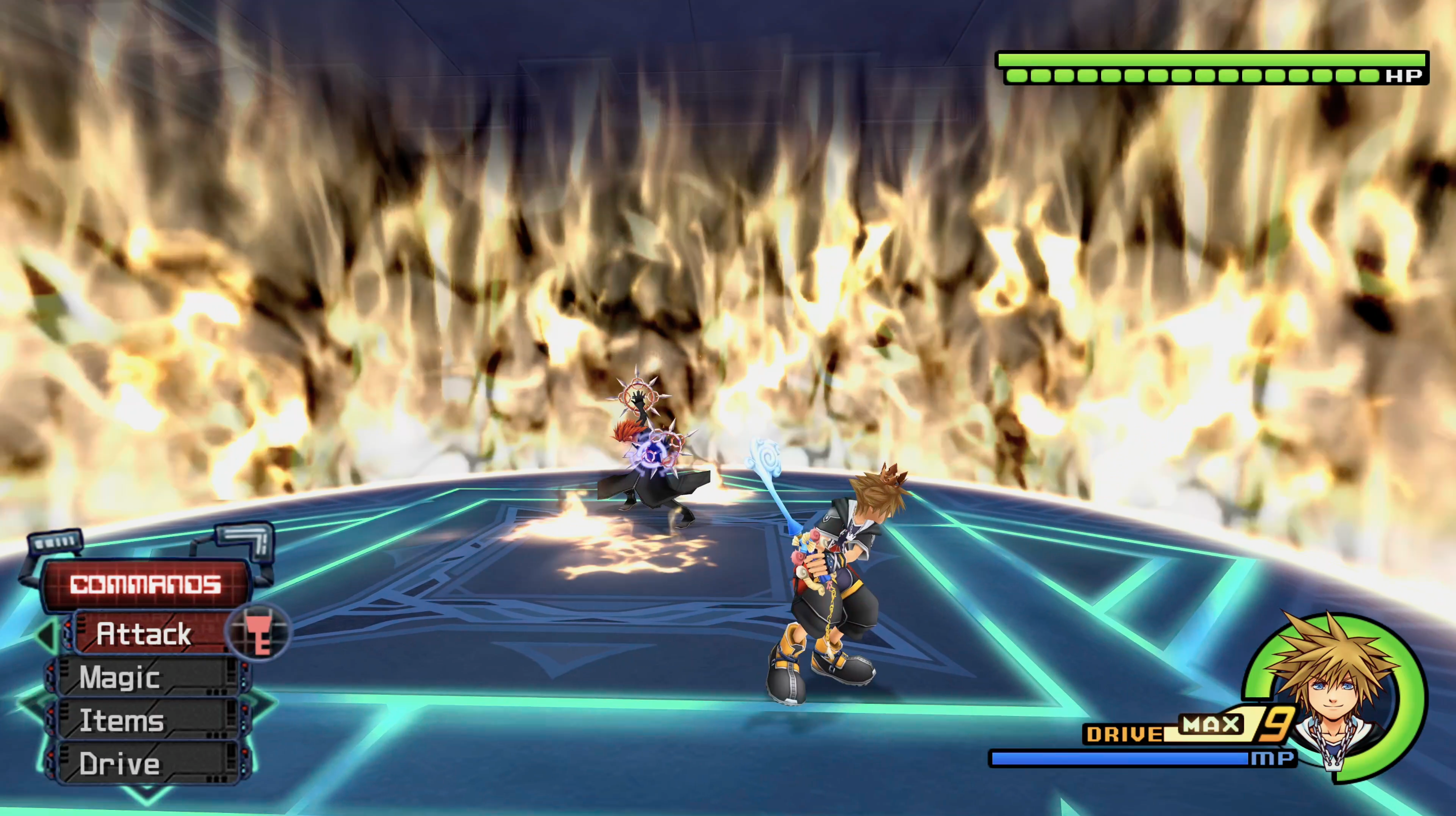
Out of everything in Kingdom Hearts II, its combat is arguably the best example of the series establishing its identity. By shedding its simple foundation, offering a suite of options, and going all in on flashy action, it provides a combat experience that’s not just leaps and bounds better than the first game’s, but one of the best in the series. For one, it’s tighter and more fluid, which causes combat to be more responsive and faster-paced than in the first Kingdom Hearts. Sliding Dash was once a slow and inconsistent attack, but now it’s a quick and reliable move that closes the distance to enemies and starts up combos with ease. Ground combos can seamlessly transition into air combos, which have also seen significant improvements. This is all coupled with the extensive list of abilities that offer more attacks and options to make your combos longer and stronger.
Then you have your other supplemental aspects of combat that have been vastly improved over their KH1 counterparts. Sora’s magic is more useful here than before, with returning spells like Fire gaining better utility, and the new spells Reflect and Magnet being some of the best in the game. There’s also the way that magic can be naturally integrated into combos, which makes it something I find myself using more often than I did in KH1, especially on Critical difficulty.
Summons are still things I don’t use too much, but similar to magic, I get far more use out of them here than in the first game. Genie’s a favorite because of how bombastic and aggressive he is, but the way Stitch constantly refills my magic is just one reason why he’s such a great help in fights. Limits have also been expanded on, with every party member now having one and some having special use cases. Most Limits like Mulan’s are great for all-out aggression, whereas more unique ones like Tron’s are immensely helpful for stun-locking enemies and dealing damage to them for a fair amount of time.
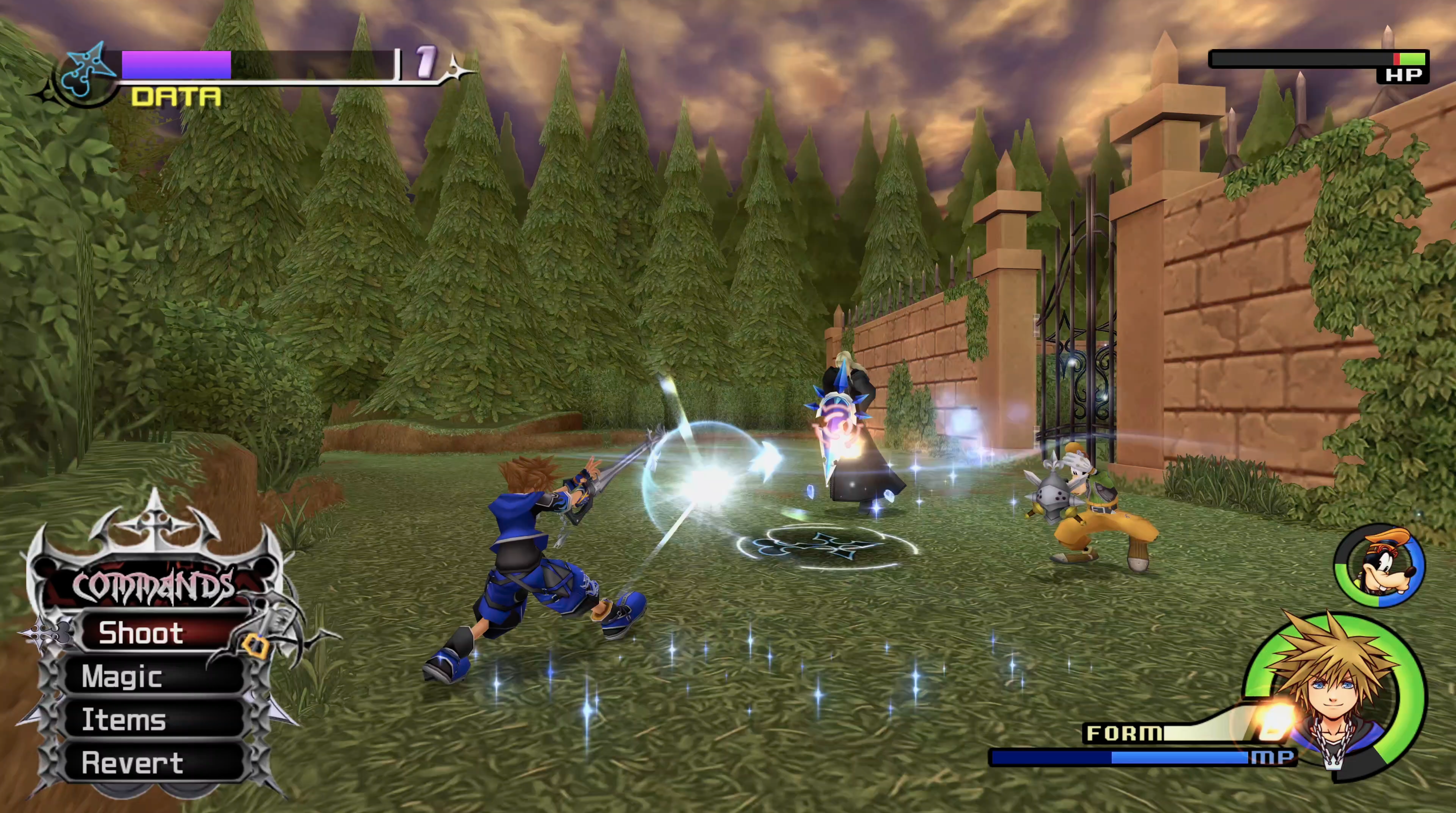
Drive Forms and Reaction Commands have always been the main highlight of combat in Kingdom Hearts II, and I still feel that way about them now. As some of the most powerful tools at your disposal, they make fights more exciting and interesting to engage in. Whether that’s wailing on an enemy with rapid blows in Valor Form to quickly bring down their health or teleporting around the area to knockback sniper shots and take out enemies in one hit, they give me the same rush of excitement that they did when I first played in 2006. I’m not on the level of speedrunners when it comes to the combat system in Kingdom Hearts II, but the depth on offer here has always impressed me, and it continues to do so with every new playthrough. The amount of potential when it comes to how you approach fights stands in stark contrast to how straightforward and barebones KH1 is in comparison, and understandably is seen as the gold standard that all other entries in the series are compared to.
Playing Kingdom Hearts II now, I see a combat system that exhibits confidence, not just in how it plays, but also in how it looks. Just like how the story and tone have grown up, here the combat system has grown into one that focuses in part on looking cool and subsequently making you feel cool. Reaction Commands are a shining example of this since they’re all about being flashy, cinematic moves that bring some elevated spectacle to fights. I think about how performing a quick reversal on Dusks or going full anime and cutting a skyscraper into pieces always makes me feel as powerful and badass as Sora looks doing them. The energetic and explosive sequences that happen during Limits are just as effective in conveying the power fantasy as they get the blood pumping and ratchet up the excitement.
Aside from these things, there’s a sort of refined elegance to Sora’s fighting technique that the spectacle of combat shines a spotlight on. Touches like the spin Sora does when performing Fire as the finishing move in a combo or the mesmerizing ballet of aggression that are his attacks in Final Form show how much better he’s gotten at combat since the first game and is coming into his own. Importantly, they add so much to making the combat feel as cool as it looks.
All of these elements of combat are at their best during the game’s many boss fights. Not only do they make each encounter more thrilling, but they also make each one feel unique. This is especially true when it comes to fights against Organization XIII since they have more interesting mechanics and movesets to deal with than the standard Disney and Heartless bosses. The same goes for the super boss fights against Sephiroth and Lingering Will, albeit with an added level of difficulty. As tough as some of these fights can be, the challenge they offer combined with the spectacle they bring makes them far and away some of my favorite boss fights in any game I’ve played.
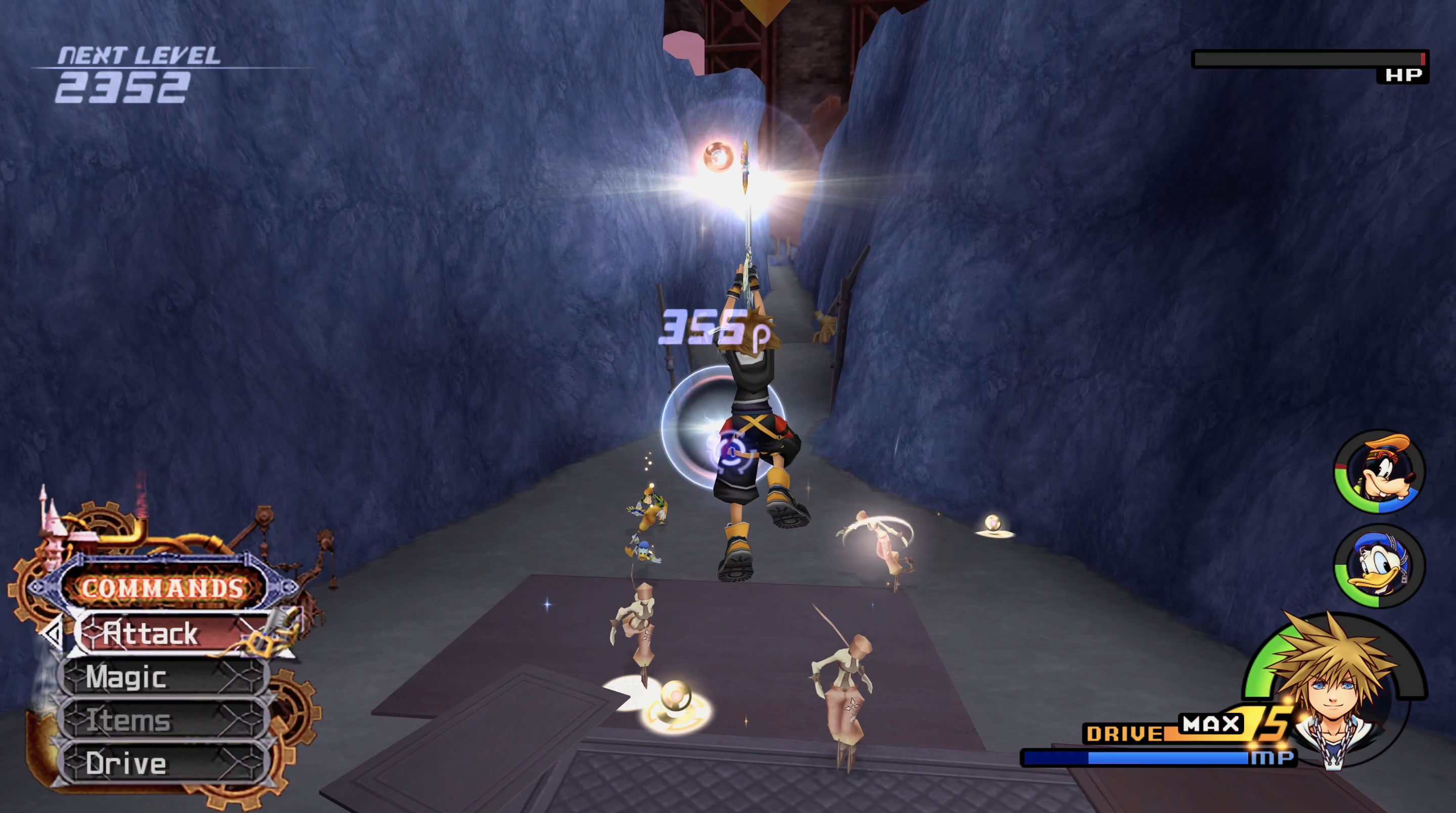
Now although I love the combat in Kingdom Hearts II, it’s not without its flaws. Not being able to guard or perform dodges while airborne stands out in particular, especially after experiencing how much of a difference they make in Kingdom Hearts III. And as great as Drive Forms are, this playthrough made me realize that there isn’t much incentive to use them in combat unless you’re in a boss fight, grinding to level them up, or need a quick get-out-of-jail-free card to stay alive. Using them too much will trigger Anti-Form which does keep them balanced by punishing overuse, but it also kept me from ever using them unless I absolutely needed to. And with transformations that are as cool as Drive Forms, I feel like the lack of incentive to use them in fights does them a disservice.
There’s also the fact that while the combat here is some of the best in the series, in actuality, it doesn’t feel that way for a large portion of the game. It starts in a better place than the first Kingdom Hearts and feels pretty good thanks to the increased fluidity, but the slow movement causes the combat to feel a bit stiff until you have a healthy amount of combat and traversal abilities halfway through the game. Of course, things will naturally feel better as you get stronger in any game, but again, with the hindsight of how amazing combat felt from the start of Kingdom Hearts III, I can’t help but feel like Kingdom Hearts II suffers with its slow and steady approach.
Even with these flaws in mind, the combat is still some of the best the series has to offer. It rectified the issues of the first game by making it more fluid, increasing the pace of battles, and providing a breadth of options that add some much-appreciated depth. The charm of the first game’s simplicity might have been lost, but the level of excitement and fun that replaced it was a worthy trade-off that would go on to inform future entries in the series as they strived to reach the standard that was set here.

The worlds in Kingdom Hearts II are some of my favorites in the whole series. Disney Worlds such as The Land of Dragons and Space Paranoids are always a joy to visit, and original worlds like Hollow Bastion and Twilight Town are certified classics. And I know this is a hot take, but Atlantica and Pride Lands are my two favorite Disney worlds in the game. I’ve had so much fun with the musical mini-game in Atlantica over the years that I sometimes find myself singing the songs in my head when I’m not playing. As for the Pride Lands, dashing around and fighting as lion cub Sora is an experience that never gets old.
Before getting into the worlds themselves, I want to briefly touch on the reworked Gummi Ship sections. Just like with practically everything else in Kingdom Hearts II, they’re a major improvement over their KH1 counterparts. Right up front, the world map is much more visually appealing and gives the worlds a sense of place that the world map didn’t provide in the first game. Once we’re actually in a Gummi Ship level, rather than being slow, boring journeys through space, they’re fast-paced, over-the-top expeditions that are consistently a blast to play through. I can understand if someone doesn’t like them because of how hectic they are, or because of the simple fact that they don’t like engaging with the Gummi Ship at all, but I love what the team did here.
Now although I love the worlds in Kingdom Hearts II, I don’t love the design philosophy behind them. The worlds in the first game had layouts that emphasized exploration, platforming, and interactivity which made for a janky and confusing experience at times but caused them to feel like places you were actually visiting and exploring. Kingdom Hearts II trades the interesting ideas of its predecessor for more simplistic ones, resulting in worlds that are upgrades from a gameplay perspective, but downgrades from a design perspective.
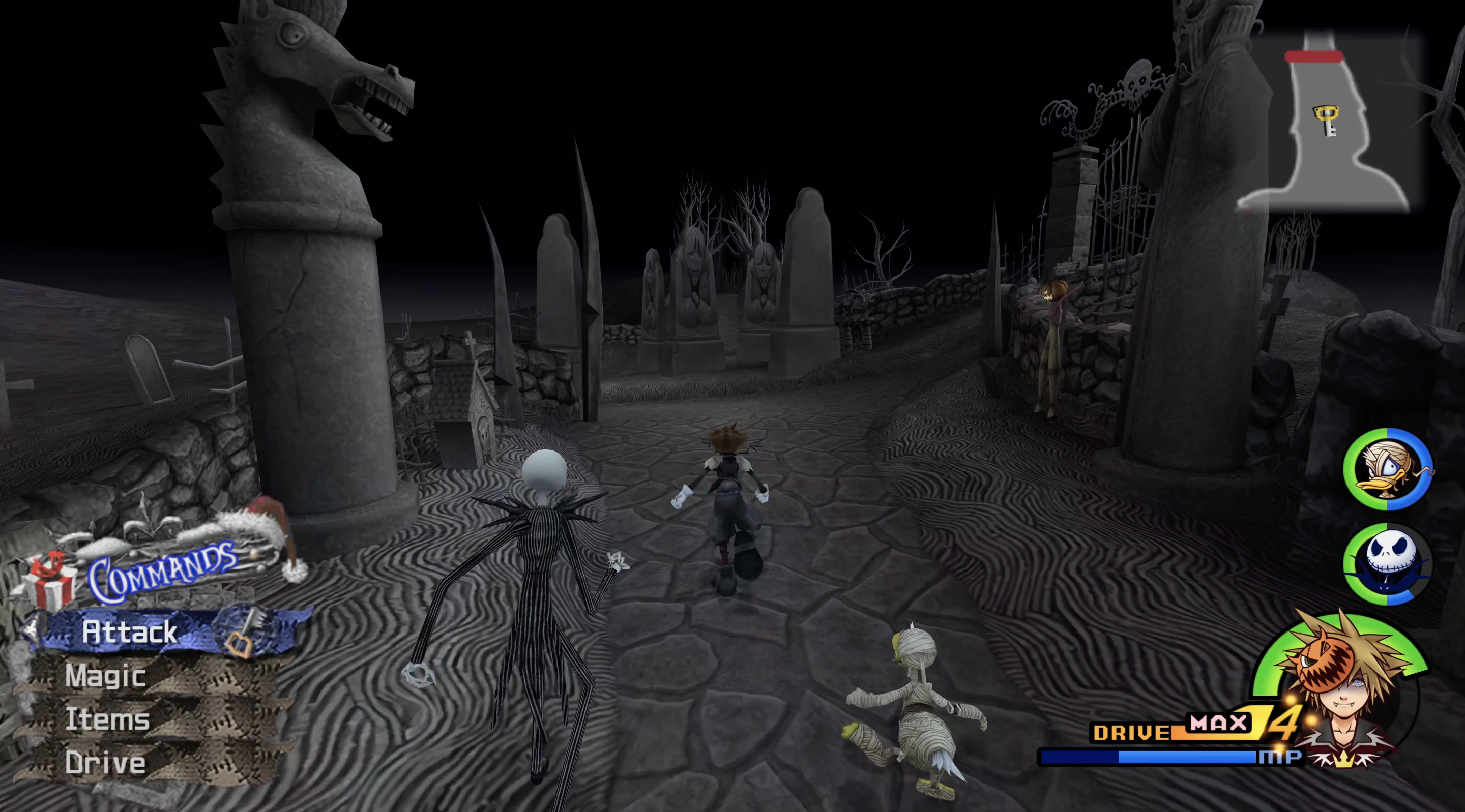
For one, the worlds no longer feature any wide-reaching connectivity. In the first game, running through each room eventually allows you to loop back around to an earlier part, making the worlds feel somewhat expansive. In Kingdom Hearts II, the worlds have a far more linear design, where instead of being able to largely reach any part of a world by going in any direction, your only real options now are to go forward or backward. This means that each world is more or less just a series of flat rooms with maybe a few twists and turns along the main path. Halloween Town is perhaps the biggest victim of the new approach to level design, as you essentially walk in a straight line to get through its rooms.
This might not have been that much of an issue if platforming was still a key part of the world design in Kingdom Hearts II, but it too has been practically removed. The vast majority of the worlds don’t feature it and the ones where it is present mostly do the bare minimum with it. It’s a bit frustrating because we have these cool traversal abilities that are given to us from our Drive Forms, but almost no real reason to use them outside combat. To be fair, the Final Mix version of KHII introduced collectible stickers with some needing these abilities to reach them, but they’re the exception, not the rule.
There’s also the near-complete removal of any interaction with the worlds themselves. Worlds in the first Kingdom Hearts had minor and major interactive elements that made them feel more alive, but they’ve all but been eliminated here. Where that game had Trinities and level-altering objects, Kingdom Hearts II just has items to examine for a barebones description. The most notable form of world interaction is the skateboard that appears in a few different worlds. It’s a lot of fun to ride around and perform tricks on, especially in Twilight Town’s Tram Plaza, and it goes a long way towards increasing the enjoyability of the few worlds it’s featured in, but it’s a minor addition when looking at the game as a whole.
To me, it feels like these changes were done for a few different reasons. You have the aspect of making it easier to get around, which I greatly appreciate, and you also have the greater prioritization of combat which comes with a need to make spaces that accommodate this. But perhaps more crucially, there’s the fact that Kingdom Hearts II isn’t a whimsical adventure like the first game. It’s grown past that and adopted a more serious tone. As such, it’s almost as if the world design is dictating that we focus on the task at hand and go from point A to point B without anything potentially distracting from that. It does this figuratively and literally as there are times during the story when you’re blocked from going anywhere but in the intended direction.
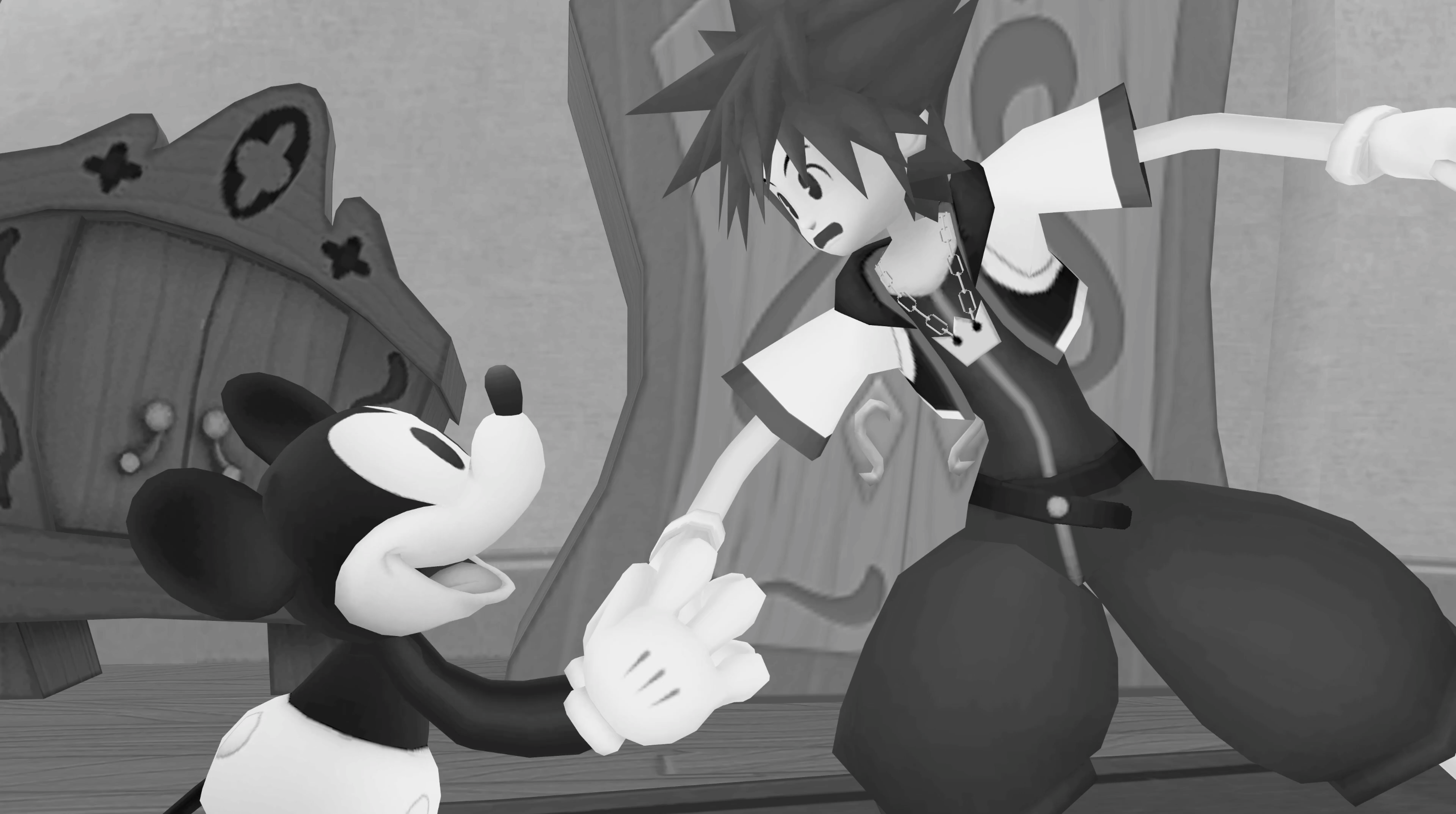
What ends up doing the heavy lifting for the worlds in Kingdom Hearts II and makes them so special to me is the vibe that each one projects through a combination of music and visuals. They come together to fill the void that the level design created, providing a sort of liveliness that makes them memorable. This can range from the cold isolation of places like the Underworld and Beast’s Castle to the cozy hospitality of Christmas Town and Twilight Town. Even the worlds with a somewhat lacking visual aesthetic such as the Pride Lands or the Land of Dragons are elevated thanks to their great music. The two standout worlds to me in this regard are undoubtedly Timeless River and Space Paranoids. The audio and visual design of Timeless River wonderfully recreates the aesthetic of the classic 1928 short film Steamboat Willie, while the electronic-infused score and neon lights of Space Paranoids make it a technological paradise that I can never get enough of.
There’s only one area in Kingdom Hearts II that I feel successfully incorporates exploration, platforming, interactivity, music, and visuals into its design, that being the Cavern of Remembrance in Hollow Bastion. As another Final Mix addition, the music here is entrancing and works hand-in-hand with the crystalline walls to create this mysterious aura that pulls you in, begging you to delve deeper. To do that, you’ll need to activate mechanisms and use your upgraded Drive Form abilities to navigate different obstacles carefully. I always thought the Cavern of Remembrance was unique, but I never realized until now how much it evokes the sense of true exploration that the worlds in KH1 did. It combines the best parts of the world design from that game and this one into one small area, simultaneously making me appreciate it more than I ever did before and lament what was lost with the shift in design philosophy.
The worlds in the first Kingdom Hearts might have been a bit janky to get around, but the attempt at making them feel real gave them a special charm. Kingdom Hearts II fixes the navigation issues by streamlining the world design, and as I said in the first part of this series, I do like how it’s easier to understand. But by evolving into a more linear, combat-focused experience, the worlds lost a big part of what made traveling to them so exciting, causing them to feel a bit shallow and bland in comparison. When I was younger I didn’t pay much attention to this, but playing as an adult with clearer eyes, I can’t help but be somewhat disappointed that a better balance couldn’t be had, especially since some elements of the design philosophy here can be seen in future games.
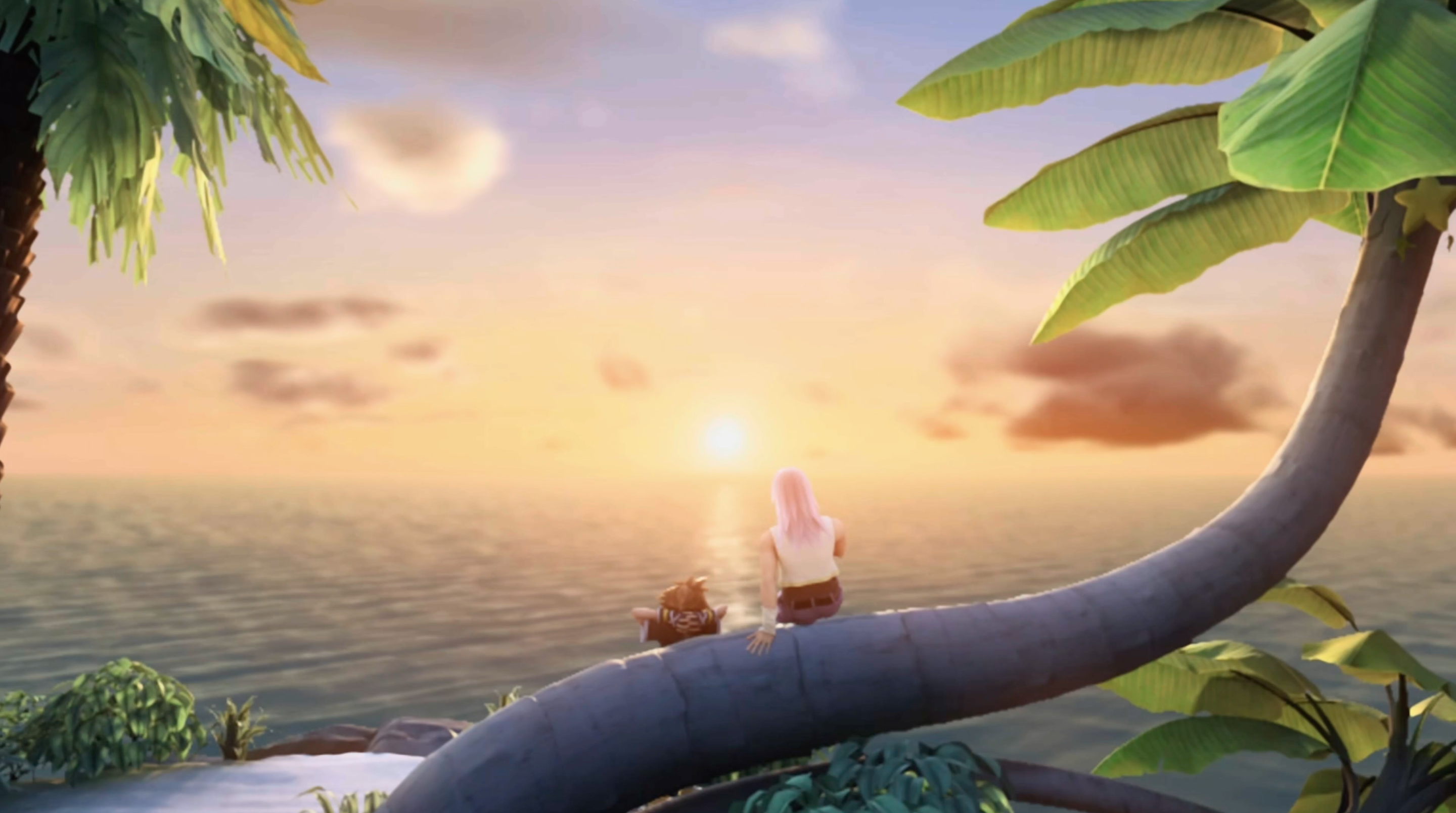
If the first Kingdom Hearts was a child stepping into the world and seeing what it could become, then Kingdom Hearts II is a teenager finding its path forward and confidently laying the groundwork to get there. For over a decade, it was the game that defined the series, and it’s been fascinating to see what makes it the inception point for everything that the series would become in its wake. Between its more complex and thematically rich story, a reworked combat system that emphasizes fast-paced action and spectacle, and a notable shift in world design, many of the ideas here would persist and be built on in subsequent releases. The results of these decisions can be debated, but one thing that we can all agree on is that they make Kingdom Hearts II an absolutely amazing game.
 TheComfySpot