Kingdom Hearts is a special series to me. Not only has it played a key role in molding me into the person I am today, but it’s also been a constant source of comfort for me throughout my life. With that in mind, I decided to go back to six key games from the franchise, some of which I haven’t played in a long time, in a series I call Revisiting Kingdom Hearts to see what I think of them in the year 2024. Have my feelings changed about each game over the years? Am I able to take away anything new from them that I didn’t before? How does any one game compare to the rest of the series? These are the kinds of questions I’ll be asking myself as I work my way through the franchise. In part five of this series, I’ll be talking about Dream Drop Distance, and my newfound love for this underrated game.
Out of all the games in this retrospective series, Dream Drop Distance is the one that I’ve been the most curious about. I enjoyed it in the past, but outside of certain major elements, I remembered practically nothing about it since I had only played it twice before: once on the 3DS in 2012, and again with the remaster in 2017. So with this third playthrough, I was pleasantly surprised to find that Dream Drop Distance is more fun than I’ve ever given it credit for. It’s not perfect, but I’ve been sleeping on it for far too long.
The story is typically one of the best parts of any Kingdom Hearts game, but sadly, that’s not the case when it comes to Dream Drop Distance. Some aspects of the story are great, such as its refreshingly whimsical tone in comparison to Birth By Sleep. The return of certain Organization members by way of recompletion is admittedly a bit of a problematic addition to the lore, but I still think it’s awesome seeing Lea join the good guys and get his own Keyblade.
I also enjoy the story’s split narrative and the creative potential it presents, since at times, Sora and Riku have to accomplish tasks in their respective versions of each world to help one another. Scenarios like chasing a boss in Riku’s Traverse Town and sending it to Sora’s version of the world so he can stop it are a fun way to keep the characters connected even though they’re apart. This sort of interaction doesn’t happen in every world though which is unfortunate because it makes the ones where it does happen much more interesting.
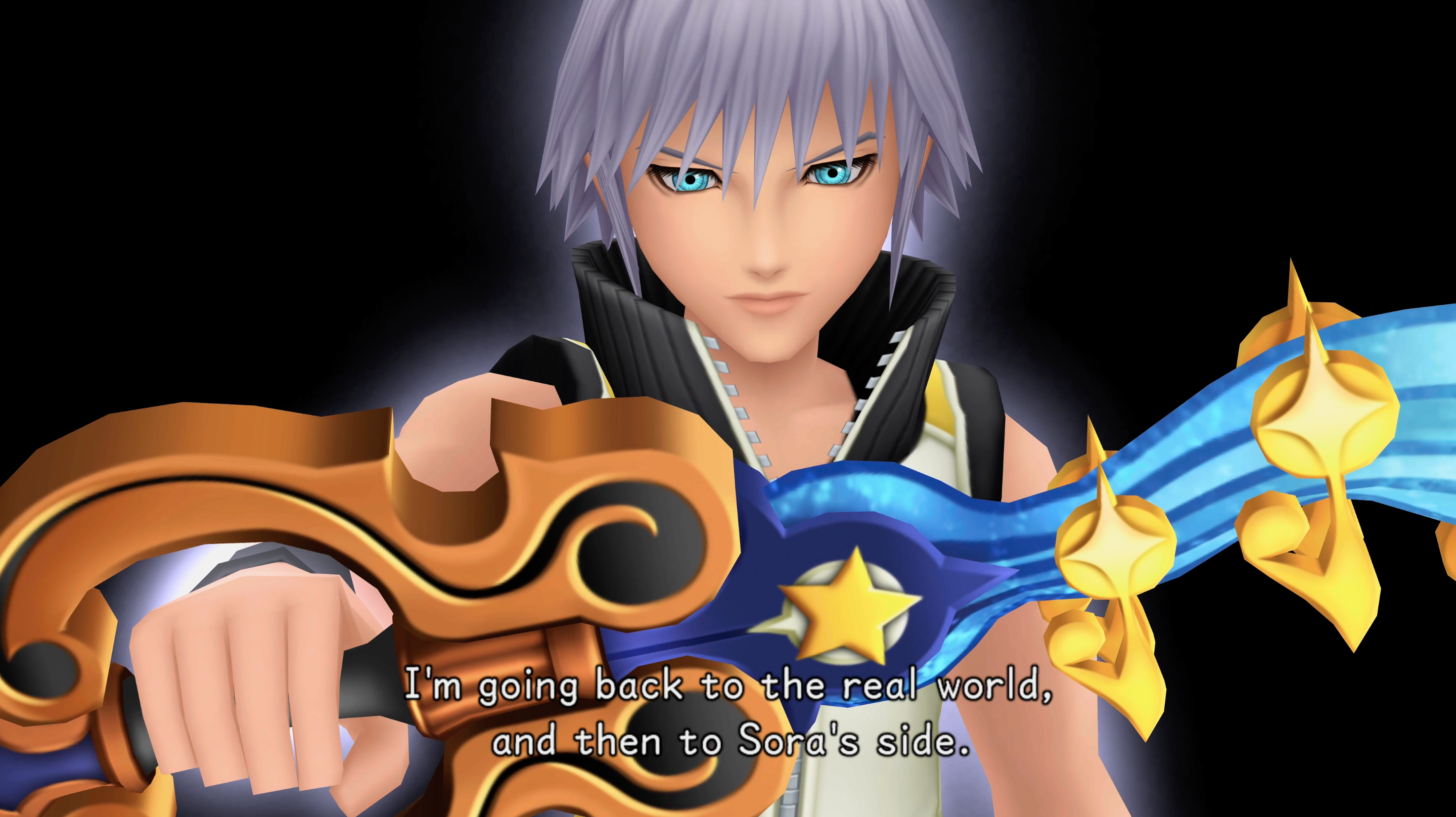
Similar to Birth By Sleep, the greatest benefit of the split narrative is the character focus it provides, specifically when it comes to Riku, as this is undeniably his game. Sure, Sora’s the main character of the series, and there is some good stuff for his character at the end of the game, but he’s kind of just along for the ride and is only taking the Mark of Mastery test because Riku is. Before the release of Dream Drop Distance, I mainly liked Riku because he looked cool and was a top-tier party member in Kingdom Hearts II. It wasn’t until this game that I began to love him for the character he is. Aside from his calm, confident demeanor being a nice contrast to Sora’s jovial personality, what stood out to me about Riku in past playthroughs, and even more now, was the growth that he showed here.
While he may have been redeemed in everyone else’s eyes, Riku’s looking to prove to himself that he’s worthy of wielding a Keyblade and that he’s overcome the darkness inside him. It’s a wonderful journey that Riku goes on as he comes to acknowledge the good that can come from our past mistakes. We can try to bury these failures in the deepest parts of our hearts and minds, but they’ll always be there as a constant reminder of where we went wrong. What’s important is understanding that our past mistakes don’t define us forever, nor are they something that we can’t ever come back from. So while there is power in suppressing those mistakes to move past them and prevent them from consuming us, there’s also power in accepting our mistakes and channeling them in a positive direction. Riku had to learn this lesson and affirm the strength of his heart to save Sora and complete his redemption journey. As such, it’s only right that he’s bestowed the title of Keyblade Master.
The positives of Dream Drop Distance’s story make it a fun one to experience, but the flaws make it messier than it needs to be. For starters, there’s how awkward and disjointed it feels. Because of the split narrative, Sora and Riku are going on their own journeys through alternate versions of each world. Sometimes this is done well, such as in worlds like Prankster’s Paradise or Country of the Musketeers where you get stories that are either complete or try to do interesting things with the narrative. Other times, like in The Grid or La Cité Des Cloches, it’s not.
Where The Grid fails for me narratively is the fact that Sora’s journey through it doesn’t feel complete. Rather, it feels like half a story that just ends without any real conclusion. It’s the complete opposite of Riku’s time there which tells a full story with a proper ending. As for La Cité Des Cloches, while we get complete stories for both Sora and Riku, the story is nearly the same for each of them, just told slightly differently. The execution here is disappointing since it’s coming right after Traverse Town which does more interesting things with its story for both characters.
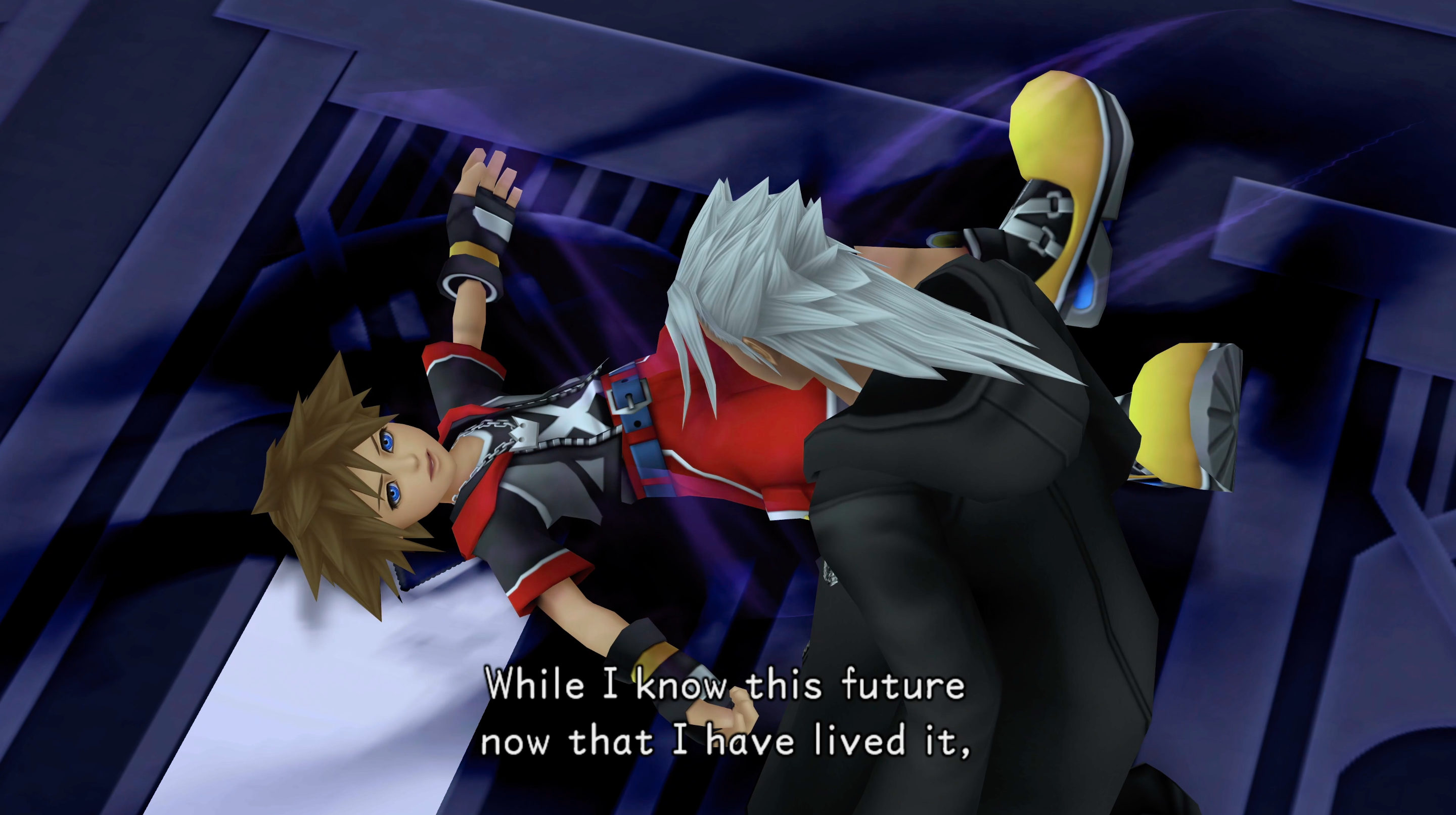
Another source of the story’s awkwardness comes from the “flashback” cutscenes Dream Drop Distance introduces. These cutscenes let you choose whether to watch them immediately or skip them and watch them later on, with some providing welcome backstory for the Disney worlds you visit. Others cover key information like the literal reason why Sora and Riku are even taking the Mark of Mastery exam or what Dream Eaters are. What baffles me about these “flashbacks” isn’t necessarily their contents, but rather their presentation, as I’m not sure who it’s supposed to be for.
The way they’re presented implies that they’re something minor, but anyone who’s playing for the first time (or replaying after a long time like myself) is going to watch them all immediately, so making it an option is pointless. If someone wants to skip them, they’re likely skipping all the other cutscenes in the game too because they’ve seen them enough. It feels like an attempt at maintaining a strong sense of forward momentum in the story by making cutscenes that would’ve been mandatory in previous games optional ones here, but I don’t see how skipping them makes the story better for new or relapsed players.
Since day one, the biggest criticism levied against the story in Dream Drop Distance has been how confusing it is, and that critique still holds up today. Time travel and sleeping worlds are interesting concepts, and they’re easy to go along with when taken at face value. But when I try to think about the rules and logic behind them, they turn into a convoluted mess that makes it a struggle to fully process what’s going on. Unlike Birth By Sleep, which complicated and enriched the series with its new additions to the lore, Dream Drop Distance overcomplicates the series and actively harms the story it’s telling. In the years since it first came out, I’ve come to understand the rules and logic behind the sleeping worlds and time travel a little better than I did before, but it’s still just a surface-level understanding that allows me to keep up with what’s happening.
When everything is on point, Dream Drop Distance’s story is a fun and compelling adventure with some good ideas and excellent character work. But as much as I would like to, I simply can’t overlook its many flaws because of how significant they are. I can turn my brain off some and just roll with the punches, but the narrative’s pain points unfortunately make this one of the weakest stories in the series.
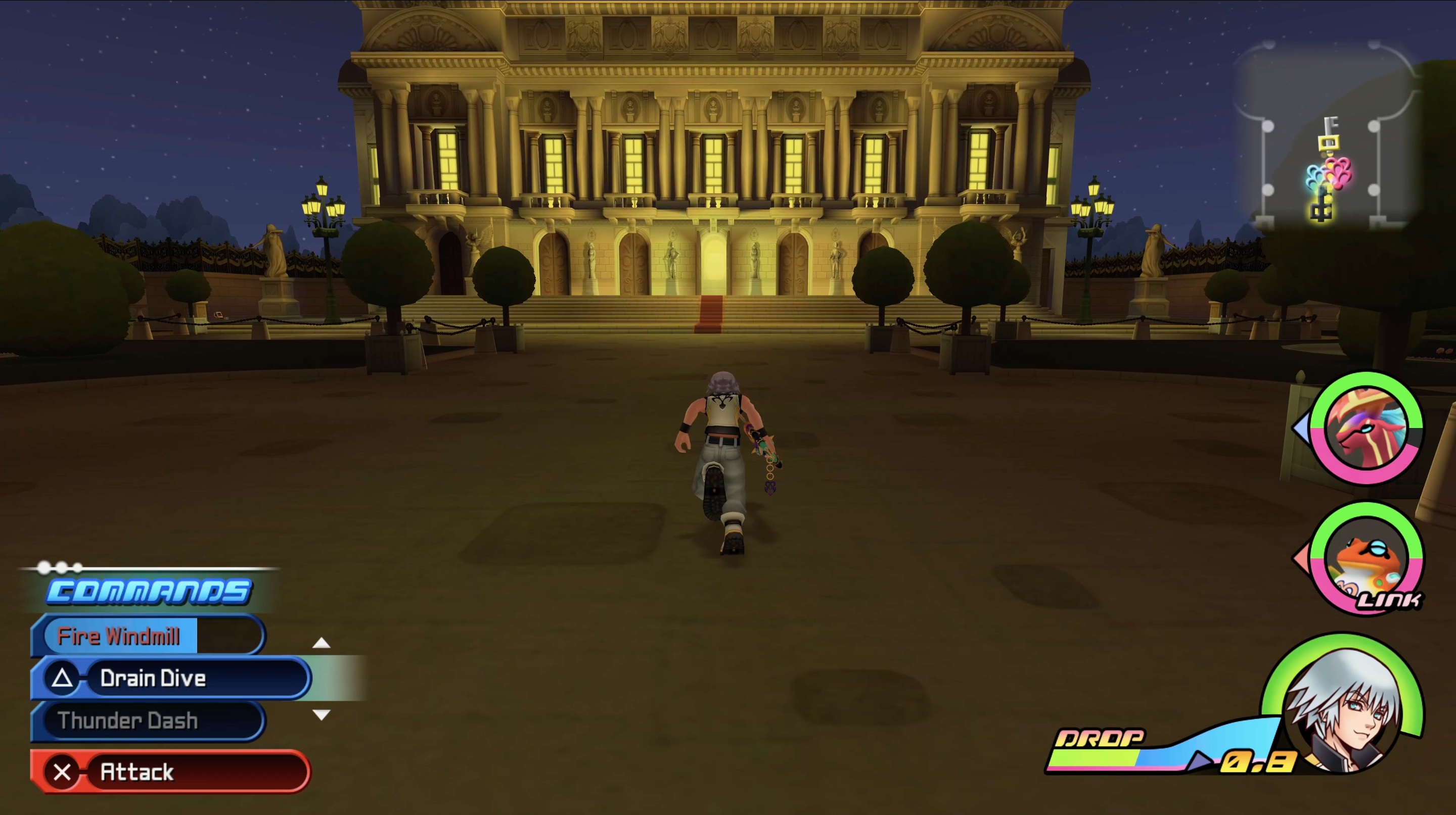
One of the areas where Dream Drop Distance surprised me was in its world design. When people talk about the games in the series with the best world design, Dream Drop Distance isn’t one that I tend to see brought up in conversation, and I feel like that’s selling the game short. I’ll even go as far as saying that the world design is underrated from top to bottom, and arguably some of the best in the entire series.
Before getting into the worlds proper, I want to briefly mention the dive mini-game you do before entering them, as it’s a fun activity that I enjoy just as much as the Gummi Ship in Kingdom Hearts II. Aside from being short and to the point, the dive mini-game oozes charm and personality. There’s the infectious song that keeps the excitement high, the creativity behind the bosses and obstacles you encounter that make each dive unique, and the mesmerizing visuals that tie it all together. I also remember them being an impressive showcase for the 3D effect on the 3DS, which while not present on console, only added to the experience back in the day. It’s a weird comparison, but the dives give me the feeling of being at a carnival and I absolutely love it.
As for the worlds themselves, they’re major improvements over the ones in Kingdom Hearts II and Birth By Sleep. Where the worlds in those games were primarily designed to be tight, straightforward experiences, the design philosophy here has shifted to focus on having large, open spaces to maneuver around with an emphasis on verticality. When paired with the technical limitations of the 3DS, this change does make the worlds seem emptier than worlds in prior games, but it’s been done to accommodate the game’s biggest feature, that being Flowmotion.
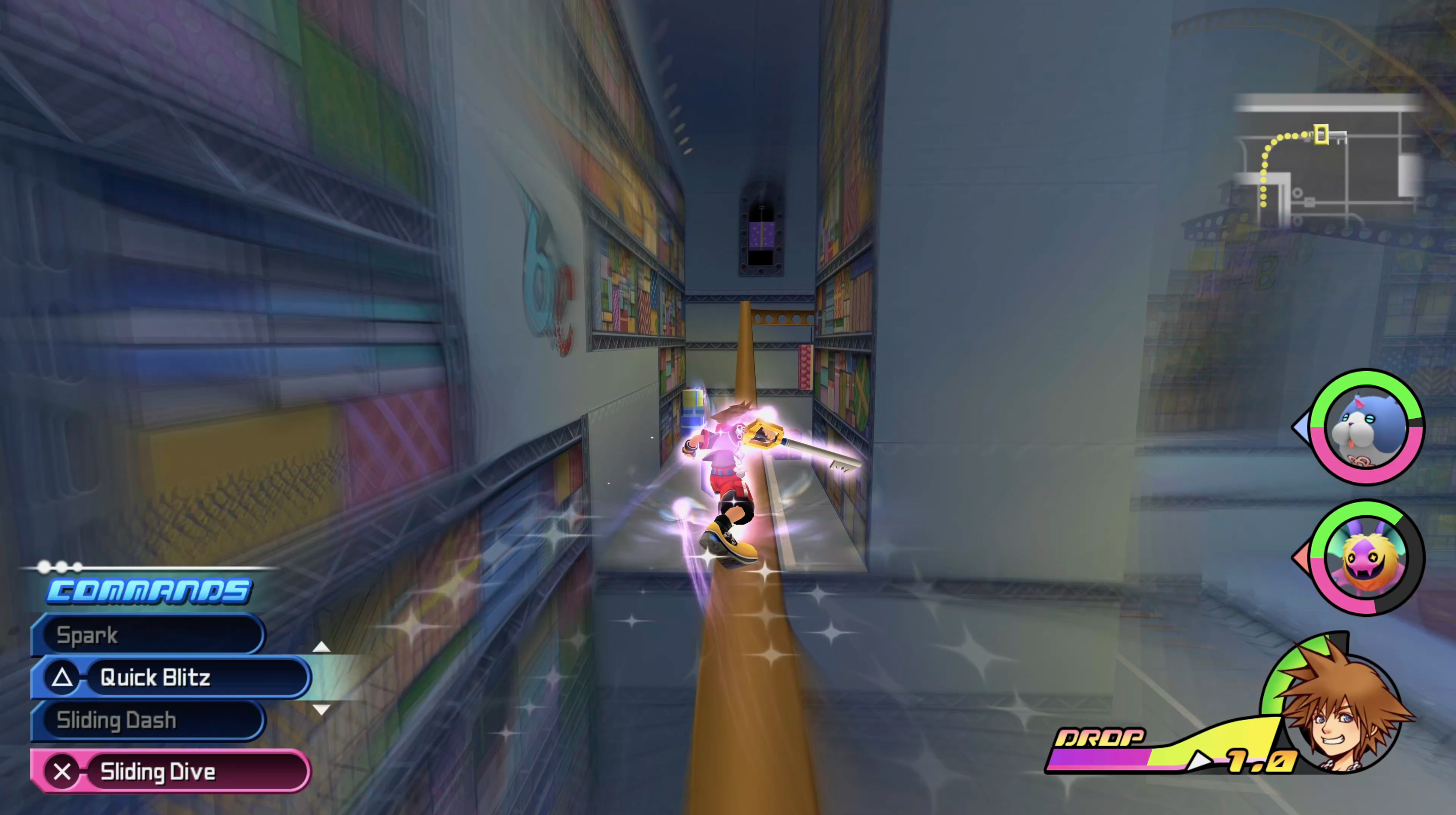
I don’t think I’m exaggerating when I say that as of Dream Drop Distance, Flowmotion is the most transformative change the series has made since Kingdom Hearts II overhauled the combat. It completely upends traversal by making it significantly faster and introducing new ways to get around. Whether you’re bouncing off walls and dashing through the air, skating along rails, or launching off poles, it’s an unprecedented yet welcome level of freedom for the series! The level design had grown increasingly bland after the first game, but Flowmotion helped it evolve by reviving the key pillars of platforming, interactivity, and exploration that were instrumental in making the worlds in the first game as special as they were.
Bouncing around Traverse Town’s original three districts makes a familiar area fun, and it’s a blast skating around new areas such as the mail room that are full of life and secrets to find. Being able to seamlessly scale the buildings and towers in The World That Never Was is a highlight for me as the extreme verticality sells the scope of the world. This is all without mentioning the new Reality Shift mechanic that works in tandem with Flowmotion to uncover new paths and reach different items across each world.
Although the changes to traversal do a lot to improve the world design in Dream Drop Distance, the look and sound of each world also play a big part in giving them life. The town in La Cité De Cloche can feel just as barren as the worlds in Birth By Sleep, but the grand, dark, and powerful music livens it up and the constant use of Flowmotion makes it a bit easier to overlook its emptiness. The theme park in Prankster’s Paradise is a visual delight and it has an equally fun and upbeat score to go with it. Country of the Musketeers is another world that’s not the strongest visually, but its whimsical music makes it fun to explore.
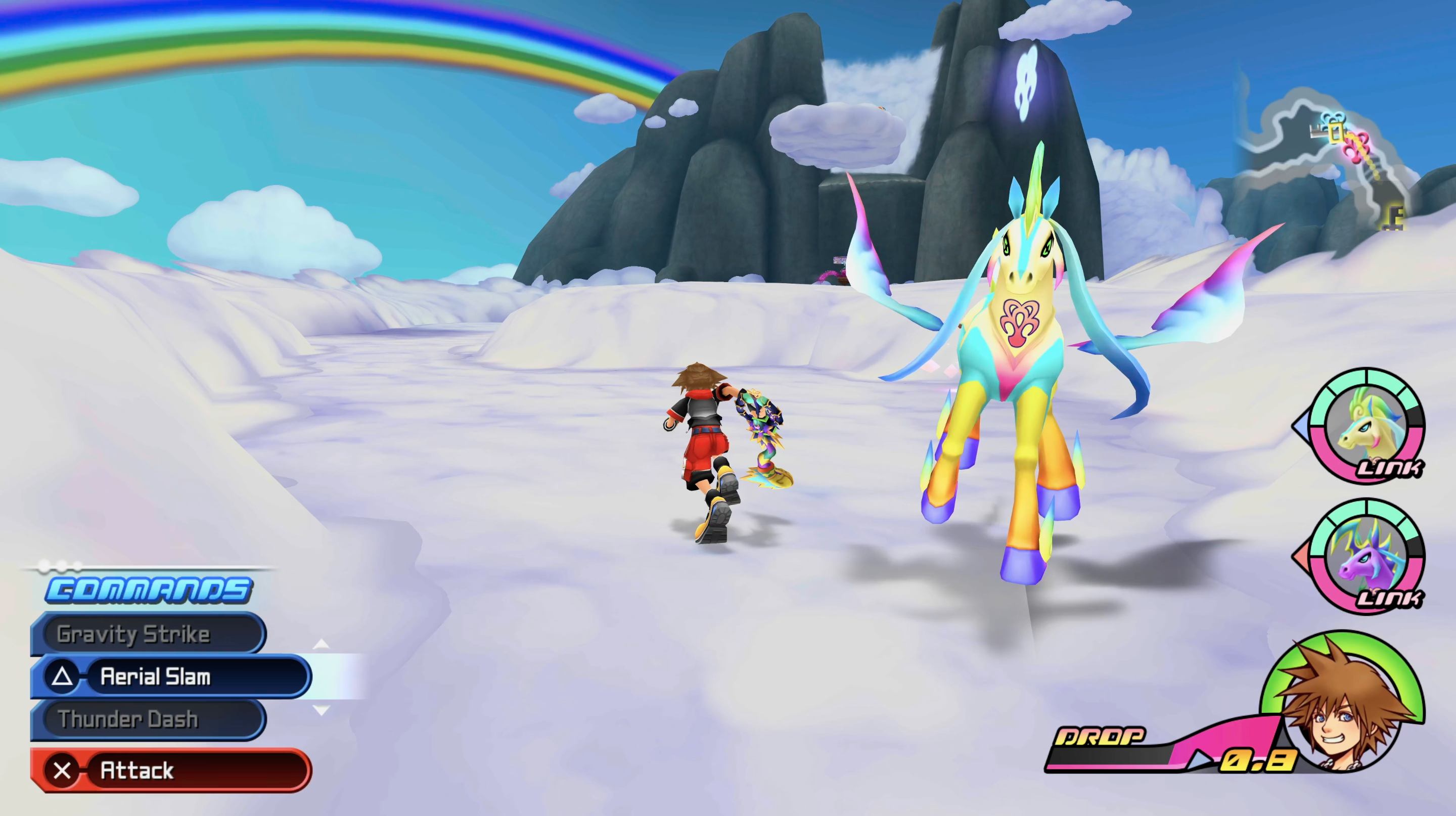
Out of all the worlds in the game, Symphony of Sorcery is far and away my favorite and is high on my list of favorite worlds across the entire series. Based on the movie Fantasia, this world is bursting at the seams with creativity. It’s a visual feast with a wide color palette and imaginative level design, but a key part of what causes it to rank so high for me is the sound design. If you don’t know, Fantasia was a movie that didn’t feature any dialogue or sound effects; the only sound was the music that played throughout it. That same philosophy is applied here, with the music being lifted directly from the movie. Even during combat, battle cries are removed and different instruments replace the sound of your Keyblade’s attacks. Similar to Timeless River in Kingdom Hearts II, this desire to stay true to the source material results in a world experience that’s unlike anything else in the series.
On the other end of the spectrum, we have The Grid, which is, unfortunately, a disappointment. Tron Legacy is one of my favorite movies and its visual aesthetic leaves me in awe whenever I watch it. The Grid in Dream Drop Distance retains the moody aesthetic of the film, but it doesn’t invoke the same wondrous feeling. It’s almost certainly a result of the constraints imposed by the 3DS hardware, so I don’t want to be too harsh, but unlike Space Paranoids, which was a feast for the eyes in Kingdom Hearts II, The Grid is mostly a visual bore. Some areas such as the lightcycle track and the solar sailer are fine, but the visual design of the world largely falls flat when compared to Space Paranoids and Tron Legacy, as it lacks the pop that they have. I’ve never had a problem with the actual level design of The Grid, but I’ve always felt that it should’ve been saved for a console entry so its visuals could be done justice, and that sentiment is even stronger now.
While there are some minor flaws with the world design in Dream Drop Distance, they’re overshadowed by the areas where it shines. Thanks to Flowmotion and a much stronger visual and musical identity, the worlds feel like interesting and wondrous playgrounds for the first time in a long time, and not just Disney-themed boxes. It took ten years, but the series finally started to advance its world design, and in turn, laid the groundwork for Kingdom Hearts III to build off of it and evolve it even further.
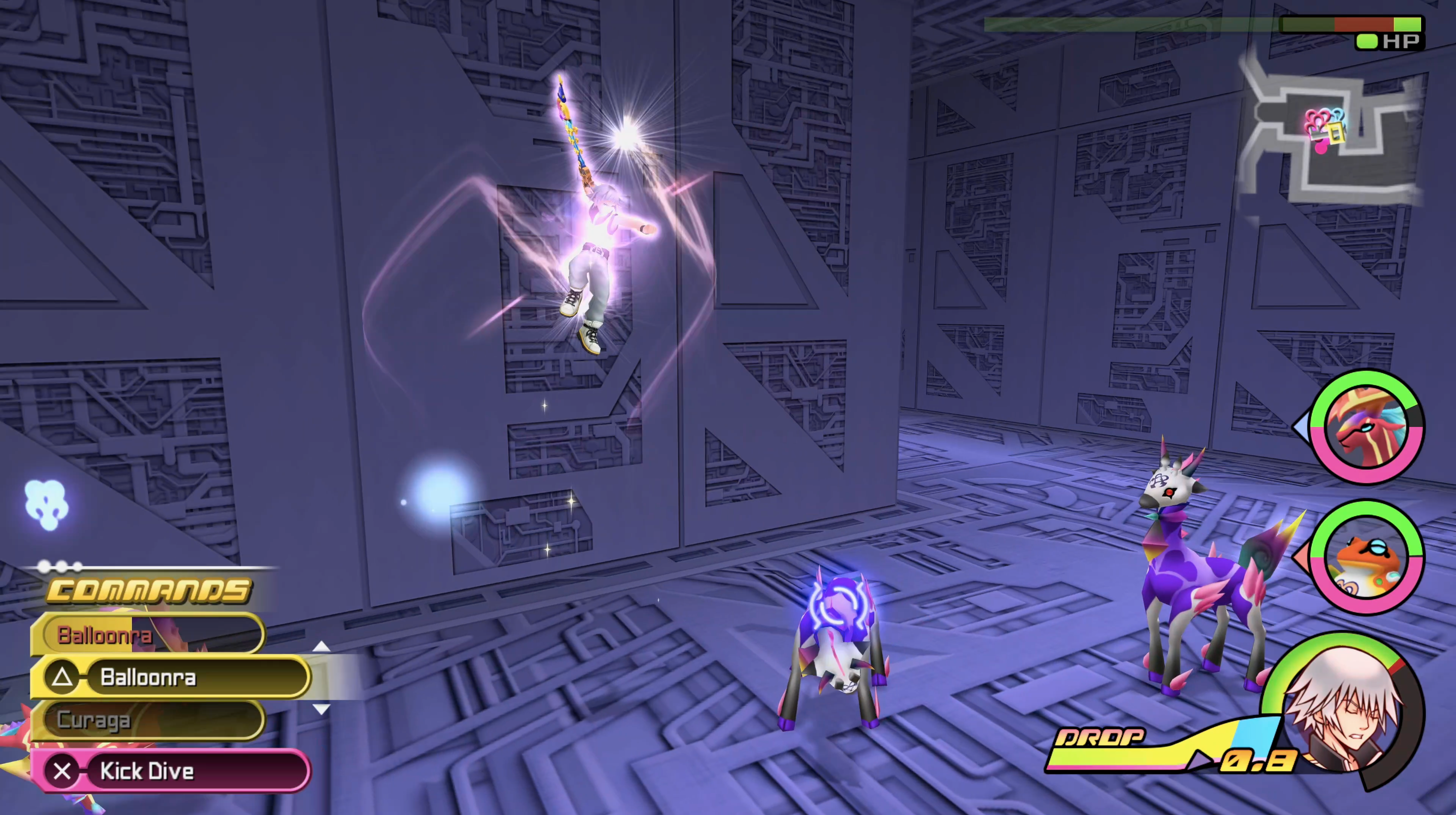
More than anything else about Dream Drop Distance, what surprised me the most was how much fun combat is. I always liked it, but now I feel like I’d rank the combat amongst the top three games in the series. It’s a faster game than any that came before it with attacks being very fluid and the speed of battles being increased quite a bit. This is especially refreshing coming off of the slower Birth By Sleep, and it’s interesting to see how much it foreshadows the quicker pace of Kingdom Hearts III.
Once again, we have Flowmotion to thank for this as it takes the flashy, spectacle-heavy core of the series’ combat to its logical next step and opens the door to a more exciting and dynamic combat system. Bouncing off walls and flying around the space before slamming the ground or drilling into an enemy is something that never gets old. The same can be said for the way you can dash into larger enemies and use Flowmotion to toss them at others. Some may say that Flowmotion is overpowered, but as the defining feature of the battle system, it’s not so powerful that it completely negates the need for anything else. If I’m being honest though, the fluidity and simplicity of Flowmotion makes it so much fun to use and integrate into combat that I don’t even care.
Reality Shifts are also a key part of combat where they function like a more creative and interactive version of Reaction Commands. I enjoyed launching enemies at each other in Traverse Town and I adored using the charming comic panels in Country of the Musketeers to damage enemies or gain some health. The reality shift I liked to use in combat the most comes from The Grid because of how many things it can do, such as allowing you to control an enemy that explodes at your command or turn a turret against its allies. When you integrate Flowmotion and Reality Shifts with your standard attacks and commands, combat really takes on a whole new life.
I will say that the importance of Flowmotion does cause boss battles to suffer, specifically the ones against Dream Eaters. They’re typically large enemies that move around the area fast, which presents two issues. The first issue is that due to their size, the camera can get a little wonky during these fights as it tries to keep track of them. Issue number two is the fact that these bosses are almost always on the move, meaning you’re constantly chasing them down. As cool as Flowmotion is for traversal and combat, it’s incredibly annoying running behind bosses just to get a few hits on them before they’re on the move again.
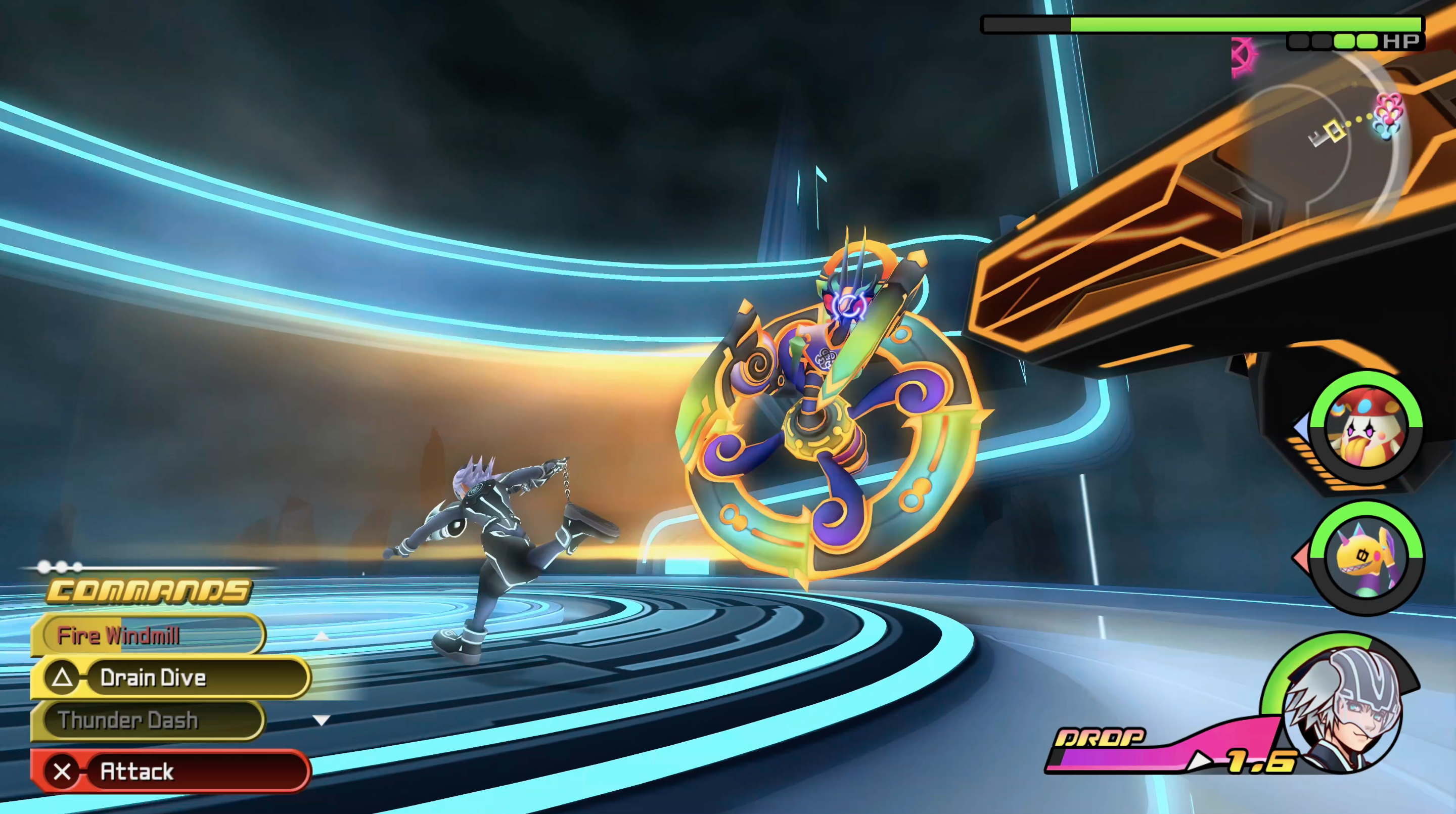
Speaking of Dream Eaters, I know people tend to have pretty negative feelings towards them, but I actually enjoy them. From a design perspective, they’re far more interesting than the discount Heartless we got with the Unversed. Dream Drop Distance clearly tries to capture the spirit of Pokémon’s “gotta catch ‘em all” mantra, and I’ll say it worked on me, someone who hasn’t been a hardcore Pokémon fan since Diamond came out in 2006. I found Dream Eaters to be so charming and adorable that part of the reason why I made as many as I could was just to have them for myself. I also spent quite some time petting them and playing with them in Flick Rush because it was fun to spend time with them outside of combat. Admittedly, Dream Eaters aren’t the best party members in fights, but I do like the different links you can perform with them such as swinging Pricklemane like an oversized Morningstar or using your Keyblade like a surfboard after merging with Sir Kyroo.
It’s through the Dream Eaters that we get some changes to the way abilities and the Command Deck work, and I’m mostly positive on them. The melding system is gone and the massive command list of Birth By Sleep has been considerably shrunk down, with the process behind getting commands and abilities being streamlined quite a bit. Every Dream Eater has its own ability grid to work your way through by leveling them up, with each grid having a range of different abilities and commands. While you won’t know what’s on a Dream Eater’s grid until you make them, they all generally have some useful stuff. Thankfully, the process of creating Dream Eaters is also much more transparent than the vague melding system from Birth By Sleep which I greatly appreciate.
My one gripe with the new system is the fact that the vast majority of abilities will only be active if you have the Dream Eater they come from in your party. It just feels needlessly restrictive since it means you have to structure your party solely around the abilities you get from your Dream Eaters and not around which ones you like the most or who might be more helpful in fights. I’ll gladly accept the simplicity behind unlocking abilities that Dream Drop Distance provides, but I do prefer the permanence that Birth By Sleep had with its abilities.
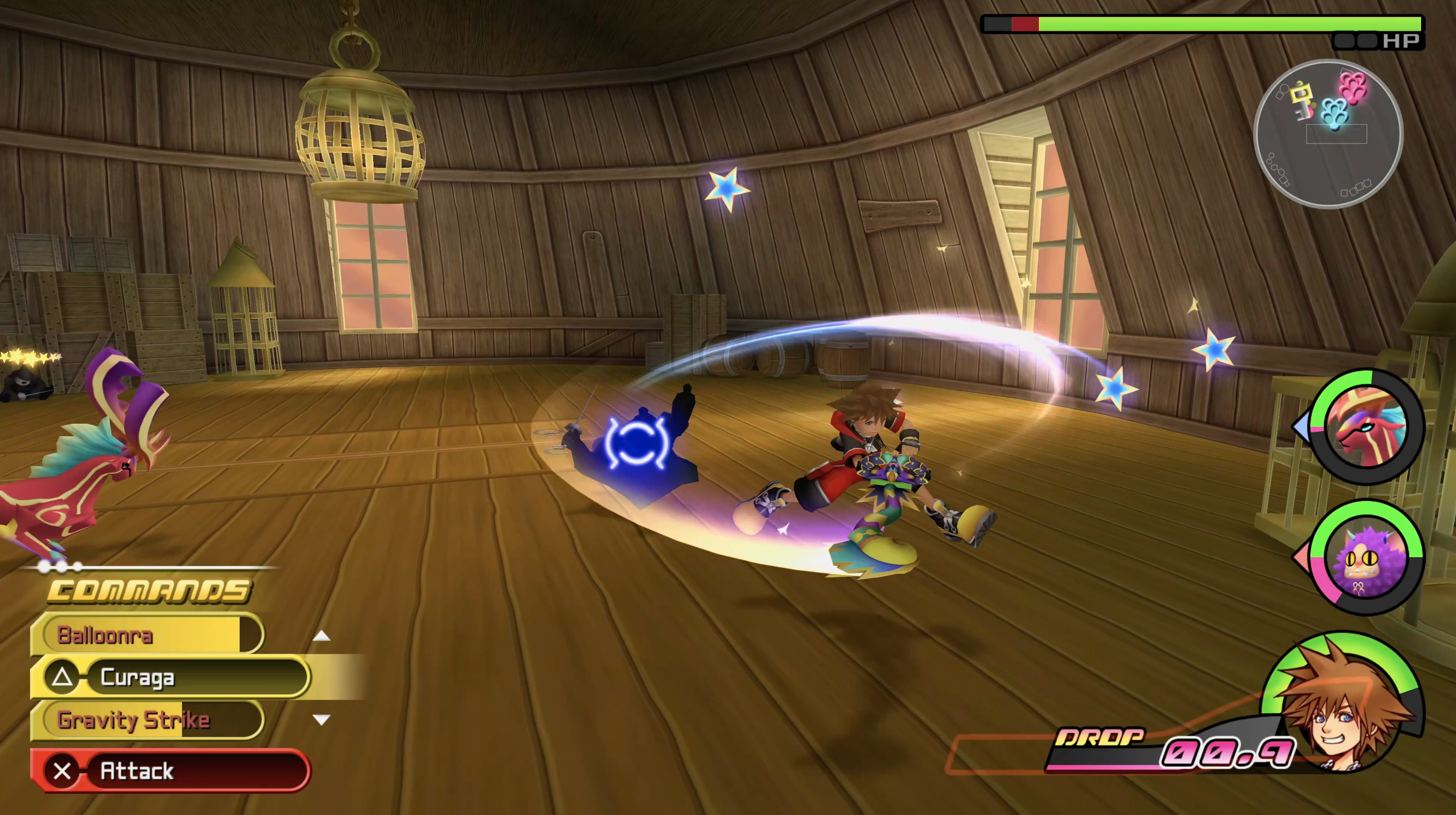
Now I can’t talk about gripes with Dream Drop Distance without talking about the drop system. Since 2012, the overwhelming consensus on the drop system has been that it’s an annoying pain that’s constantly getting in the way of the fun. Well, I’m here to say that I’ve never agreed with this perspective and I still don’t. I understand that it can be frustrating to be forcibly switched to another character in the middle of a boss fight, only to have to restart it from the beginning when you return. I also understand that one may not like having story progress halted because a timer ran out. The thing is, you’re given the tools to manage the Drop Gauge with Drop-Me-Nots and Drop-Me-Nevers that you can use whenever you want to extend it. Plus, you can manually switch between characters at any time, so you can just switch back right away if you want. It’s really not as big of an issue as it’s made out to be.
Gripes aside, I’d say that combat in Dream Drop Distance is easily some of the best in the series. It rectifies most of my issues with the combat in Birth By Sleep by making it more fluid, and also streamlines the Command Deck, even if I’m not the most fond of the changes to abilities. More importantly, the new mechanics it introduces with Flowmotion and Reality Shifts result in the most exciting battles up to this point. I can’t believe I never felt this way about combat before now because I genuinely had an absolute blast with it from the first encounter all the way to the last one.
Dream Drop Distance was a delight to return to after seven long years. I wasn’t sure what to expect after such a long time and came away from it having more fun than I ever could’ve imagined. Don’t get me wrong, the story’s flaws detract from the journey, and some are a detriment to the series going forward, but its breezy tone and excellent focus on Riku’s character development make a fun adventure out of a confusing narrative. It becomes even more enjoyable thanks to the improvements surrounding world design and combat, with Flowmotion serving as the incredible backbone behind these advancements. For one reason or another, I didn’t fully appreciate these elements during my previous playthroughs of this game. But now I see the greatness in what Dream Drop Distance brings to the table and proclaim it to be the most underrated game in the series.
 TheComfySpot