Kingdom Hearts is a special series to me. Not only has it played a key role in molding me into the person I am today, but it’s also been a constant source of comfort for me throughout my life. With that in mind, I decided to go back to six key games from the franchise, some of which I haven’t played in a long time, in a series I call Revisiting Kingdom Hearts to see what I think of them in the year 2024. Have my feelings changed about each game over the years? Am I able to take away anything new from them that I didn’t before? How does any one game compare to the rest of the series? These are the kinds of questions I’ll be asking myself as I work my way through the franchise. In the final part of this series, I’ll be talking about Kingdom Hearts III, and what makes it the quintessential Kingdom Hearts experience.
The 13-year wait for Kingdom Hearts III was a long one filled with a range of emotions, chief among them being excitement, as I speculated about the worlds we’d travel to, the gameplay innovations that would be introduced, and the way the Dark Seeker saga would be wrapped up. When fantasy finally became reality in 2019, Kingdom Hearts III exceeded my expectations in ways that I never imagined, but it also fell short in a few key ways. Even with its flaws in mind, Kingdom Hearts III is a game that I loved unabashedly when it first came out, and five years later that love has grown as it’s become the premiere Kingdom Hearts game in my eyes.
Looking at the story, it wholly embodies everything that one comes to expect from a Kingdom Hearts narrative, for better and for worse, with its blend of messy, overcomplicated narrative elements, and wholesome fun. Even though the story is the weakest aspect of the game overall, I wouldn’t say it’s bad either as there’s quite a lot that I enjoy about it. One positive element that immediately comes to mind is how funny it is. Every game in the series has plenty of moments that draw out laughs, but Kingdom Hearts III frequently feels more deliberate with its comedic beats, resulting in the funniest moments in the series.
Goofy’s property insurance remark during the attack on Thebes is hilarious and the kind of joke that we never got in previous games. Sora sarcastically vocalizing how we all felt after, once again, being knocked down the mountain in Arendelle was spot on. Do I need to explain the absolute perfection that is Yeetus Vanitas? These moments are just the tip of the iceberg, but they’re indicative of the very intentional humor that’s littered throughout the story.
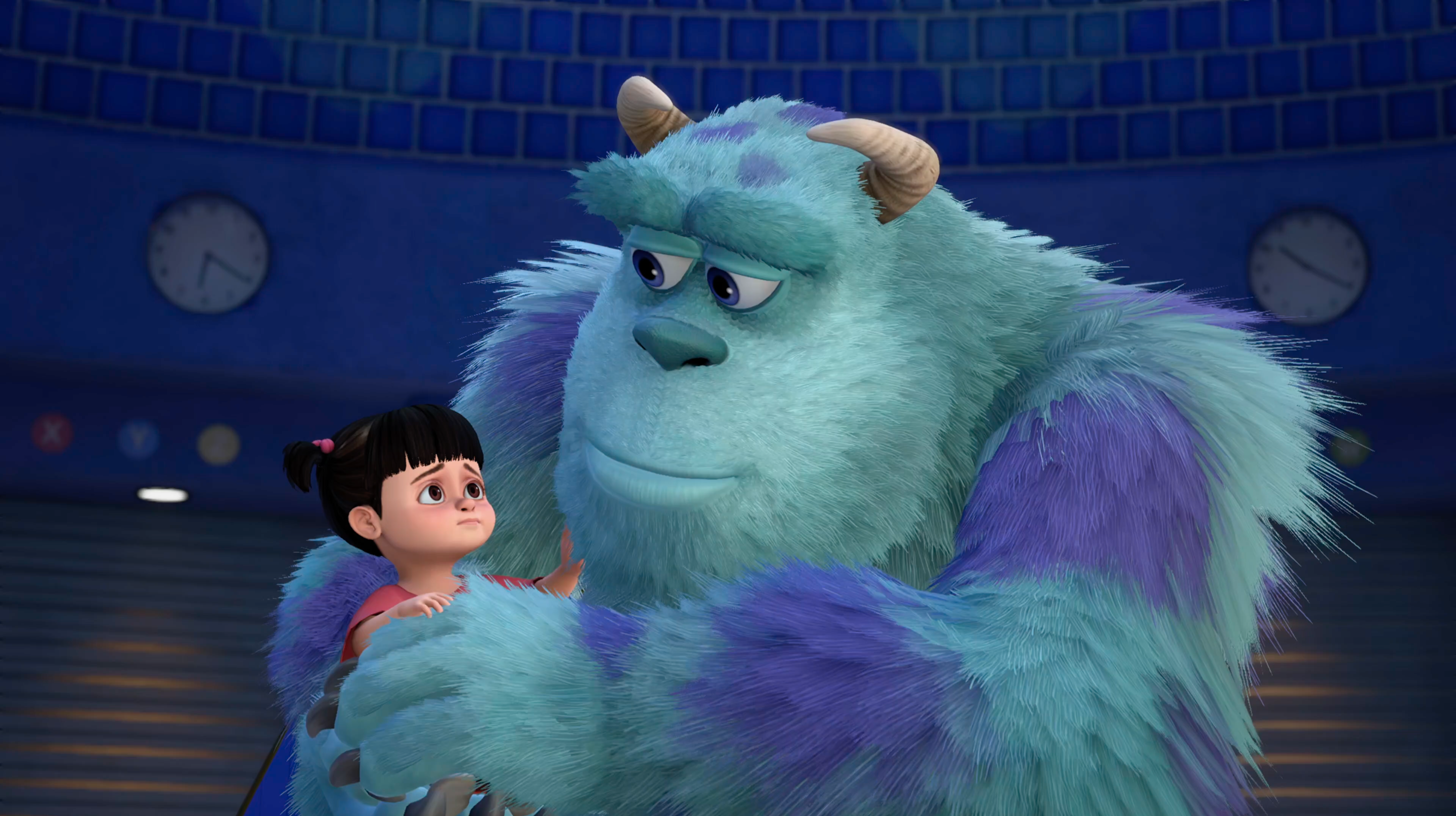
I also really enjoy our time in the Disney worlds. Getting new, original stories for Monsters Inc., Big Hero 6, and Toy Story that operate as quasi-sequels to their respective movies is a welcome change of pace from the standard retellings that became the norm for the series. That being said, participating in classic Disney stories is part of the appeal of Kingdom Hearts, and the retellings that we get are plenty of fun as well, especially since they allow the team to show how well they can recreate scenes from the movies, down to the character animations and cinematography. I know many people hate it, but I love seeing “Let It Go” get recreated in its entirety as Sora, Donald, and Goofy watch in awe.
Speaking of things people dislike about Kingdom Hearts III that I don’t mind, there’s the matter of Final Fantasy characters being absent in the base game. Yes, they had important roles in prior games and I loved their appearances, but I’ve never been upset about their absence here since their stories were more or less complete and the series had grown in intriguing ways without them. With an already diminished presence post-Kingdom Hearts II and the stacked cast of characters that Kingdom Hearts III had to focus on, I’d prefer they not be in the game at all if there’s no place for them than have them shoehorned in to appease people like what happened in the Re Mind DLC.
Another major element of any Kingdom Hearts story is the focus on character development and exploring the themes inherent to each game, such as friendship, hope, or identity. As the culmination of the series so far, Kingdom Hearts III is no different and continues to explore each of these themes, but during this playthrough, I picked up on two things that I didn’t quite key in on before.
The first is Sora’s wavering spirit throughout the story. He’s still our confident, loveable goofball who can be a bit of an airhead at times, but the cracks in his persona have never been this apparent. From the start of the game, Sora’s strength is brought into question, be that through his lost powers, the strain of all the connections to his heart, or his fear of losing his friends. Each of these points has individually weighed on him at some point in the past, but never at the same time and not for so long.
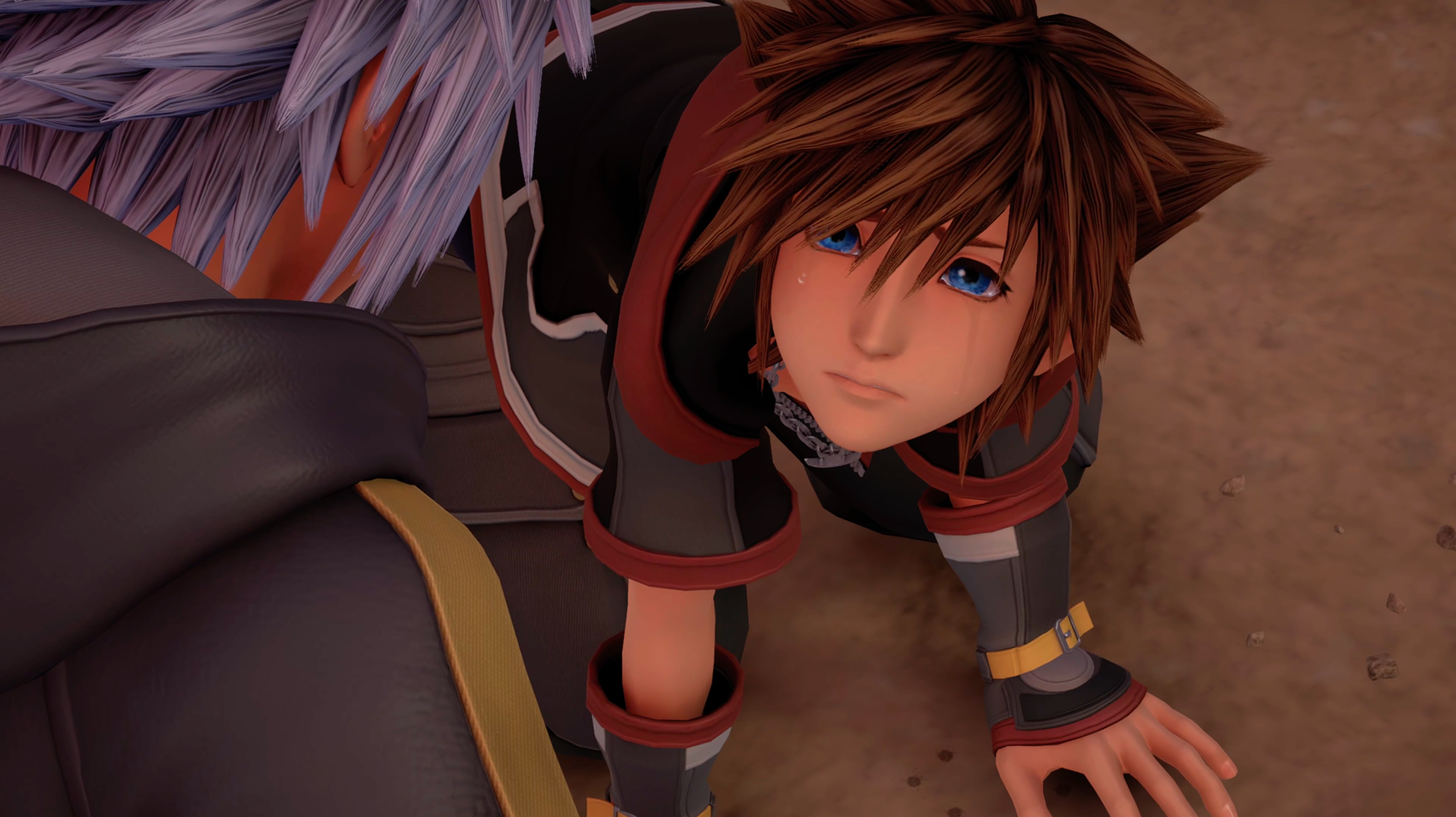
It’s what makes Sora’s breakdown in the Keyblade Graveyard so impactful, as the weight of all his struggles comes crashing down and shatters his confidence, allowing self-doubt to creep in after his greatest fear has become reality. This is a side of Sora that we haven’t seen before, so it’s hard to bear witness to, but it’s a feeling that many of us can personally relate to in one way or another. That makes it all the more uplifting when he literally puts himself back together through the power of not just his friends, but his own strength, and pushes forward with renewed confidence in himself.
The second thing that stood out to me was the narrative’s heavy focus on love. Love has been an underlying element throughout the series but it’s never been as upfront and important to Sora’s story or character development as it is here. He sees how people don’t think twice about giving their lives to save someone they love through Anna and Flynn’s sacrifices for Elsa and Rapunzel respectively. The bittersweet fate that befalls Will and Elizabeth in The Caribbean emphasizes how no amount of time is too little to share your true feelings with the person you love. Hercules choosing to stay with Meg shows how being with who you love makes a place home. It’s easy to gloss over the importance of these lessons as they happen, but they’re instrumental in Sora understanding and embracing what he’s felt for Kairi all these years, and inform his decision to search for her at the end of the game, no matter the cost.
The heavy emphasis that the narrative places on these subjects is something I didn’t really notice in previous playthroughs for one reason or another. Perhaps I was just having too much fun to think harder about these elements. After paying closer attention to the narrative this time around, it’s impossible to miss how important they are to the story as they work to make Sora a more admirable and relatable character.
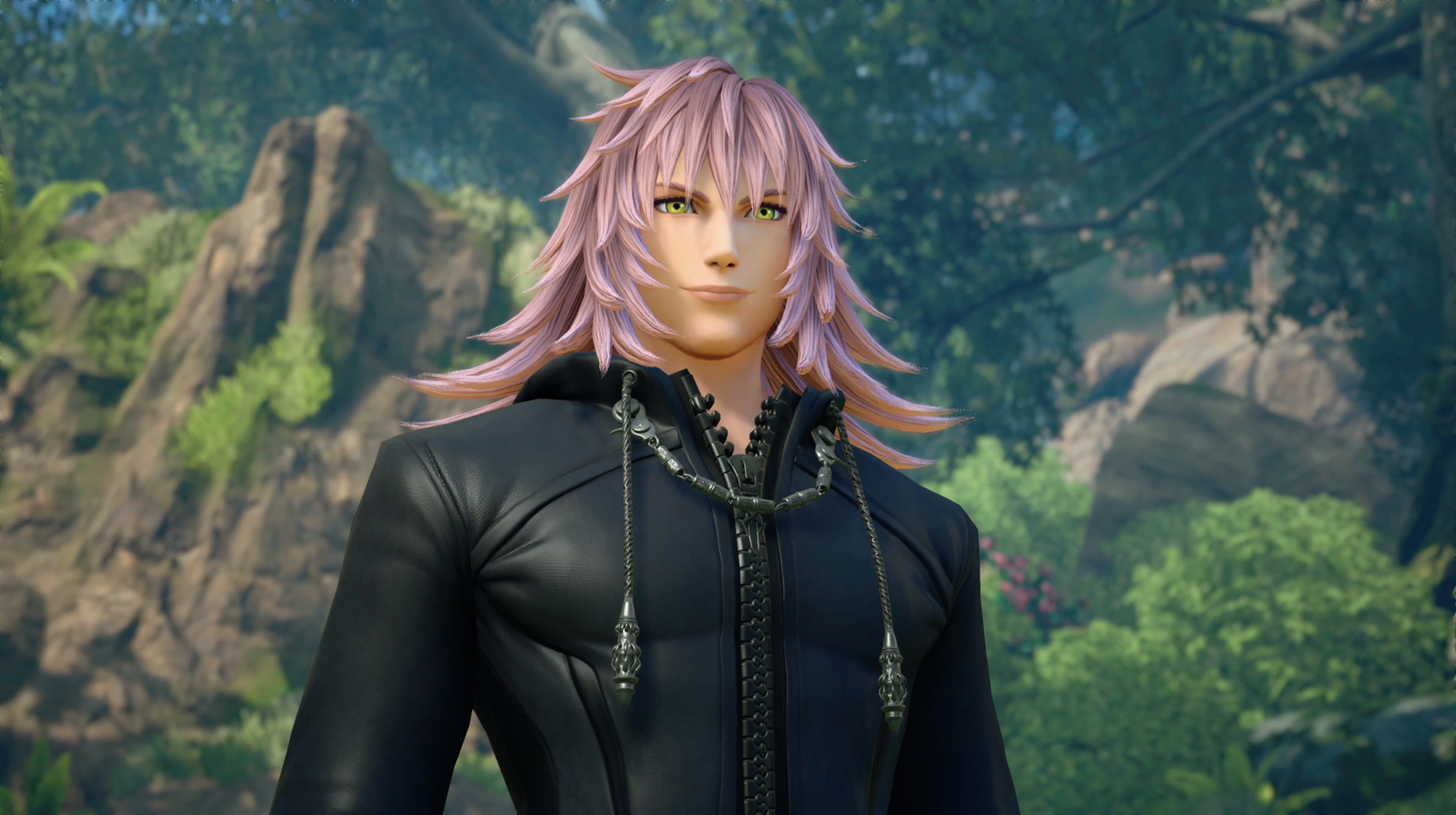
Although there’s a lot that I like about the story in Kingdom Hearts III, there’s just as much that I have mixed or downright negative opinions about. It’s cool seeing the return of certain Organization members, but as Larxene says, the real Organization XIII does feel like Organization Rehash since half of the group consists of members from its previous incarnation. Not only does this personally remove some of the excitement from seeing who’s in the group, but it also continues to make death seem even more nebulous than it already is since people can return through either time travel or recompletion.
Another notable sore spot is the story’s pacing. The Keyblade War is what the narrative’s building towards, but it’s a bit annoying how backloaded all the events of major consequence are. This results in a story that fails to advance in meaningful ways until Sora’s just about ready for the climactic battle. I still enjoy our adventures through the Disney worlds, and I certainly don’t agree with the notion that they’re filler since they’re fun and do contribute to the narrative’s focus on love and Sora’s growth, but the way the plot spins its wheels for so long is one of a few glaring blemishes on an otherwise excellent game.
When the story finally starts barreling toward its conclusion, it does so with a slew of wonderful moments, kicking off with the rescue of Aqua from the Realm of Darkness and the revival of Ventus in The Land of Departure. Once we get to the Keyblade Graveyard, we’re hit with one awesome scene after the next. Donald’s big Zettaflare moment leaves me slack-jawed, the fall of the Guardians is equally shocking and heartbreaking, and the ancient Keyblade wielders lending their assistance against the giant Demon Tide is nothing short of epic. But amidst all the spectacle and fan service, Kingdom Hearts III begins to indulge in its own worst habits.
Our time in The Final World is fascinating, but the time travel shenanigans that are involved undercut the events surrounding it. Honestly, it’s not the use of time travel itself that I have an issue with here, but rather the response by the Guardians. At first, they seem to know what just happened, but then proceed to play out the events that caused their initial defeat as if they never experienced it. Just like in Dream Drop Distance, it’s confusing and messy, so I simply have to roll with the punches and not think too hard about it.
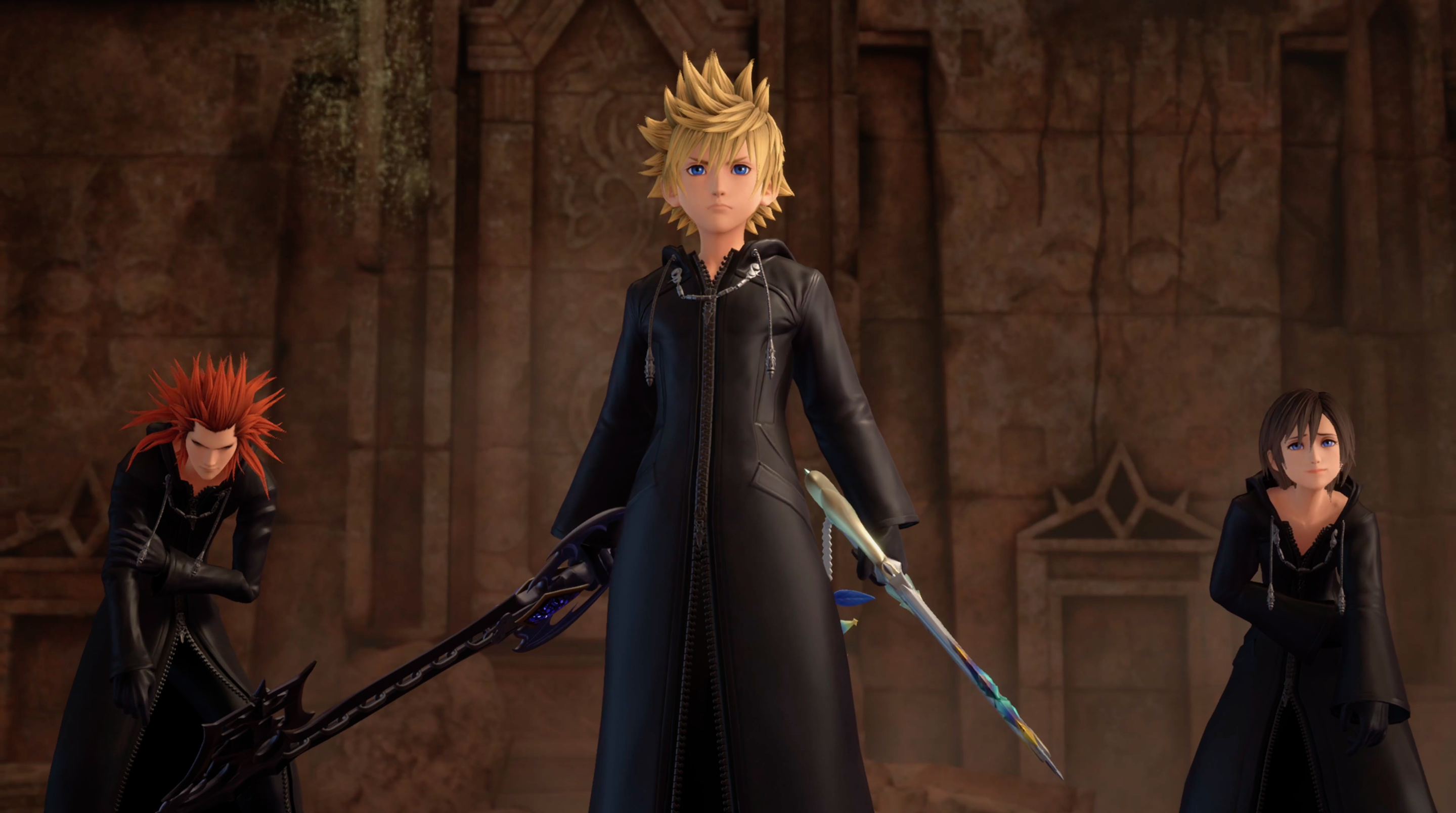
I love the Wayfinder Trio’s emotional reunion, yet the Sea Salt Trio’s reunion is a bit of a mixed bag to me. It’s exciting seeing Roxas and Xion return (even if I don’t care much about the latter of the two), but I can’t help feeling like each of their revivals takes away from the impact they left, just so all the major characters could get a happy ending. At the same time, that happy ending does work as a payoff for them since they’re both able to reclaim the identities they were deprived of. To me, it’s a case of fan service winning out which I can understand, even if I don’t necessarily agree with the decision.
What’s unforgivable is the treatment that Kairi receives here. Having her get kidnapped and subsequently fridged is without a doubt the worst thing Kingdom Hearts III does. The series had been building Kairi up for some time to no longer be a damsel in distress, but someone capable of protecting herself. I’m not saying she needed to be on the same level as more experienced Keyblade wielders in her first real battle, but building Kairi up and then removing her for shock value is a cheap narrative decision and she deserves better.
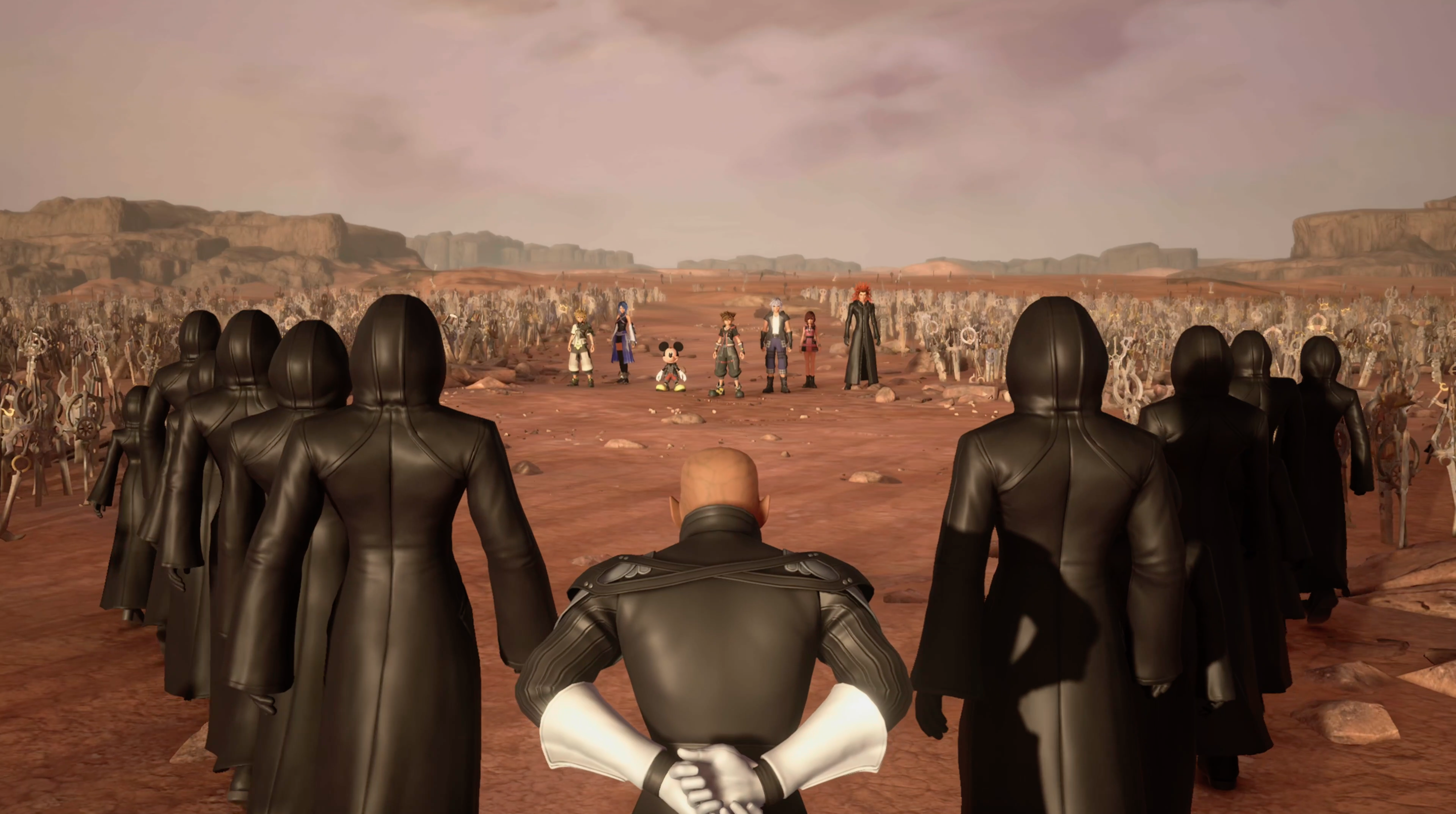
All of these things harm the story, but I want to be clear when I say that they don’t ruin the story for me. It still manages to go out strong as Sora defeats Xehanort, everyone receives some wholesome closure, and we get a cryptic tease of the future concerning the Foretellers and Yozora. To its credit, Re Mind tries to make up for some of these flaws with a few changes of its own, even if its use of time travel continues to be messy. The extra cutscenes surrounding the Sea Salt reunion make it a much stronger moment when it finally happens. It’s impossible to completely make up for what happened to Kairi, but properly showing her combat skills before being captured is great, as is including her in the final battle against Xehanort. And even though I was fine not seeing what the Guardians were up to while Sora fought Xehanort in the base game, I can’t deny the awesomeness of their clash with Xehanort’s clones outside Kingdom Hearts or Mickey’s last stand against them.
You see, that’s the thing about Kingdom Hearts III’s story. At this point in the franchise, nothing exemplifies Kingdom Hearts more than grand, hype-inducing scenarios and overly complicated plot points that are supported by emotional moments that tug at the heart and humorous ones that make you laugh out loud. In that regard, Kingdom Hearts III delivers in spades on all counts, and you’re either all in on the story or completely out because of these traits.
I love this universe and the characters that inhabit it. That’s why despite my feelings on certain narrative decisions, I’m still satisfied with this story as a whole because it hits all the beats I look for from the series in a way that’s enjoyable from start to finish. I find myself with a giant smile on my face at the happy ending that everyone received because in my eyes, even with all its flaws, the series earned such a moment after 17 years. Honestly, if it wasn’t for Sora’s disappearance, I’d say this was even more of a perfect ending than Kingdom Hearts II’s. As with any long-running and beloved series, closing the book on the Dark Seeker Saga in a way that was one hundred percent to everyone’s liking was always a fool’s errand. Even with its many issues, I feel like Kingdom Hearts III still manages to stick the landing and bring this era of the franchise to a satisfying conclusion.
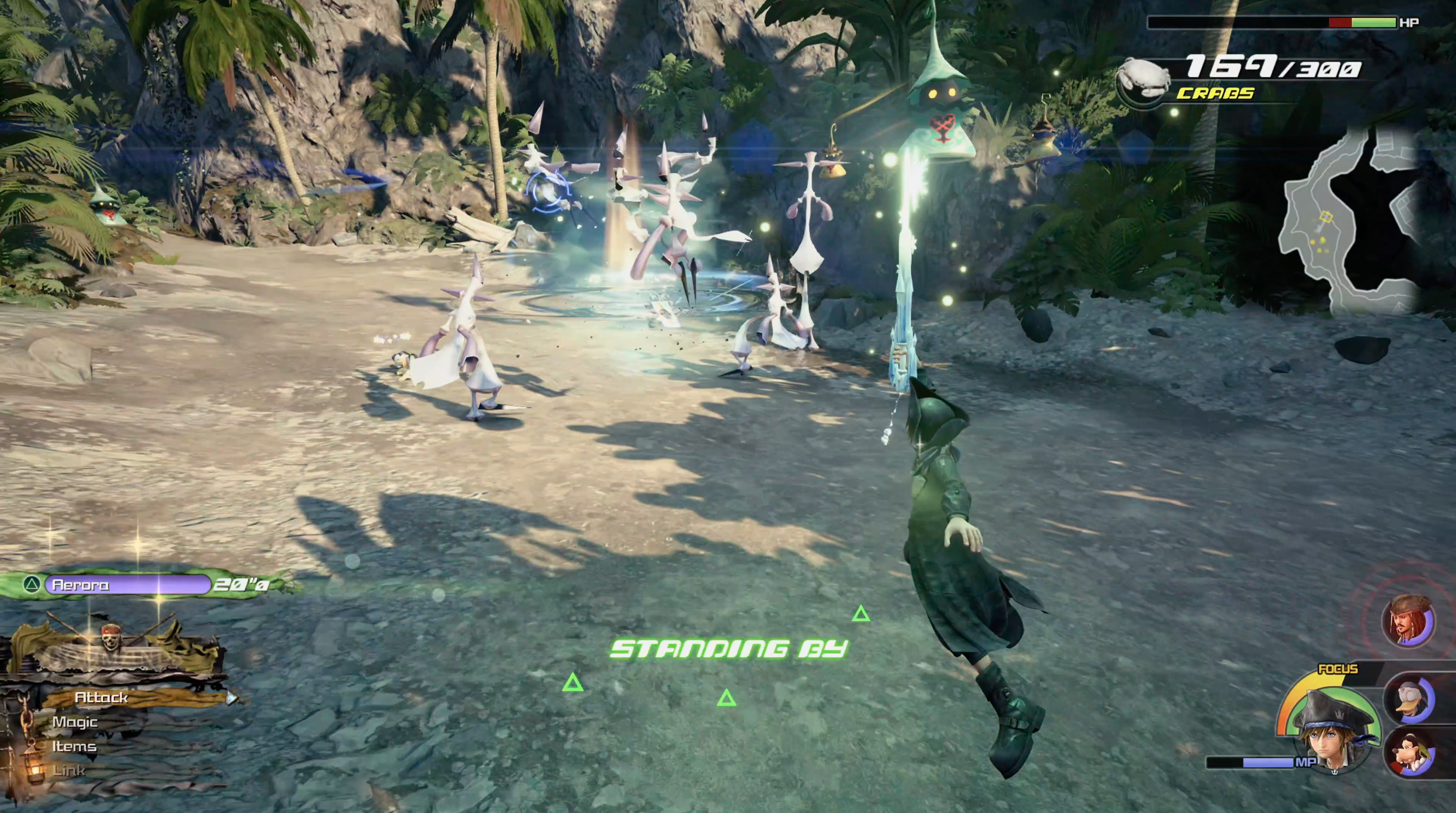
Now if we’re talking about quintessential Kingdom Hearts experiences, you don’t have to look much further than the combat in Kingdom Hearts III. Yes, the combat in Kingdom Hearts II is understandably showered with praise, but Kingdom Hearts III blows it out of the water by every possible metric. It takes the fast-paced, flashy action that the series is known for and dials it up to 11, resulting in the most exhilarating, spectacle-heavy battles in the franchise.
Right from the get-go, combat feels amazing with a greater level of speed, fluidity, and responsiveness than every game before it, and it only gets better from there. Attacks bring you to targets more easily than in previous games, and the seamlessness with which you go from one defeated target to the next causes fights to feel so much better and faster. Blocks and dodges can now be done almost instantly mid-combo, but what makes a world of a difference is being able to do them when airborne, especially since there’s a stronger focus on aerial combat in Kingdom Hearts III.
Shotlocks have returned and they’re much better than they were in Birth By Sleep. Time slows down while charging them up, which is a smart refinement, and I love the sheer variety on offer as every Keyblade has multiple Shotlocks to perform. Flowmotion has also been brought over from Dream Drop Distance, but the strength of Flowmotion attacks has been wisely dialed back quite a bit from its previous incarnation. That said, it still shines thanks to the incredible new airstep ability. I can’t stress enough how much being able to instantly dash across the battlefield and reach targets in the blink of an eye completely changes the game when it comes to how you approach fights, be that against your standard enemies or the more intricate boss encounters. It’s honestly a godsend and the kind of feature that’s hard to imagine playing any future game without.
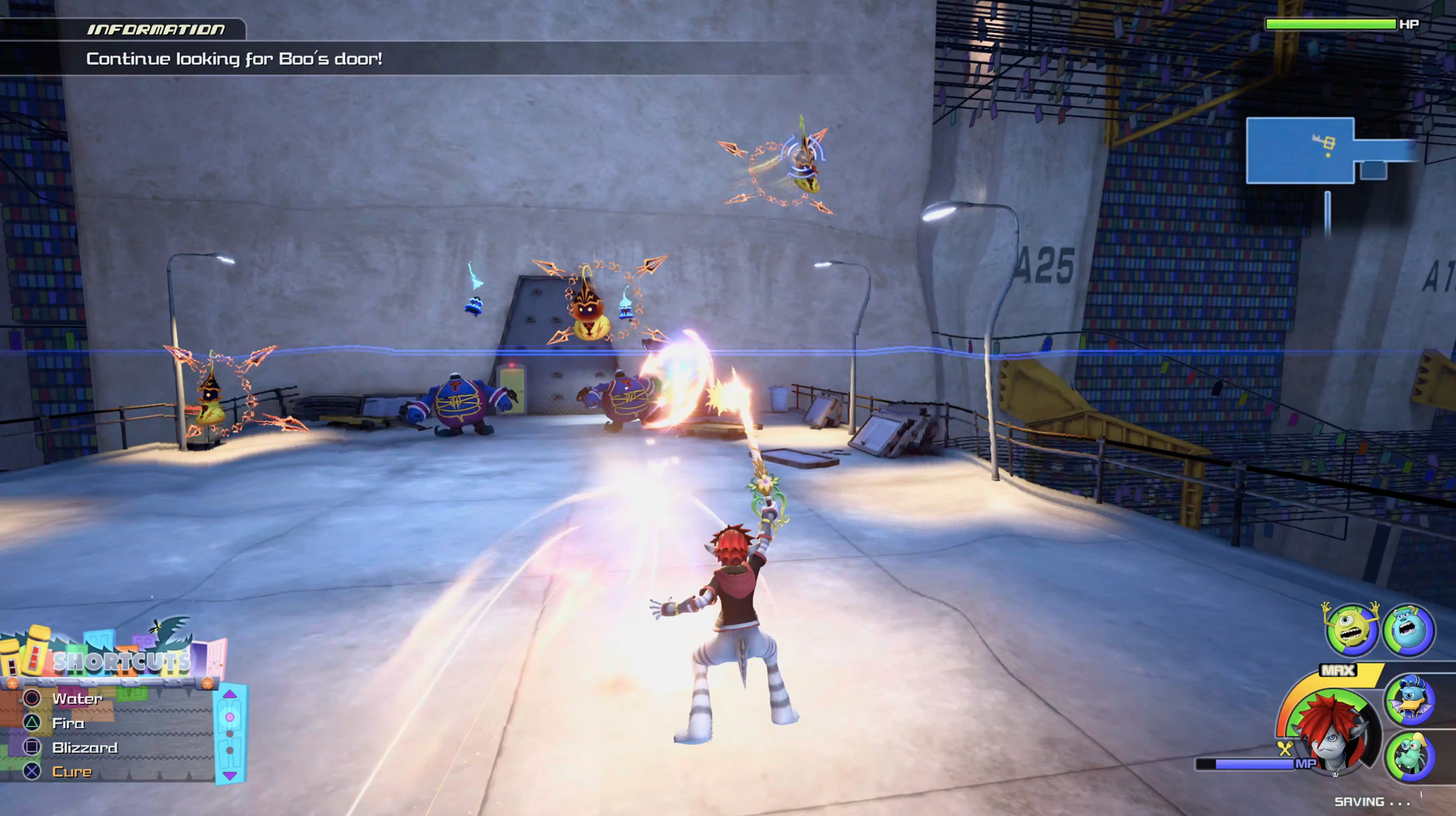
Similarly, I still can’t get over how we can finally have guest characters from the Disney worlds in our party alongside Donald and Goofy after all these years of having to pick and choose who we fought with. Summons remain a cool mechanic that I barely use unless I want to do something different, but what I do find myself using significantly more in Kingdom Hearts III is magic. It’s the best it’s ever been, partly thanks to how amazing it looks, but primarily because of how well it can be implemented in fights since magic can now be used while moving at full speed without slowing down. After more than a decade of magic being something that hits the brakes on your movement, this is a very welcome change.
That’s not the only change to magic that makes an impact. On a smaller scale, certain spells like Blizzard and Aero leave residual effects like ice trails and wind funnels that can be used for Flowmotion. On a larger scale, magic plays a more strategic role in taking down certain enemies. The Water Core and Flame Core Heartless enemies will enter forms where they can only be damaged by the element that’s counter to them. Regular attacks can be used to take down large dandelion Heartless, but casting Aero on them will make them significantly easier to manage. Most of these changes may not seem like a big deal in the grand scheme of things, but they add up and fundamentally impact how fights play out.
While some of the improvements to combat in Kingdom Hearts III come through tweaks and refinements to already existing mechanics, where it truly evolves is in the new ideas it brings to the table, starting with Situation Commands. As an evolution of Reaction Commands from Kingdom Hearts II that also takes lessons from the Command Bar in Birth By Sleep, Situation Commands are the foundation that combat is centered around.
Use a lot of magic for example and a higher tier spell will appear. Fight nearby your party members long enough and you’ll have the opportunity to use a special team attack. Crucially, they’re only activated if you choose to use them. Situation Commands are powerful, flashy rewards for your choices in battle and they’re constantly appearing during fights, lending combat a sort of chaotic energy that’s befitting for a series that revels in being an exhilarating spectacle.
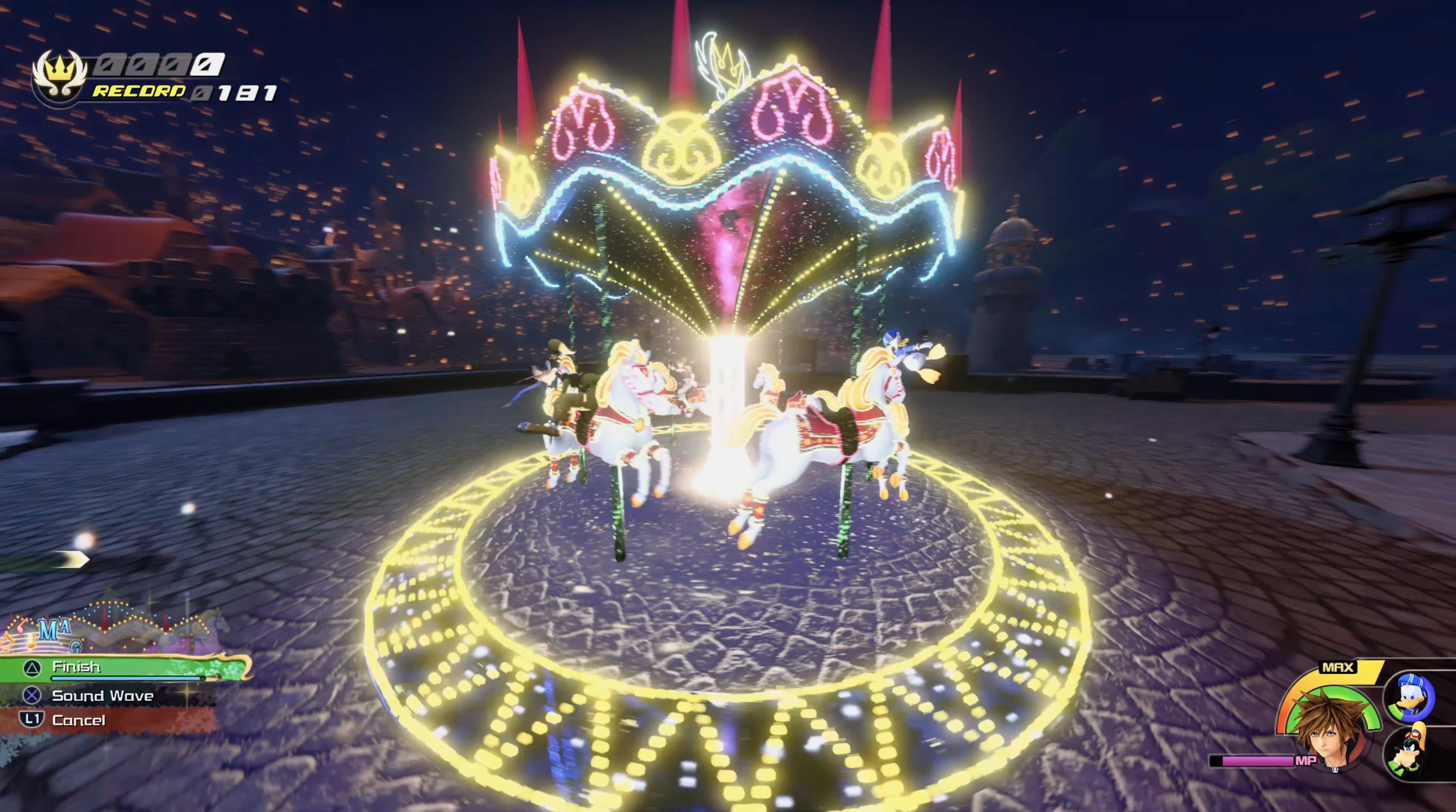
Attractions are a significant addition to the chaos, and although the community largely hates them, I’ve always enjoyed them. Shooting enemies with the Astro Blasters or spinning around the area in the Mad Tea Cups is a delightful experience that takes me back to my childhood trips to Disney World. Yes, attractions are strong, and sure, they can run long, but they can be ended at any point in time by using the finisher or just straight-up canceling the move. They’re goofy, harmless fun at the end of the day, and can easily be ignored if you would rather not use them.
Of course, the standout feature of combat in Kingdom Hearts III is Keyblade transformations. Drive Forms were cool back in Kingdom Hearts II and Command Styles were fine in Birth By Sleep, but neither of them holds a candle to these transformations. No matter how many times I’ve seen them, their theatricality never gets old, with the camera’s framing of the action consistently raising anticipation and excitement for the resulting weapon. When you combine that with the extravagance of Sora’s fighting style when using them, their usefulness in battle and the gameplay variety they bring, their explosive finishers, and, most importantly, the fact that we control when they’re activated, Keyblade transformations are undeniably the superior mechanic.
In previous playthroughs, I typically stuck with a select few Keyblades such as Favorite Deputy, Ever After, and Wheel of Fate because of how much I liked their transformations, but this time around I found some new favorites. I used to dislike Sora’s fighting style when using the shield transformation for the Hero’s Origin Keyblade, but I had a lot of fun with it this time around and made great use of its defensive properties. Realizing that the globs of honey fired by the Hunny Spout Keyblade slow enemy movement completely changed my opinion of it as I found a use for it in different scenarios. I’m not sure why I didn’t care for the Happy Gear’s transformations before, but the hyper-aggression of the claws is electrifying and the yo-yo form that follows is a blast to use.
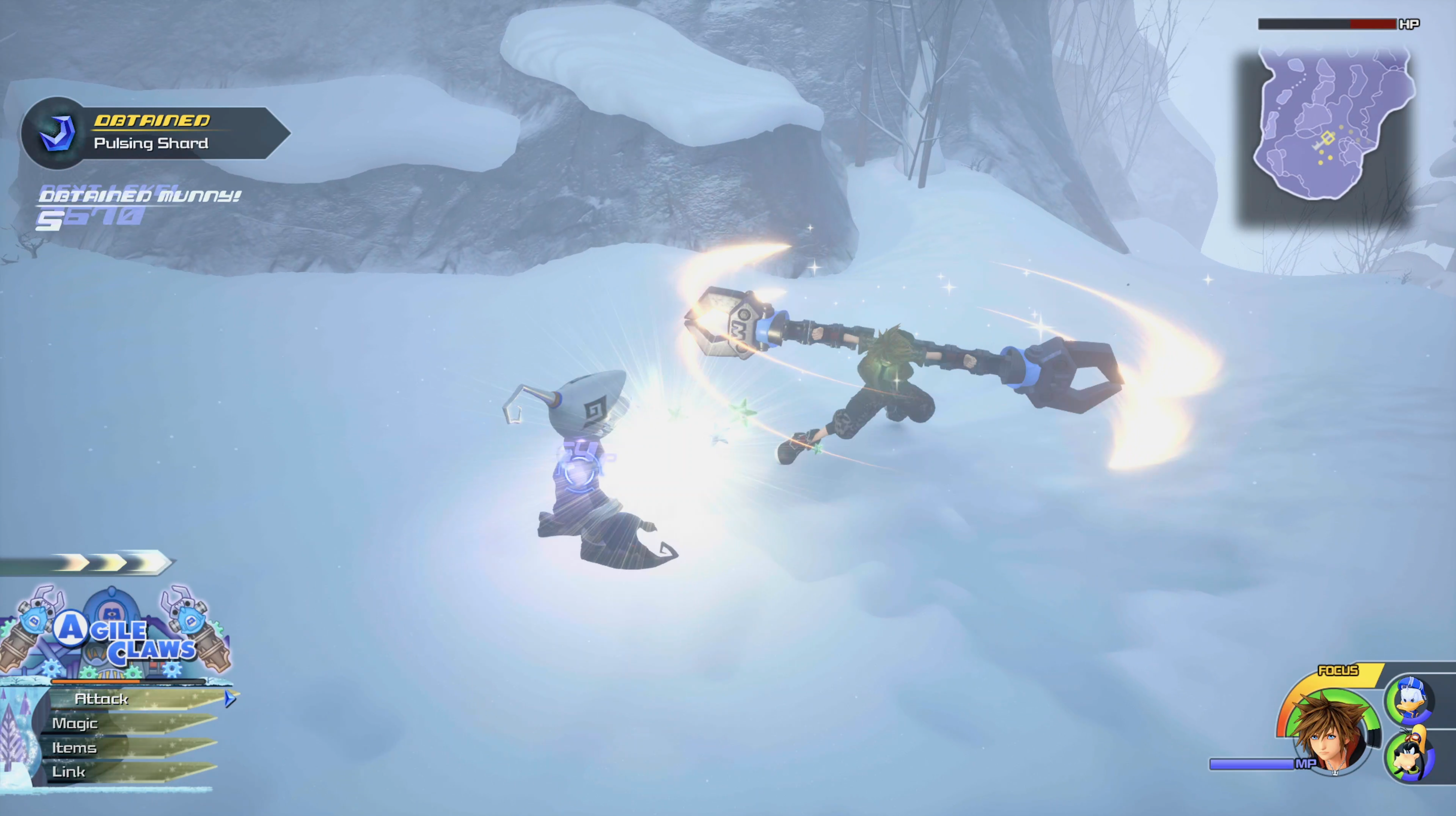
Since every Keyblade is more viable and useful than ever before thanks to their transformations and an upgrade system that makes them stronger and grants them new abilities, it’s only right that Kingdom Hearts III allows you to seamlessly switch between three Keyblades during fights. Like many other aspects of combat, this is revolutionary because it changes how one approaches fights.
If you’re fighting an enemy at range, you might use a magic-based Keyblade for its mystical prowess before switching to a strength-based Keyblade for up close and personal melee attacks. You can be attacking with one Keyblade transformation, but then decide to use a different one mid-combo to take advantage of its fighting style and finishing moves. Even just changing Keyblades to save a transformation for a more opportune moment is a lifesaver that keeps transformations from going to waste like Command Styles would in Birth By Sleep. The gameplay potential that Keyblade switching presents is simply amazing, which makes it yet another feature that I can’t imagine not having in future games.
As a quick aside, a point that I’ve seen people in the community raise over the years is how Re Mind “saved” the combat in Kingdom Hearts III and made it good, but it’s yet another sentiment that I’ve never agreed with. Sure, it brought some new abilities that improved combat, but it was never bad to begin with. Re Mind simply took an amazing combat system and made it slightly better. That said, I love the new opportunities to play as other characters in certain fights such as Roxas and Aqua, which are a blast to experience thanks to their different fighting styles and the unique Situation Commands that appear. Kairi is easily my favorite of the new playable characters partly because of how majestic her moveset is, and largely because it’s a long overdue moment in the spotlight for her.
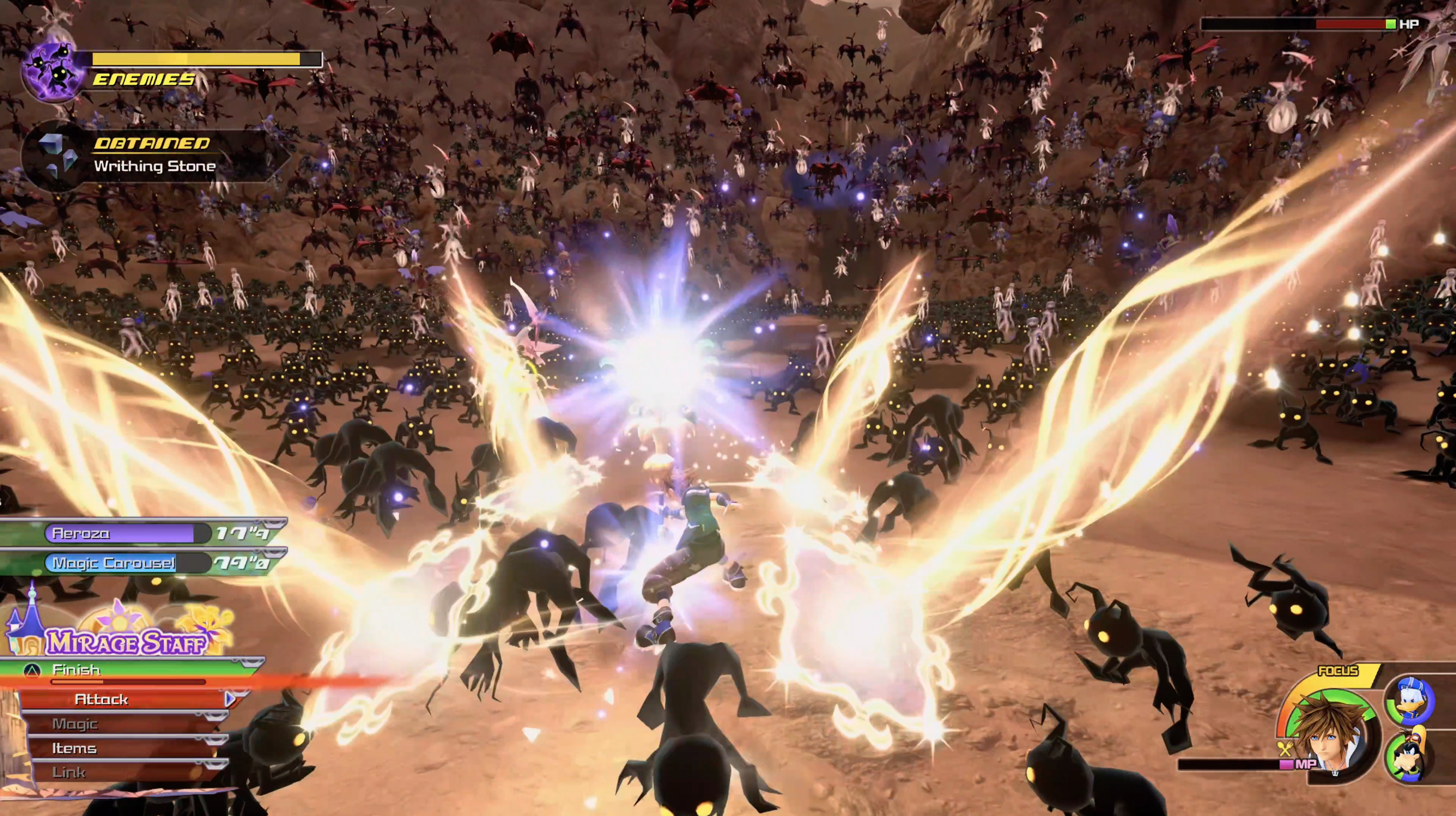
There’s a lot going on with combat in Kingdom Hearts III, but everything coalesces to fully realize the identity that Kingdom Hearts II started to create for the series. Combat was all about looking cool and feeling cool in that game, and although subsequent entries tried to build on it in their own ways, Kingdom Hearts III achieves that original goal in a manner that its predecessors could only dream of. Sora’s fighting style here is finely tuned and showcases a mastery of his abilities thanks to the years of experience that he’s accumulated since his journey first began. Every action you perform in combat gets progressively more stylish and powerful in an explosive display of sheer strength and talent against overwhelming odds. It makes you feel like the protagonist of a shonen anime at their peak as you make use of all your skills to blast through enemies in one dazzling battle after the next.
This is especially true when it comes to boss fights, which are more extravagant than in past games thanks to their scale, cinematic flair, and fast-paced thrills. The Titan battles in Olympus and the various Organization fights in the Keyblade Graveyard immediately come to mind as some of my favorites, as does the fight against Dark Inferno, but the data battles take everything to the next level. They might be more intimate than the boss encounters from the base game, but they’re just as much of an anime-inspired spectacle. Whether it’s Master Xehanort’s overwhelming move set, the white-knuckle action of Xion’s fight, or the adrenaline-pumping ambiance of Xemnas’ iconic laser dome, these are some of the coolest, most over-the-top fights in the series. And don’t get me started on how intense the fight against Yozora can get
Overall, Kingdom Hearts III stands head and shoulders above the rest of the series when it comes to its combat, and frankly, it always has. From Keyblade transformations and Situation Commands to airstepping and more, we finally have a combat system that’s every bit as dynamic and blood-pumping as it is fun and empowering. This is what the series has been striving to be for years and it’s finally realizing its dreams.
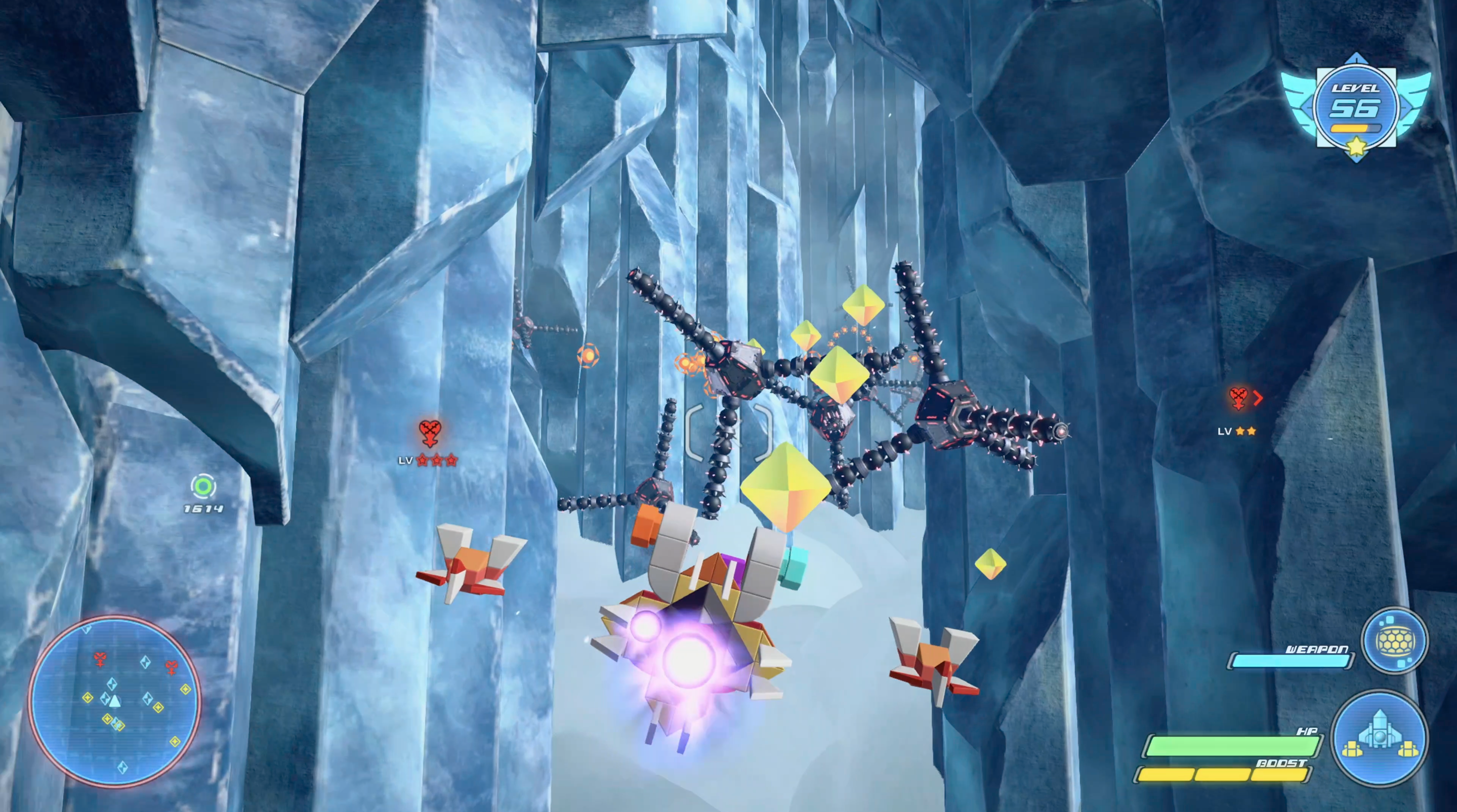
Just like with the combat, the world design in Kingdom Hearts III is hands down the best in the series. By looking to its roots for inspiration and building on those ideas with ones from later games (and some assistance from new technology), it excellently brings to life the vision that the series has had for itself since it began in 2002. Starting with the revamped Gummi Ship segments, they take the original game’s idea of flying to each world to new heights. Being able to travel freely between the worlds and explore The Lanes Between was an awe-inspiring experience in 2019, and it continues to blow me away all these years later. Soaring amongst the stars has me constantly questioning what’s inside each cavern or around the next landform. Finding the various Treasure Orbs, crystals, and asteroid clusters that are scattered about feeds into these adventurous desires as I enjoy gathering as many resources as possible before moving on to the next world.
I also adore the way that landforms are themed around the world that they’re close to, such as the ice maze that leads to Arendelle. It’s just a neat touch that lends the whole experience an extra level of wonder. Gummi Ship battles strike a fine middle ground between the simplicity of the first Kingdom Hearts and the intensity of Kingdom Hearts II, and even though I think the space combat is fun, I appreciate that fights can be entirely avoided outside of select boss encounters. I enjoyed the Gummi Ship segments in previous games to varying degrees, but by blending their respective ideas, this reimagining creates my favorite version of it.
That sense of wonder and adventure persists in the worlds themselves because of how immersive they are. It goes without saying, but Kingdom Hearts III is a gorgeous game that features an incredible level of detail. Returning worlds such as Twilight Town and The Land of Departure look better than ever, and new ones like Scala Ad Caelum and The Final World are simply beautiful. As it pertains to the Disney worlds specifically, they finally fulfill the series’ lifelong dream of having visuals that blur the line between game and movie. The degree to which everything in each world was recreated is surreal as it’s almost like stepping directly into the movies themselves. It’s been five years and I’m still dumbstruck by the minute scratches that the characters in Toy Box have!

The immersion doesn’t stop at the visuals though and gets deeper with every facet of the world design. I love how worlds are expansive and feature a handful of large, interconnected areas to traverse and explore. I look at Olympus and marvel at how I can work my way through the fleshed-out city of Thebes, ascend thousands of feet to the peak of Mount Olympus, and scour the titular city itself. This even applies to more linear worlds like Monstropolis, with the journey through the Monsters Inc. factory being a lengthy one that spans its interior and exterior sections. Since there are barely any loading screens in each world, traveling through them feels less segmented, and more like the unified experience the series has always strived to convey.
Importantly, world traversal also features plenty of platforming. Whether you’re running up walls, leaping across precision points, skating along rails, or even sliding between hiding spots, there’s more than enough variety in how you physically make your way through each world. Don’t get me wrong, there are still some locations that have a very linear design, but the inclusion of these traversal methods makes going through every single world feel more like an expedition through fascinating locations.
Two worlds that don’t get quite the same sandbox treatment are 100 Acre Wood and Twilight Town, but I’ve never been torn up about it. The former’s always been an optional world focused on breezy mini-games, so making it mandatory in Kingdom Hearts III practically necessitates a very basic approach to the world. As for Twilight Town, it’s a bit disappointing that it got significantly cut down since I would’ve liked to see it receive the same treatment as other worlds. That said, given its status as a hub world that we barely visit, I still like what we have here, especially since it gives us a peek at how the town has changed over time with elements such as the outdoor movie theater and the bistro where you can cook with Remy.
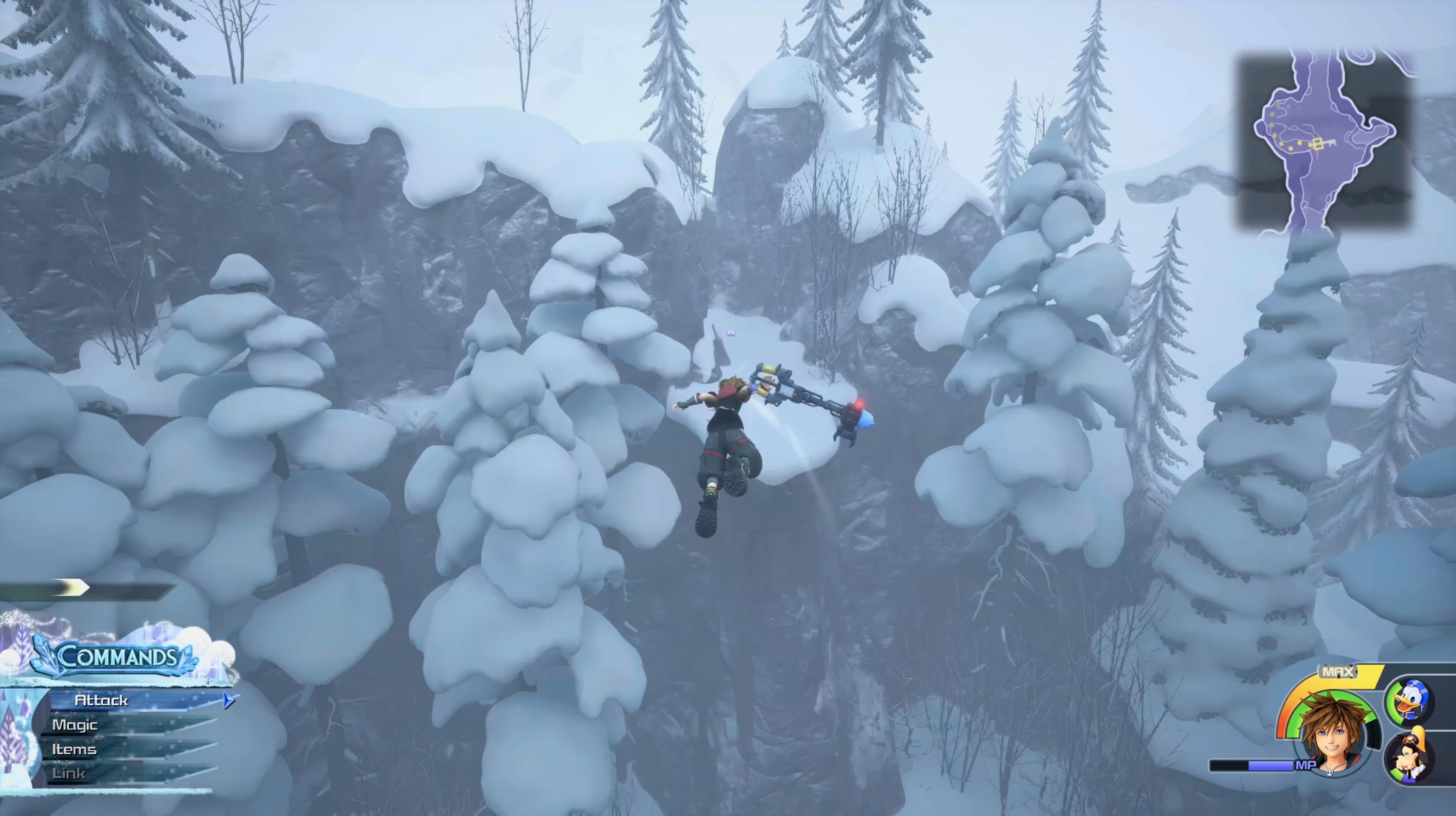
The stellar visuals and impressive scale of the worlds help ground me in them and make me want to get lost as I explore their every nook and cranny. When I’m in San Fransokyo, I’m feverishly checking every street and rooftop for chests and lucky emblems. I’m combing over the shops and play spaces in the larger-than-life Galaxy Toys as I make sure nothing is overlooked while simultaneously admiring the many products that are on display. I’m meticulously searching both land and sea in The Caribbean to find every single crab, treasure, item, and other secret that the region holds. I loved this feeling in the first Kingdom Hearts and Dream Drop Distance, so I appreciate that the team went all out to make exploration as engaging and rewarding as it is.
It also can’t be ignored how the wide range of interactivity that’s present across each world is one of the most important elements of the world design in Kingdom Hearts III. On the higher end of the spectrum, you have things like the various pillars you have to activate to escape the labyrinth in Arendelle or the different activities you can do with Rapunzel in the forest. Move closer to the middle of the spectrum and you’ll find touches such as the forge in Olympus that rewards you with a shield for Goofy or the orbs in Scala Ad Caelum that create railways for you to travel on. Go to the lower end of the spectrum and you have things like the helium tanks in Toy Box that alter the party’s voices or the objects in various worlds that require freefall dives to be destroyed. No matter the example, every single instance of interactivity works to make each world feel more alive than in previous games.
One of the most important pieces in making the worlds feel so alive is their impeccable music. I can’t get enough of the beautiful strings used in the Kingdom of Corona because they provide an air of whimsy that’s perfect for the world. Monstropolis is a bit bland from a visual perspective, but its rousing music is some of my favorite in the entire series and elevates the world by giving it a heightened sense of urgency. Even though Arendelle might be my least favorite world in the game because of its somewhat boring visual aesthetic and the annoying escapade its story takes us on, the jolly field and battle music elevate it into a charming winter wonderland.
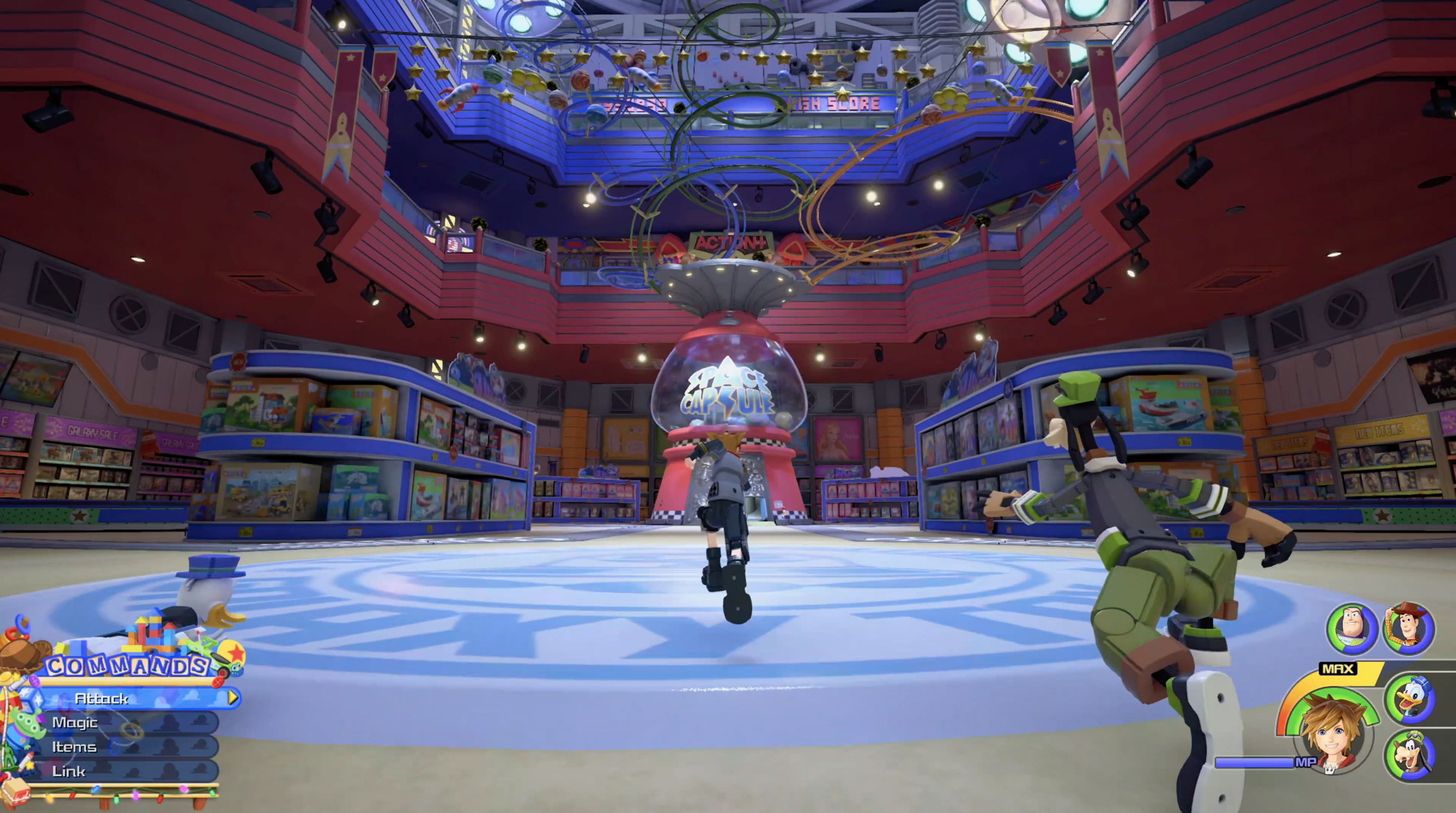
All the aforementioned elements of the world design are important, yet what helps make the worlds in Kingdom Hearts III stand out to me are the extra touches that make them feel alive. It’s the little details such as the sketches in Andy’s room or the wanted posters that are spread throughout the Kingdom of Corona. It’s how cinematic things can get, with the attack on Thebes and the arrival of the CDA in Monstropolis making the events happening there more monumental. What’s undeniably the most notable addition is the presence of actual crowds of people in places where you’d expect them. I can’t emphasize enough how much it makes a difference to be going through the various towns and cities and see them buzzing with life as residents chat amongst themselves and walk around the space.
When you combine all of these individual elements, not only are the worlds more immersive than in the past, but they’re also more unique as no two worlds feel quite the same. Toy Box doesn’t feel like Scala Ad Caelum. The Caribbean doesn’t feel like San Fransokyo. No matter how much I enjoyed the worlds in earlier games, that’s not something that I can say about most of them. It also shouldn’t be overlooked how most worlds have a mini-game that’s specific to them, which continues to make the worlds differ from one another.
From the very first entry, Kingdom Hearts has always wanted to make us feel like we were going on this grand adventure to magical places that we could only dream of. The first game excelled at invoking that feeling of wonder, but it wavered as the series went on. Kingdom Hearts III fully revives it by looking at the ideas that caused it to manifest in the first place and taking them to their maximum potential. Between the numerous ways in which the world design brings immersion to an all-time high and the excellent new Gummi Ship experience, this is the clearest case of technology catching up with the series’ aspirations. Kingdom Hearts III truly goes above and beyond to create the most fully realized worlds in the series, and in doing so, sets a new standard for world design going forward.
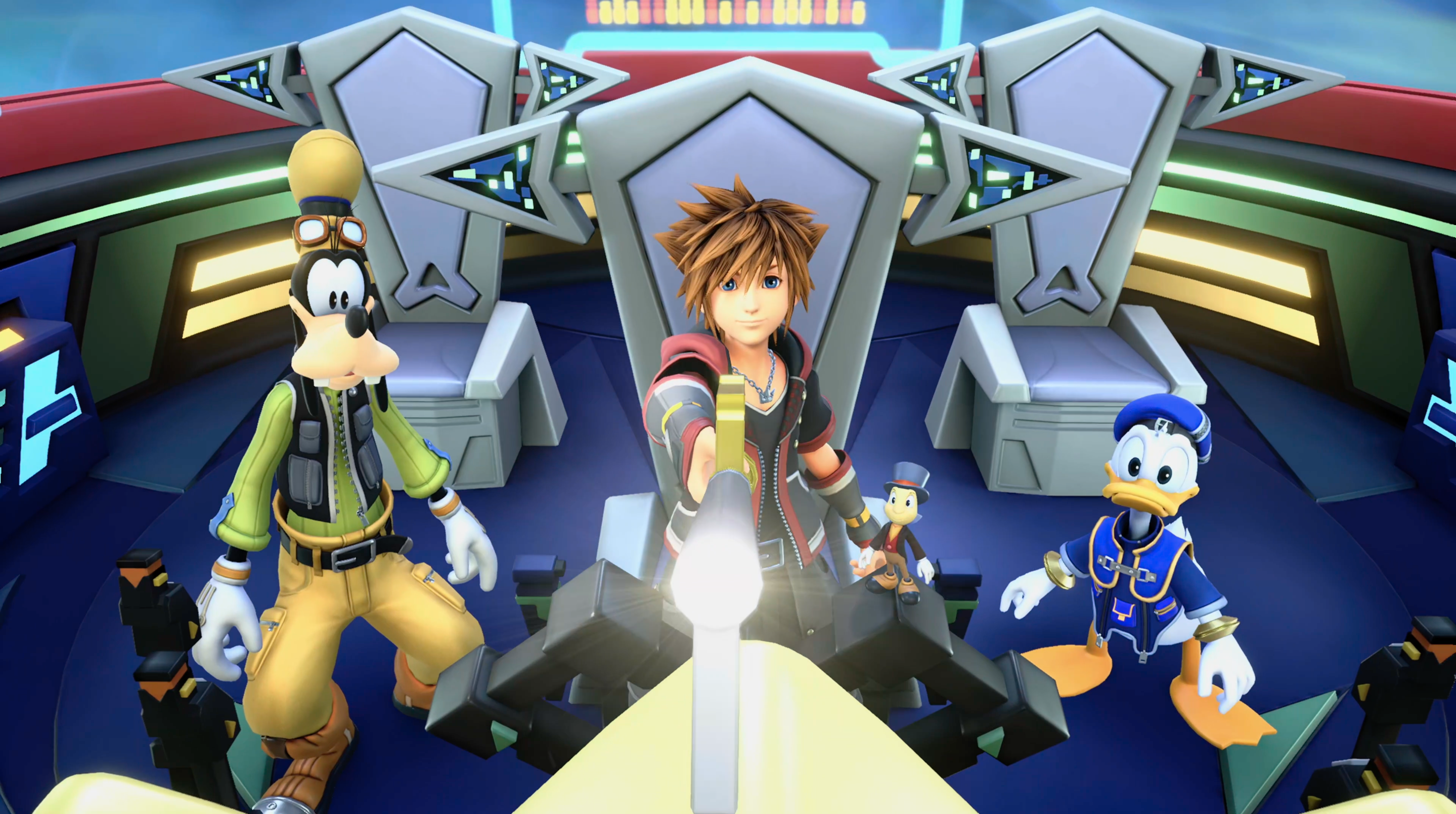
When I first played Kingdom Hearts III in 2019, I asked myself whether or not it was my favorite game in the series. It’s a question that I’ve battled with as I’ve done three more full playthroughs over the past five years, and it wasn’t until now that I came to understand why it’s been so hard to come up with an answer. Kingdom Hearts II is one of the most important games I’ve played and a formative part of my life. The thought of saying that it was no longer my favorite game in the franchise terrified me on a subconscious level because it felt like I would be letting go of something that meant the world to me. My desire to hold onto the past was so strong that it blinded me from this truth and made me unsure of my feelings for years. But now my heart and mind are clear, and I’m ready to face my fears.
Kingdom Hearts III is my favorite entry in the franchise. The story has its fair share of problems, but it’s one that I thoroughly enjoy from start to finish. Combat is a significant improvement over what came before, as it evolves and refines the best ideas from previous games, and introduces brand-new ones that are just as fun, making this the best combat system in the series. The world design is best-in-class, with worlds that are as beautiful and lively as they are expansive, and Gummi ship sections that are better than ever before.
If the first Kingdom Hearts was a child seeing what it could become, and Kingdom Hearts II was a teenager finding its path forward, then Kingdom Hearts III is the fully formed adult that proudly achieved its goals. As the culmination of everything the series had been building for itself since it began in 2002, it takes more than a decade’s worth of learnings and experience, and molds them into a game that finally realizes the series’ greatest ambitions. Kingdom Hearts III isn’t a perfect game, and that’s okay. But I can confidently say that Kingdom Hearts III is hands-down my favorite game in the series and the definitive Kingdom Hearts experience.
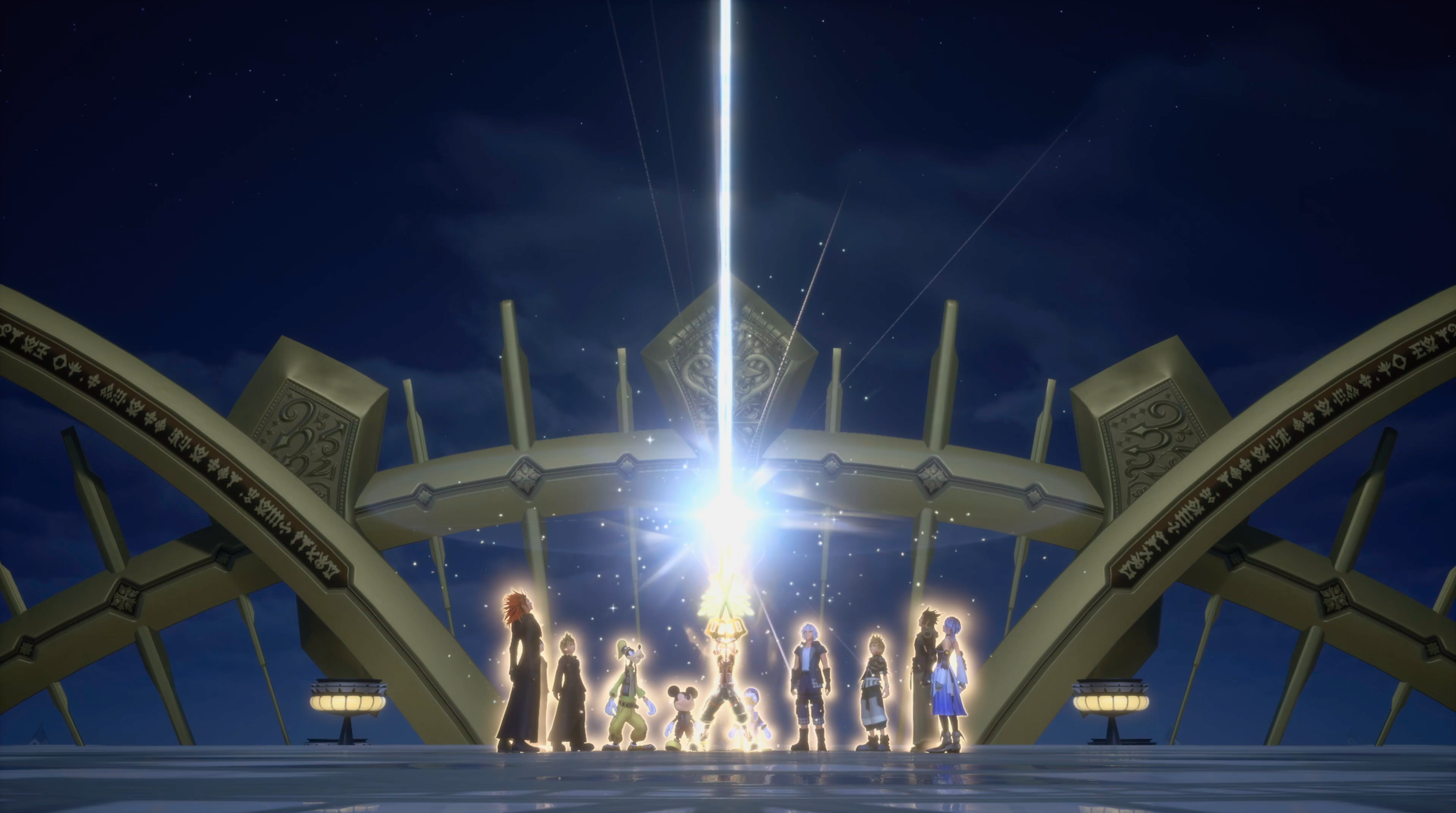
What is Kingdom Hearts? It’s a loaded question with many different answers because there’s nothing else quite like it. To some, it’s an increasingly ridiculous series that can’t be taken seriously. To others, it’s a delightful and exciting adventure. To me, the answer is a bit of both.
Kingdom Hearts is a series that’s equal parts captivating, silly, convoluted, and exhilarating. It’s about the friendships we form with others and the strength that comes from them. It’s about keeping hope alive and never losing sight of the light in the darkness. Above all else, Kingdom Hearts is about following your heart and staying true to yourself. None of this is exclusive to the series, but the way these traits and themes converge and manifest can only be described as magical. They’re responsible for its identity and are the reason why I and many others love it as much as we do.
Kingdom Hearts has done so much for me over the years. It’s fueled my passion for gaming and served as my gateway into Final Fantasy. I’ve made new friends and bonded with family members because of it. It’s inspired me to be the best version of myself that I can be. When I’m drowning in darkness, it’s the ray of light that pulls me out. This franchise has had a profound impact on my life and I’m eternally grateful for it.
You see, Kingdom Hearts is a special series to me, and I’ve cherished it ever since 2002. I love this franchise with every fiber of my being and that’s something that will never change. I don’t know what exactly the future holds for the series, but I do know one thing. No matter where it goes, no matter what it does, I’ll be there every step of the way.
 TheComfySpot