
- Developer: Ultizero Games
- Publisher: Sony Interactive Entertainment
- Reviewed On: PlayStation 5
- Available On: PlayStation 5, PC
My mindset is always the same whenever I start playing a character action game. I expect a healthy amount of spectacle and excitement when it comes to the combat, interesting level and game design to prevent things from getting stale, and a decent story that’s compelling enough to keep me invested in the events that contextualize all the action. Lost Soul Aside, unfortunately, does not check all these boxes. It strikes gold with its extremely fun combat, but sadly, it misses the mark in all other aspects.
You play as Kaser, a member of a rebel group called GLIMMER that’s fighting back against an evil empire. During one of the group’s acts of rebellion, their city is invaded by an alien race called the Voidrax that takes the souls of many residents, including Kaser’s sister, Luisa. After bonding with the ancient Voidrax, Lord Arena, Kaser goes on a journey across the world and alternate dimensions to revive his sister and save everyone from the threat of the Voidrax and their leader, Aramon.
Lost Soul Aside is a character action game, but it aspires to tell a story that’s as grand and complex as one that you’d find in something like Final Fantasy. This makes sense considering game director Yang Bing’s adoration of Square Enix’s legendary franchise, but it fails to capture what makes the stories in that series so beloved. I imagine most Final Fantasy fans would agree that even their least favorite entry had a story that was engaging to some degree, be that because of the characters or the world itself. Lost Soul Aside has a moderately interesting, if generic premise, and tells a story that never rises above just being bland and generic.
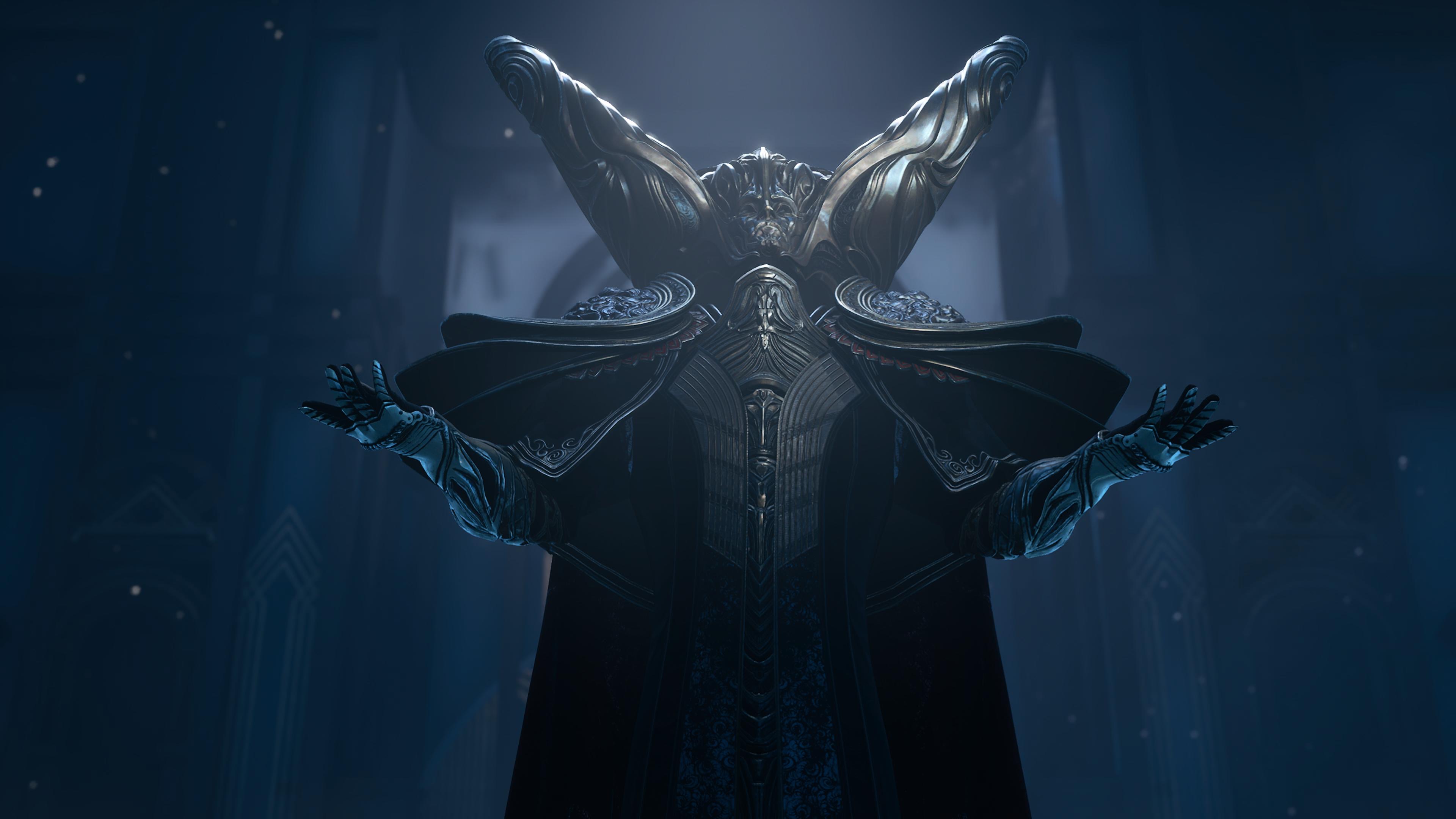
For starters, it lacks anything compelling or worth getting invested in. You have your garden-variety evil empire with soldiers who Spartan kick children into boxes, and a faceless emperor who’s all about ruling the world through power and fear. GLIMMER’s mission, origins, and methods aren’t explored in any way that adds depth to the group or to the empire. Aramon is a mustache-twirling villain that chews up every scene he’s in, but everything surrounding him and his plan to take over the planet is so convoluted that I had to just take it at face value and roll with the punches.
The closest the narrative gets to being genuinely interesting is sporadic mentions of a ten-year war between the empire and the country of Frosthold, and the empire’s continuing desire to take over the nation. Ultimately, it’s a turn your brain off and eat some popcorn type of story, which is fine for the character action genre, but disappointing for the kinds of games Lost Soul Aside wants to stand next to.
I could live with a by-the-numbers plot if the protagonist were appealing, but nothing exemplifies how dull it is more than Kaser himself. His sole motivation is saving his sister (and by proxy, the world), which in and of itself isn’t a bad thing. But if you aren’t going to have any depth, then there needs to be something alluring about you, such as your character design or personality. Kaser, however, lacks such elements that make for a memorable character.
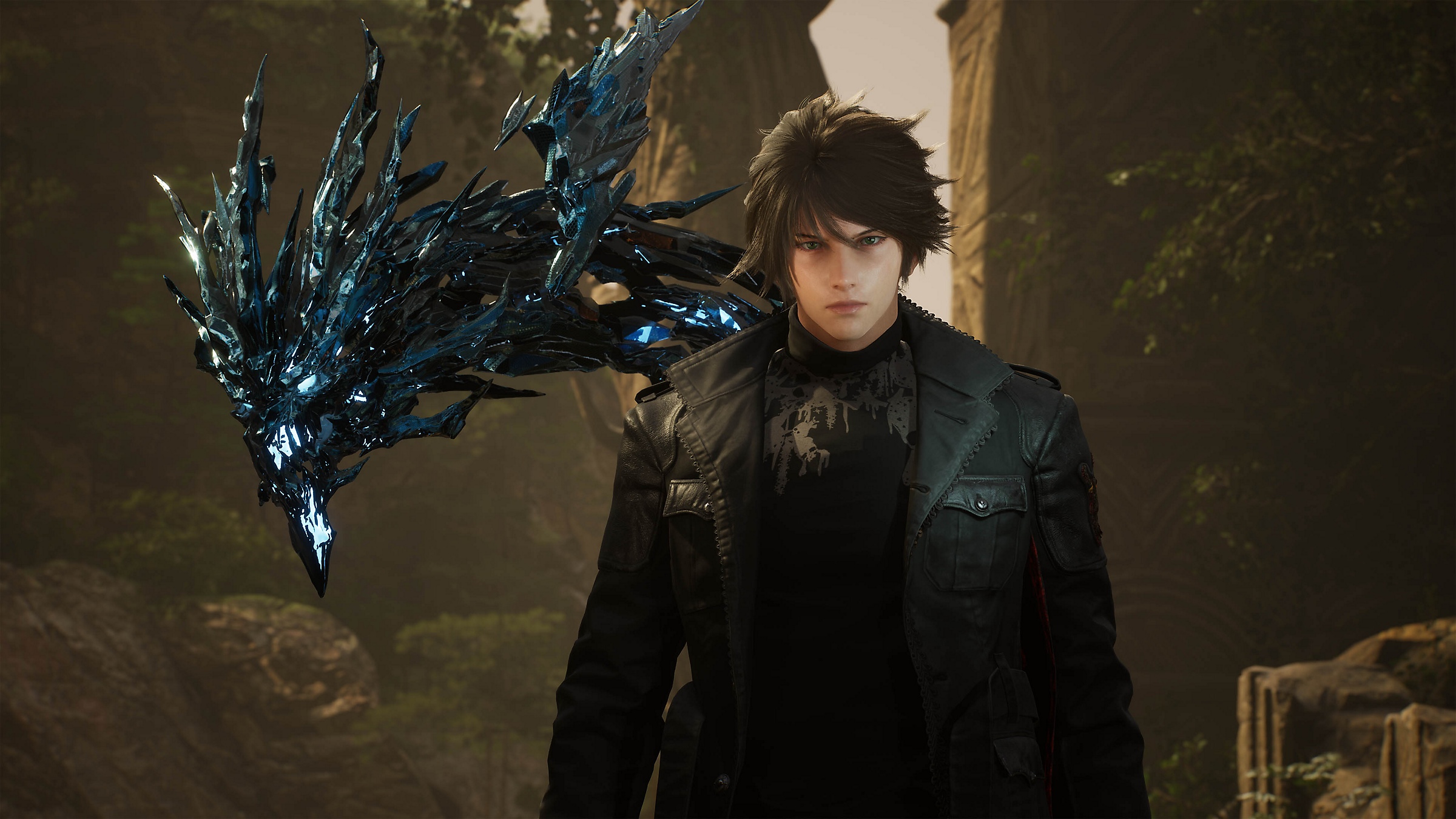
Visually, his design bears clear similarities to that of Noctis from Final Fantasy XV (yet another aspect of that aforementioned franchise adoration), making Kaser come across as a discount version of his inspiration. To make matters worse, while the voice acting throughout the game is okay at best, Kaser’s is particularly lifeless, making it impossible to connect with him on any level. Whether it’s Arena’s crotchety old man energy, Gethya’s giddiness over history and architecture, or even the emperor’s cold, calculating aura, I got more of an impression of who they are as people than I ever did of Kaser. This all causes him to feel less like a person in his own right and more like a stand-in for the player to live out a power fantasy as a boring aura-farming anime-esque character. I didn’t need Kaser to be as deep as Kratos or as colorful as Bayonetta, but when the protagonist of your character action game is outshone by every other member of the cast, you have a problem on your hands.
All of these flaws are heightened by Lost Soul Aside’s pacing and level design. Each chapter takes you to a different part of the world where you battle enemies and search for the entrance to that region’s Alternate Dimension. Once you find the Alternate Dimension, you make your way through one room after another until you reach the final boss and claim that dimension’s Spirit Crystal Fragment. You’re then brought back to the slums that serve as your hub for a brief story update before setting off to your next destination. This structure isn’t bad, but the monotony of the linear, drawn-out levels is.
Chapters vary in length, typically ranging from 2–5 hours each, so strap in as you’ll be fighting one group of enemies after another, and running through empty environment after empty environment, in between moments of awkward platforming and menial environmental puzzles. Awkward is actually an understatement when describing the platforming. Put simply, it’s not good. Kaser doesn’t have a steady momentum when jumping, causing him to drop like a rock when he hits the apex of his jump. I adapted to this, but it never felt good, and it made for an annoying experience when going through these sections. As for the puzzles, they break up the repetitive run-fight-run-fight cycle that persists throughout each level, but they aren’t that challenging or engaging. They’re largely just fine, but they always felt like busywork to pad out the runtime before you reach a boss fight and then repeat the gameplay loop. Every so often, there will also be a big setpiece moment that raises the energy some, but they’re not the norm.
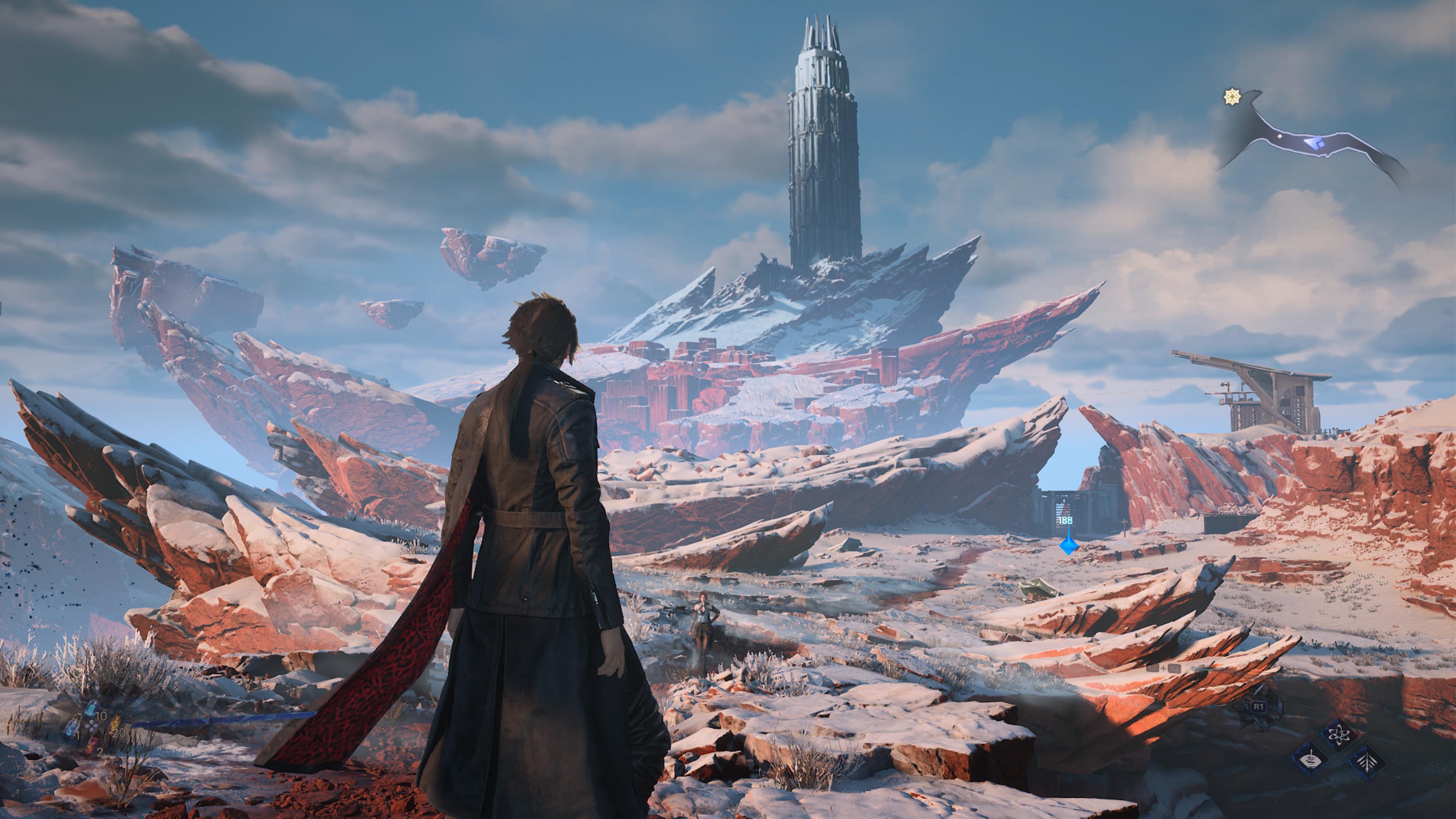
It’s a structure that becomes tiresome very quickly and had me hoping that the next chapter would come soon so that I could be done with the game. As I was partway through the search for the penultimate Alternate Dimension and Crystal Fragment, I dreaded how many hours it would take to complete the chapter and then do it all again one more time for the final dimension and fragment. Mercifully, Lost Soul Aside’s final chapter spares you the trouble and sends you directly to the Alternate Dimension, almost as if it knows how much it’s been prolonging things.
Crafting resources, potions, and currency can be found along the main path and on minor branching paths, as well as combat challenge rooms called Dispersed Dimensions. Some areas also have energy collection challenges, but these are really just minor distractions without any substance due to how simple they are and their lackluster rewards. The litany of crafting items became redundant after a while because I had so many of them, yet no way to use them since Liana’s workshop only ever had one potion I could make, and my stock was full. Because Lost Soul Aside doesn’t exactly make it clear that a vendor in the slums sells crafting recipes, it wasn’t until the final chapter of the game that I discovered this and was finally able to use the dozens of crafting items I had collected.
Then there are the technical issues. For some reason, when walking at a normal pace, the camera stutters along with every step Kaser takes. It’s incredibly distracting, and the only way to avoid it is by sprinting everywhere you go. The game also hitches every time it auto-saves, which is pretty frequently. Most of the time, it doesn’t intrude on gameplay in a meaningful way, but there are a few occasions where it happens while platforming, which is the worst possible time for such a thing to occur. Admittedly, Lost Soul Aside does have some good-looking environments to take in during all the fighting and exploration. Locations such as the snow-covered mountains of the Redstone Mines and the heavenly Aeroflux Dimension had me taken aback by how picturesque they were.
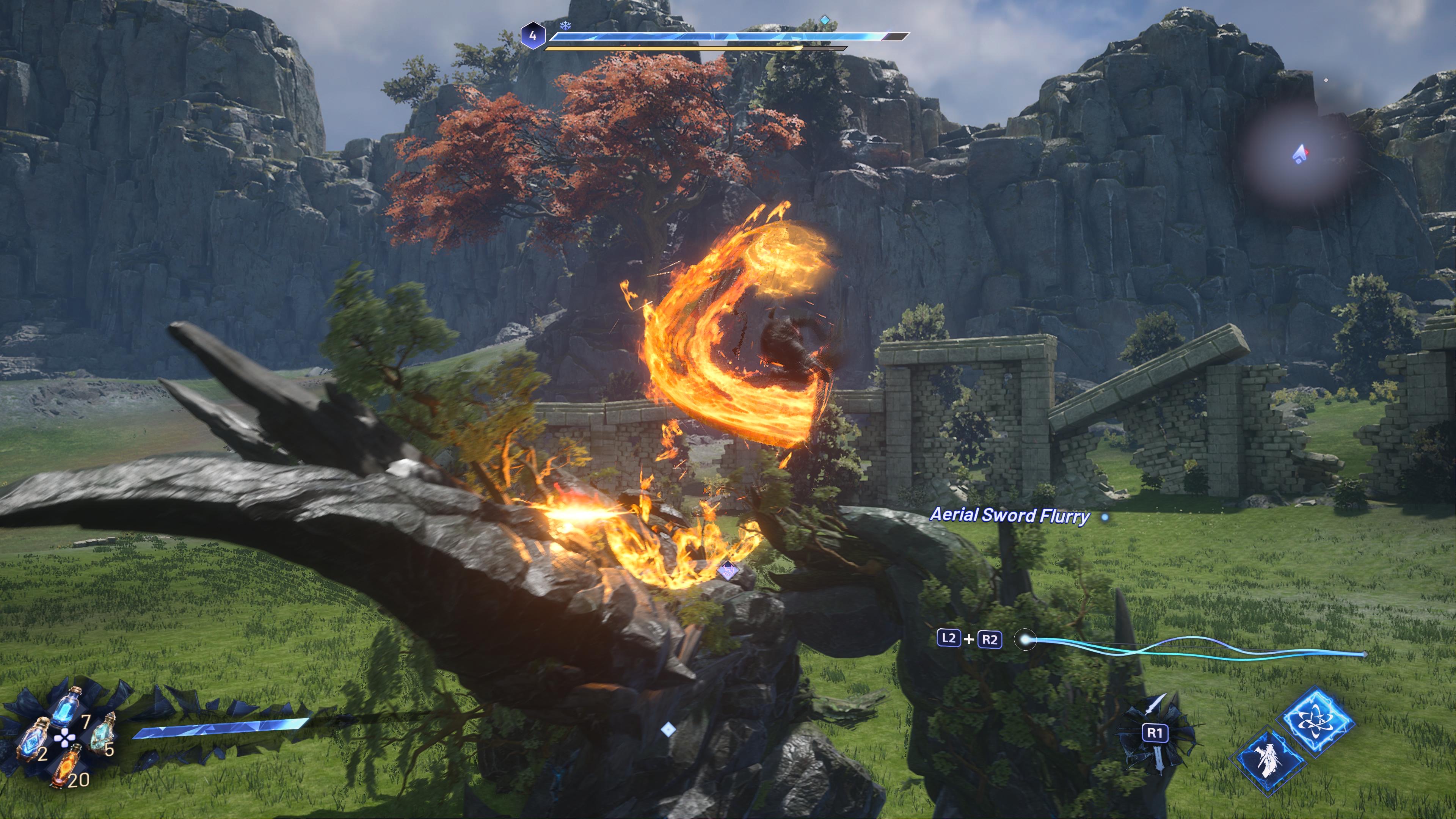
The one bright spot of Lost Soul Aside is its combat. It’s not without its flaws, but it excels at delivering all the stylish, fast-paced action that you’d expect from hack-and-slash, character action games. Combat starts fairly simple with just a sword and some basic attacks, but as you unlock new abilities and weapons, it steadily takes shape into some of the most fun combat I’ve experienced in the genre, with plenty of room for player expression. Alternating between light and heavy attacks to perform specific moves, instantly swapping weapons mid-combo, juggling enemies in the air, zipping around the space as you dodge attacks and nail perfect blocks; it all feels amazing and never gets old. The slick animations also create a dazzling display of badassery that contributes to the thrill of combat.
I especially enjoyed the Bust Pursuit follow-up attacks that can be performed with a timely press of the R2 button. Some of them, like the tornado created after performing an aerial launch attack with the poleblade, allow you to keep the pressure on opponents. Others, like the explosive arrays the scythe leaves behind, create opportunities for you to dish out strategic punishment. The window for performing Burst Pursuits is small, but they’re an integral part of your kit that I quickly fell into the groove of using.
Being bonded with Arena grants you access to several of his abilities as well, such as summoning a pillar of flames at an enemy’s location, or surrounding yourself with orbs that damage enemies they come in contact with. They operate on a cooldown, but damaging enemies decreases the time you have to wait, so it was never long before I could use them again. You can have up to three equipped at a time, though it takes a while before that’s even an option, so I typically stuck with the ones that I knew I liked and didn’t branch out much. There’s also the option to temporarily enter a fusion state with Arena that enhances all your attacks after generating enough Fusion Energy. It’s a brief power boost, but it can be the key to turning the tide in a tough battle.
Something that surprised me was how player expression in combat wasn’t limited to just the moves you used in battle, and extended to the weapons themselves. They can be adorned with up to six charms that boost their stats in various ways, and you’re able to place them on your weapon wherever you choose. Because the charms can only be placed on the X or Y-axis, your weapons might look a bit silly, but it’s a small touch that I had fun with.
One aspect of the charms I do take issue with is the stats. Every charm has an inherent, guaranteed stat boost, like increased damage to airborne enemies, but they also feature a random stat boost, such as increasing your chance of performing a critical hit. The latter are a problem because between the category of stat boost and the value of said boost, there’s a wide range of options that’s completely left up to chance every time you purchase a charm. You might want to buy a charm that’ll increase the attack power of your weapon, but it’s a frustrating roll of the dice as to whether you’ll get that boost and if it’ll even be at the amount you’re hoping for. Charms aren’t exactly cheap either, so you can end up burning a bunch of money trying to get the specific boost you want. One has to wonder why crafting charms with specific stat boosts isn’t an option.
With all the tools at your disposal, combat could easily become a cakewalk, but Lost Soul Aside puts up a considerable fight from start to finish. Between low-tier, fodder-type enemies that you can play around with and stronger, mid-to-upper-tier enemies who have a stagger bar in addition to their base health, there’s a wide variety of foes to duke it out with, keeping encounters from ever getting stale.
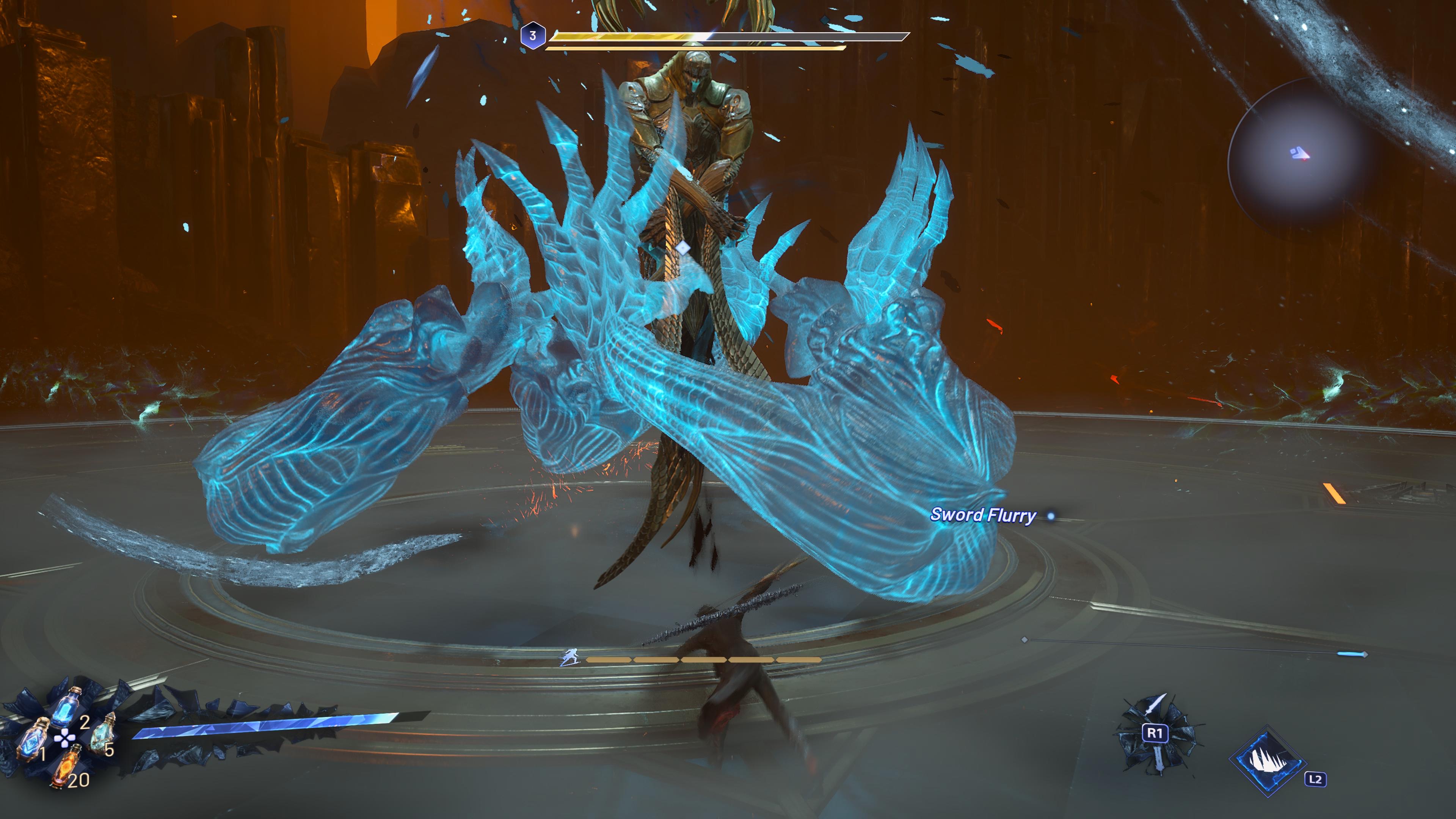
Boss fights are a bit of a mixed bag, though. They’re full of spectacle due to either their scale or the action happening on screen, but the gameplay and mechanics involved in many are either very simple, very annoying, or a combination of both. I found that the least enjoyable encounters were against the larger-than-life foes.
The dragon at the end of chapter 1 is a drag of a fight that involves breaking their claws while avoiding attacks, so that you can briefly stagger and damage it before doing the cycle all over again. The towering water entity at the end of chapter 4 can only be damaged when attacking its head, resulting in a prolonged fight. I much prefer the intimate boss fights against human enemies since they do a better job of balancing epic visuals with fast-paced action. Heaven forbid you die at any point during a boss fight, though, since there aren’t any checkpoints, so you’ll have to restart them from the very beginning.
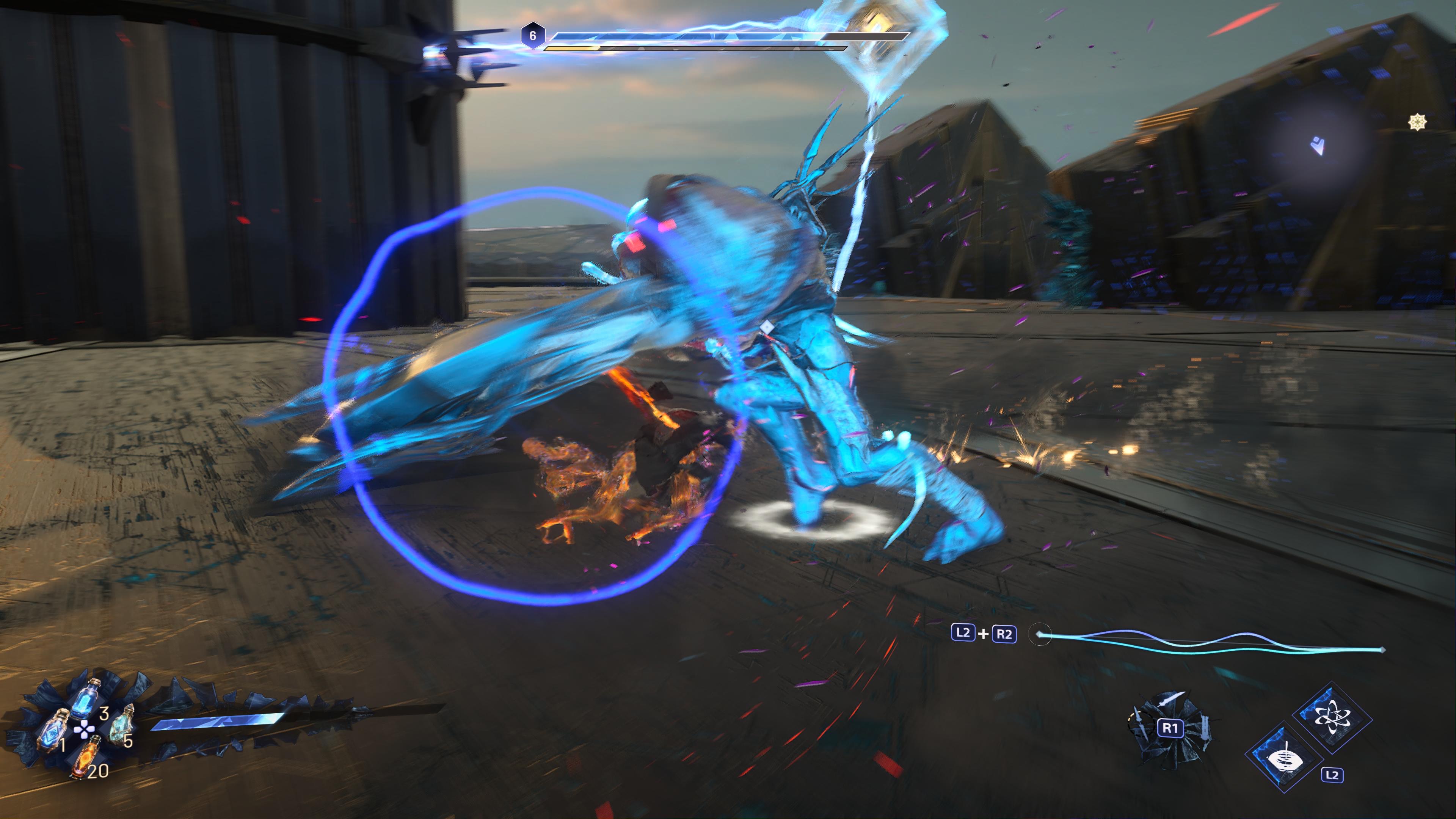
I appreciate a consistent level of challenge, and fights are regularly thrilling affairs; however, it can feel cheap when dealing with a group of stronger enemies since their moves are more deadly and can quickly overwhelm you. It doesn’t help that there’s little to no visual, audio, or physical feedback when you take damage, either. Of course, you can try to dodge and block their attacks, but these actions are governed by a stamina meter that I’m a bit confused by. In character action games, you’re expected to dodge and block attacks just as much as you’re dishing out damage. Restricting the number of times you can do either of those actions runs counter to the high-intensity experience of the genre. In addition to the aforementioned defensive options, you also have to consider how much stamina is being used with the scythe’s throwing mechanic and the poleblade’s rapid-spin attack.
At the same time, stamina restores itself fairly quickly, and restoration can be improved along with general consumption, based on your choice of weapon charms, accessories for Kaser, and any stamina potions you might have. With so many ways to maintain stamina, the system feels borderline pointless at best and annoying at worst. It’s especially annoying for fights in the Dispersed Dimensions, as well as for the back half of the game in general, where enemies weren’t pushovers and I didn’t have the mental bandwidth to keep track of stamina consumption amidst the chaos of battle. Perhaps the intent was to prevent you from spamming certain actions during fights, but it ends up being more of a nuisance that doesn’t enhance combat in any way.
For those who deeply enjoy the combat, a boss rush mode unlocks after completing the story, as well as the ability to replay the adventure on harder difficulties. I don’t foresee myself sticking around much for either mode, but having some notable post-game content for those who want it is certainly appreciated.

Overall
It took me about 22 hours to complete Lost Soul Aside’s main story. That’s not particularly long for a game, but this was quite possibly the longest 22-hour game I have ever played. Between the subpar story, repetitive structure, and tedious level design, it simply doesn’t have the substance to support this runtime. Combat is a lot of fun, but it can only do so much to improve the experience. At a certain point, I was primarily looking forward to fights because completing them meant I was one step closer to finishing the game. As a leaner, more focused package that played to its strengths, Lost Soul Aside could’ve been a pretty good game. Instead, it’ll have to settle for being slightly above-average.
 TheComfySpot