- Developer: Sucker Punch Productions
- Publisher: Sony Interactive Entertainment
- Reviewed On: PlayStation 5
- Available On: PlayStation 5
In 2020, Sucker Punch delivered a certified hit with Ghost of Tsushima. As a love letter to classic Japanese cinema, its gripping story, immersive open world, and visceral combat made it one of my favorite games from the PS4 generation. Five years later, the team is back with Ghost of Yōtei, a game that aims to give us more of what we got before, just refined to a razor’s edge. Not every swing lands, and the reliance on what worked before weakens Ghost of Yōtei in some key ways, but when it hits, it’s sharp enough to cut through the noise and make this another fun and memorable adventure.
Set a few hundred years after Ghost of Tsushima, you play as Atsu, a woman who’s never escaped the childhood trauma of her family being murdered by a group known as the Yōtei Six. Driven by hate and the goal of getting justice, Atsu returns home 16 years later to hunt the group down. It’s not a groundbreaking story, and at times it can be predictable, but as with anything, the execution is what really matters, and Ghost of Yōtei’s writing and presentation are more than up to the task.
Right from the start, there’s a level of intimacy that makes it more captivating than the story in Tsushima. Through a masterful blend of excellent pacing, cinematography, music, and performances, the story’s opening minutes had me utterly engrossed in Atsu’s plight. What sealed the deal was how you yourself use the touchpad on the DualSense to write the names of the Yōtei Six on her sash. The DualSense’s unique features are often underutilized, so I appreciated how it was used here to instantly connect me with Atsu and make her hunt my hunt.
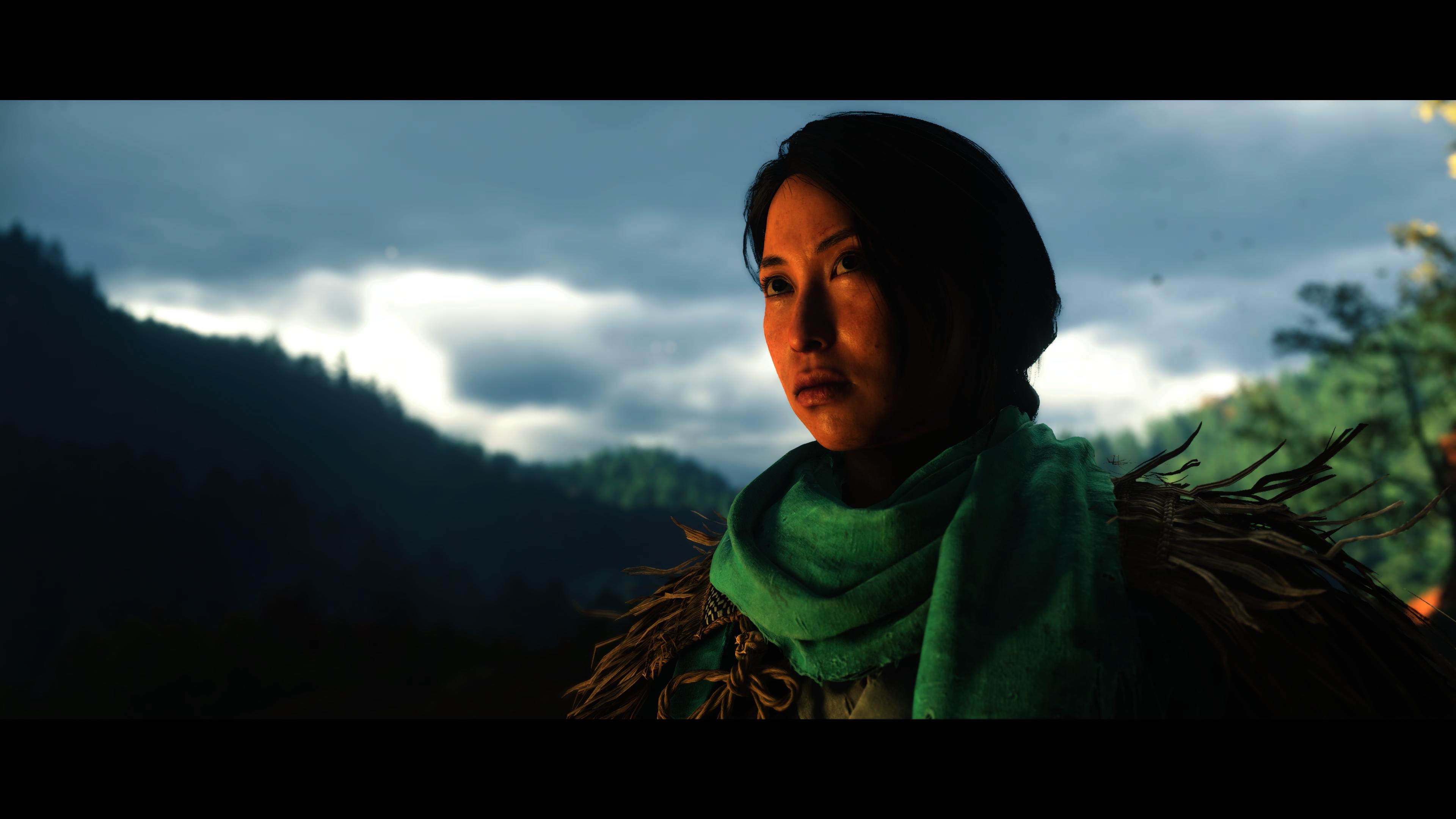
A common critique of Jin from Ghost of Tsushima is that he’s bland and uninteresting because of how he’s constantly worrying about being an honorable samurai. I never shared that sentiment, but I do believe that Atsu’s a significantly more interesting character. She immediately embraces the Onryō persona and uses the fear it strikes into others to empower her and bolster her resolve in seeing this quest to its conclusion. Revenge may be her singular goal, but I love the complexity that arises in its wake as she reckons with how it’s affected her and those in her orbit ever since that harrowing night. Actress Erika Ishii does an excellent job in the role, imbuing Atsu with the fierce determination that makes her a terrifying force, and the painful desperation of a woman who wants to be freed from years of agony.
Atsu’s present condition is wonderfully juxtaposed with several playable sequences that flash back to her youth with her family. Whether it’s learning how to forge a sword with her father, playing a game of zeni hajiki with her mother, or having some innocent fun with her brother, these sequences do a good job of showing all that Atsu lost with their deaths. Making these sequences more impactful is the ability to switch between past and present at will. This puts the stark difference in worldview on full display, most notably at their home, where it’s lively and serene in the past, but scarred and decrepit in the present.
Although she starts the story as a lone wolf, Atsu slowly builds up a group of allies that she can rely on. I really enjoyed this supporting cast of characters and their various stories, as they brought out a warmth and compassion in Atsu that she typically keeps buried within. Some of my favorites were the weapon masters you can find in different parts of the world who add new tools to your arsenal. The training arcs you partake in are brief, yet fun, and the stories for these masters are usually closely tied to the narrative of whatever region you’re in, giving more of a reason to be invested in them.
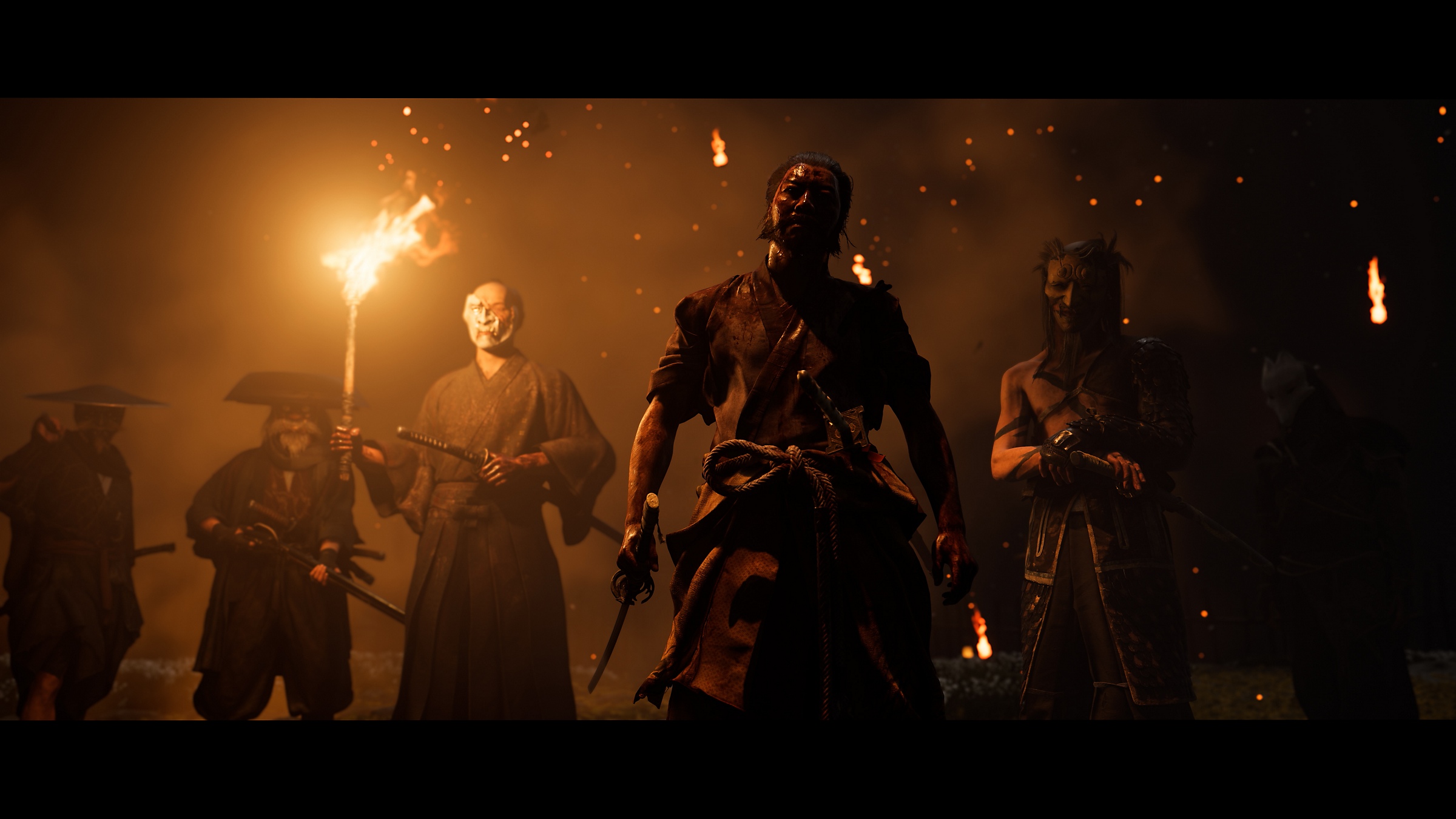
It’s tough enough to create one good antagonist, and Ghost of Yōtei has the unenviable task of making six. Some members of the Yōtei Six are more fleshed out than others, but overall, they’re a solid group of characters with each one getting their own dedicated arc in the story. As the leader of the group, Lord Saito takes over the main antagonist role, and I found him to be a notable step up from Khotun Khan, even if they have roughly the same amount of screentime. Having a personal connection to Atsu already improves things, but the depth provided by Saito’s ambitions and motivations makes him more than just another villain who wants to rule over others. Saito absolutely commands the screen whenever he’s present, with actor Feodor Chin giving a charismatic and menacing performance that I wish we got more of.
If there’s one issue I have with the story, it’d be its structure. In the lead-up to release, one of the key pieces of the marketing was how Ghost of Yōtei had a non-linear narrative that allowed you to pursue the various leads you had for the Yōtei Six in whatever order you wanted. While this is true, it’s not as open-ended as one may think. You’re presented with leads for each member of the group, but only two of them actually allow you to track down and eliminate their target. The other leads offer an illusion of choice, with their targets not actually being able to be eliminated until a pre-determined point in the back half of the story. Narratively, it makes sense why these specific targets can only be taken down when the story says so, and it just so happens that I planned to tackle them in that specific order anyway. But if I only get a say in the matter for two of the six, I’d rather not have a say at all.
When it comes to the open world, the name of the game is refinement. One of Ghost of Tsushima’s defining qualities was its emphasis on natural, player-driven exploration, and Ghost of Yōtei wholeheartedly doubles down on that philosophy. Following the “guiding wind” and familiar location identifiers, such as smoke trails in the sky, are still key to finding points of interest and returning activities such as bamboo strikes and hot springs, along with a bevy of new ones. A murder of crows, for example, signifies a wolf den where Atsu will team up with the animal to free other wolves that have been captured by Saito’s men.
Making discovery easier is the addition of a spyglass that Atsu can use at any moment to find places that haven’t been visited yet and add them to your map. This convenience saw me use it quite liberally in the early hours of the adventure to spot anything and everything I could. Eventually, I chose to use it sparingly because I felt like it simplified things too much. Instead of actually discovering locations and activities in the world, using the spyglass felt more like deliberately adding things to a checklist. Others may not feel the same way, but such a mindset runs completely counter to the more natural, freeform manner in which the franchise intends for you to build a list of things to do. There’s also a cartographer who sells maps with the locations of specific activities, but he only ever sells a few at a time, and you have to do a bit of work to mark the spot by aligning his map with yours. It works well as a supplement to exploration as opposed to a replacement for it.
Ezo may be roughly the same size as the island of Tsushima, but each of its five regions is densely packed with a large variety of things to do. You have enemy encampments to clear out, painting locations, bounties to track down, shamisen practice, environmental puzzles, shrines to reach; the list goes on, leading to a game with side content that’s less repetitive and more interesting than its predecessor. It’s also less of a chore to tackle it all since getting around on your horse is faster than before. Riding through patches of white flowers and picking up resources while on horseback will grant you a temporary speed boost, so I was almost always flying across Ezo’s many fields and hills. Exploration is also critical for unlocking new techniques and abilities for Atsu, since the only way to earn points for them is by finding altars of reflection spread across Ezo.
With so much on offer, it’s easy to get distracted from whatever your primary goal is at any given time, and made even more difficult thanks to the spontaneous way in which you’ll come across many of the game’s meatier side quests. You might hear the sound of a storyteller who regales you with the tale of a haunted estate, leading you to search the property and uncover its mysteries. You might be riding your horse toward an injured person when all of a sudden you get thrown off because of gunfire, and are now sneaking up a hill to take out your assailants. You might even find a trail of blood in the woods that leads to a bounty you hadn’t picked up yet. The stories told in these side quests are genuinely interesting, and the rewards are worth the trouble.
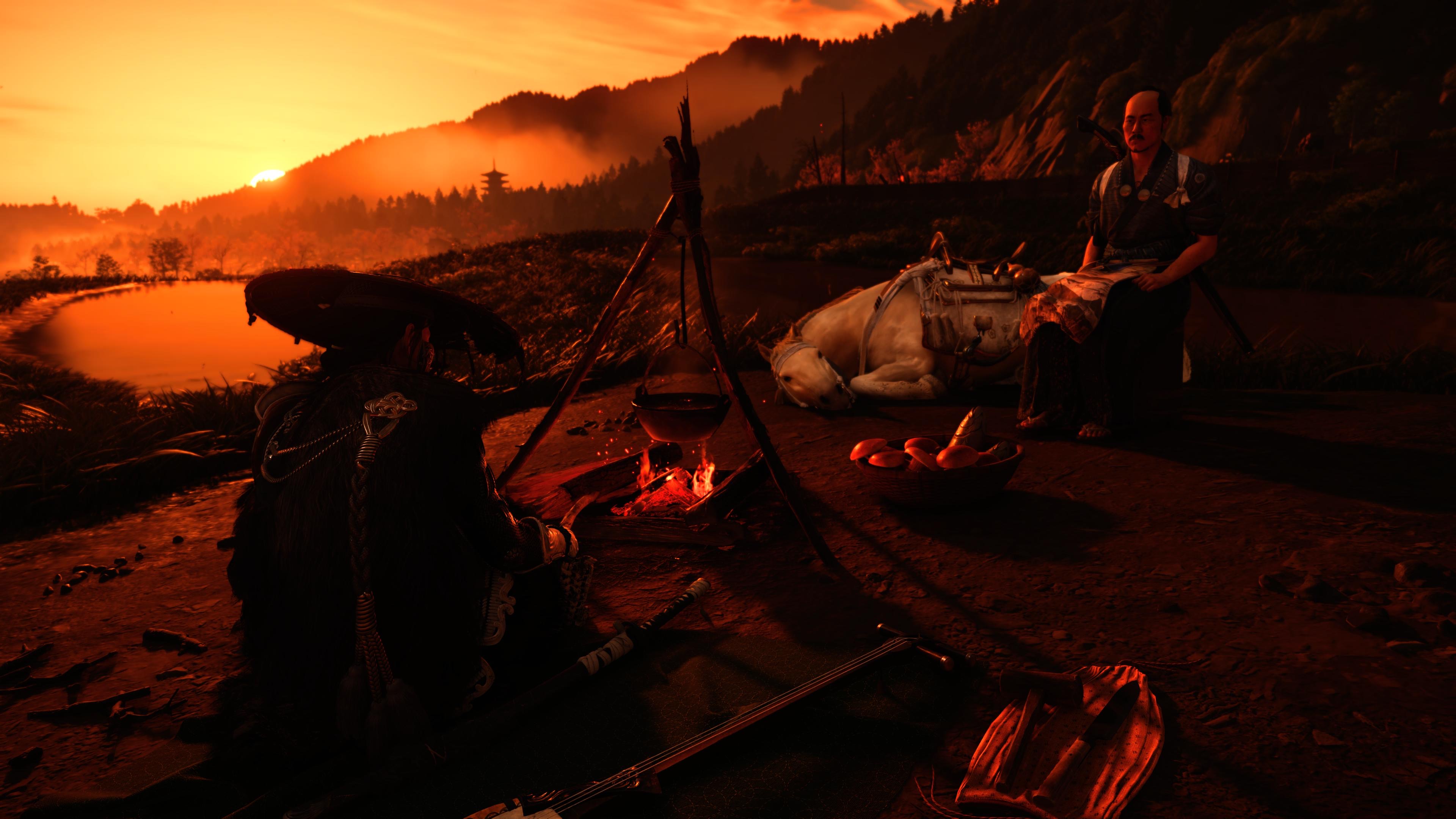
Going one step further is how seemingly minor people and places I found while exploring in the open world would actually end up being key parts of a side quest I had yet to discover. One such instance happened when I came across a group of travelers peacefully eating around a campfire. They offered me a meal, and I gladly obliged, taking this opportunity to bask in its serenity and be one with the world for a few minutes. Shortly after, I crossed paths with a monk who mentioned one of those travelers, beginning a side quest that completely recontextualized the tranquil encounter. In the greater pantheon of open-world games, this isn’t a big thing, but it does somewhat add to the immersion by making Ezo feel a bit more lived in.
The best and most notable addition to exploration is the camp. No matter where she is, Atsu can set up camp and cook food to gain a perk in combat, or craft ammo and supplies with the resources she has. A member of her wolf pack can join her as well, letting you purchase any items or upgrades they might be offering. While fast travel is still shockingly fast in Ghost of Yōtei, I appreciate the convenience of being able to restock and resupply on the spot, and then continuing the journey from there.
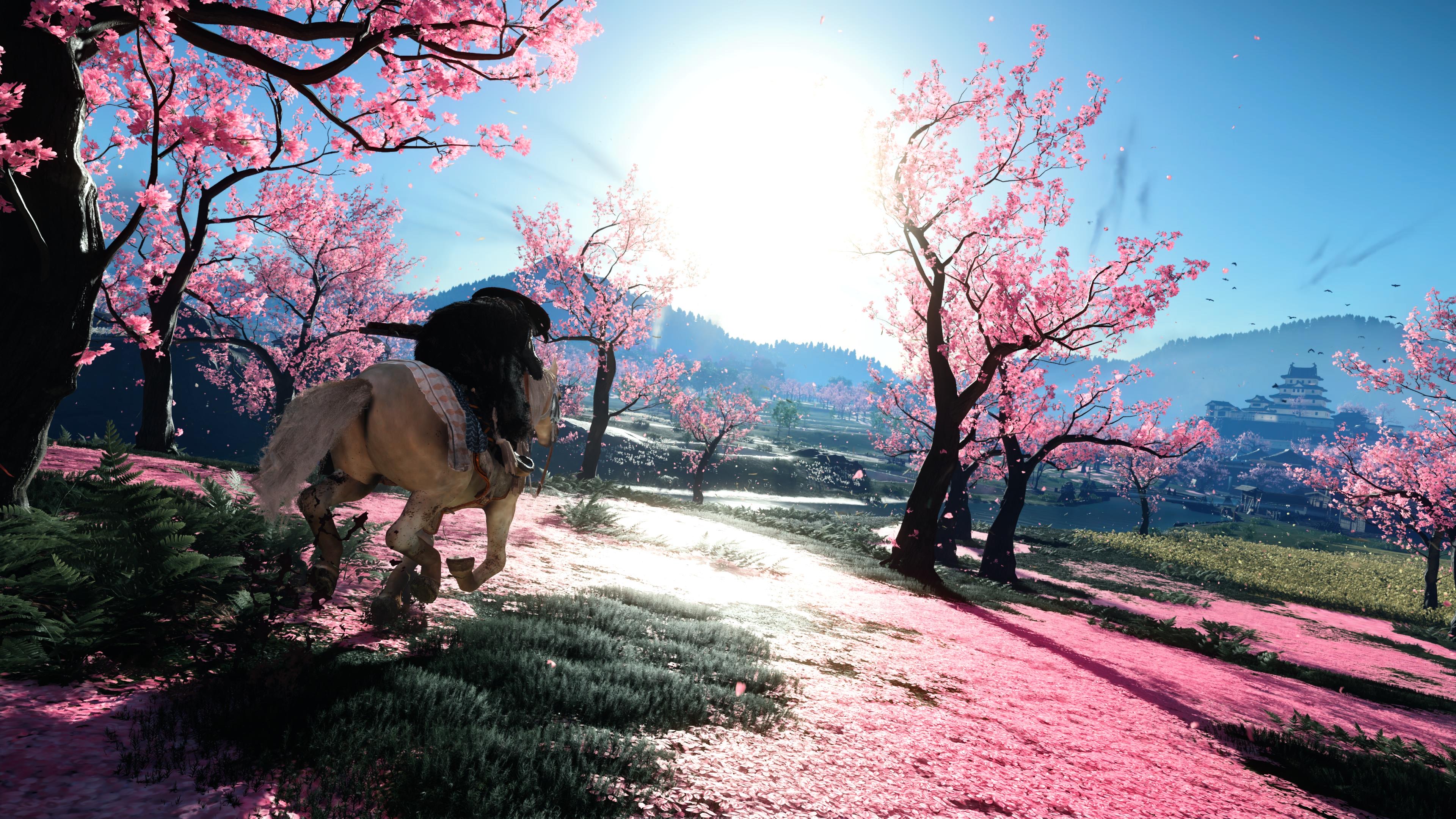
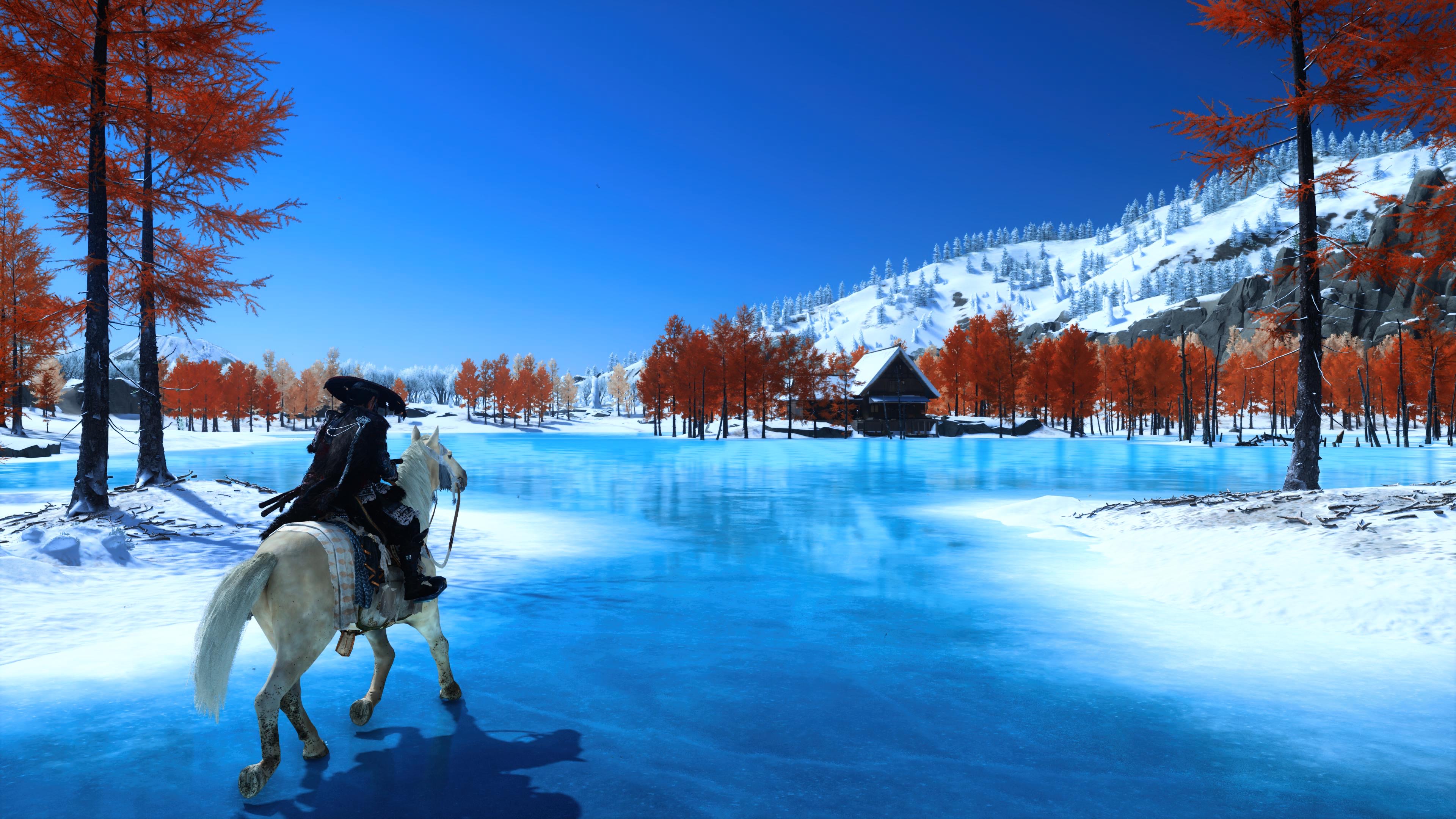
It should also come as no surprise that the open world is stunning. Whether I’m riding past sakura trees in Oshima Coast with clear, sunny skies overhead, or staring in awe at the aurora borealis, Ghost of Yōtei’s stellar art direction constantly produces gorgeous sights across the Ezo region. Yet despite how enjoyable it is to explore this world and get lost in its many stories and activities, I can’t shake the overwhelming sameness of it all when compared to Ghost of Tsushima.
The challenge of any sequel is finding a way to build on the core ideas that worked well before. To introduce ideas that make for a new and improved experience, while keeping it fresh for returning fans. Sucker Punch largely accomplished the former, but isn’t quite able to do the latter. Initially, the feeling of engaging with these open-world systems again for the first time in years was exciting. I loved literally, and metaphorically, going where the wind took me as I got reacquainted with them and noticed the new additions. A few hours later, although I was still having fun seeing all that Ezo had to offer, that “new game shine” had worn off once I realized that I wasn’t actually engaging with the world or traversing it in any substantially different ways than before.
Even with a new setting, as beautiful as Ezo is, none of it seemed like something that I wouldn’t have seen in the last game. Everything about exploration just feels like business as usual. The closest it gets to keeping things fresh is in the snow-covered mountains of Teshio Ridge, which features a criminally underused weather mechanic and clever environmental puzzles that are specific to the region.
Ghost of Tsushima’s take on open-world exploration was novel at the time, and still is to a degree, but Ghost of Yōtei isn’t interested in taking big steps forward with its open world. It’d rather take small, incremental steps to provide an experience that’s an improvement on paper, but similar enough to make you forget about the differences and feel like you’re playing the same game from 2020. They’re smart, yet safe additions that allow the game to settle for coloring inside the lines that Tsushima already drew instead of using those lessons to create an exciting new piece. I imagine that most players will be more than happy with this, and I’m glad they enjoy it because it’s not inherently bad by any means. I just wish Sucker Punch had taken some more big swings with its approach to the open world this time around.
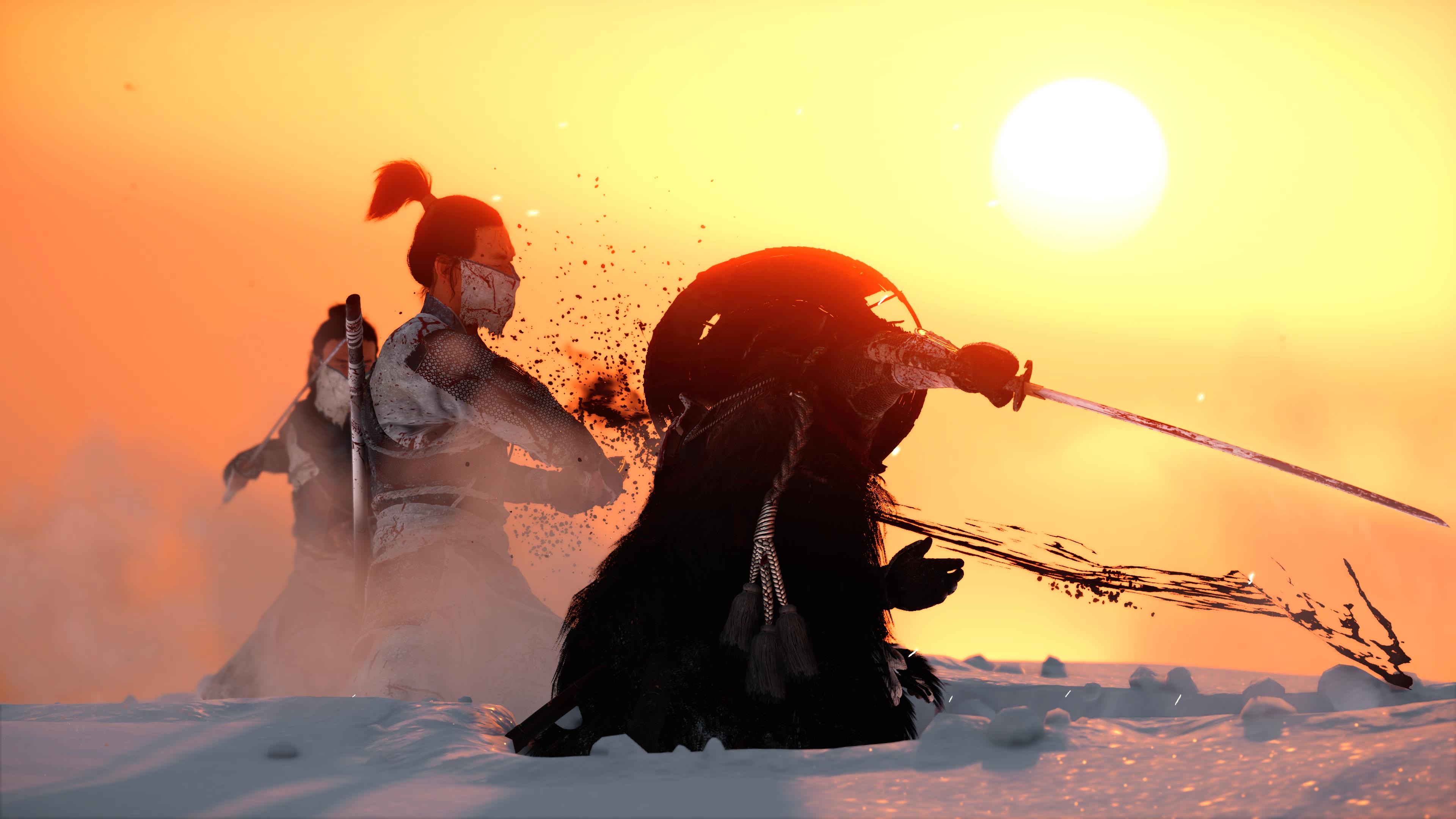
The ambition I was hoping for from exploration can be seen in Ghost of Yōtei’s combat, which continues to be a wonderful highlight of the franchise. Standoffs retain their stylish cinematic flair. Duels are still intense, methodical tests of skill. Swordplay remains as meticulous and crunchy as always, where every hit and well-timed parry matters. However, Sucker Punch has refined its already excellent foundation with changes that lead to a significant and tangible improvement over what came before.
First and foremost is the ability to pick up and throw stray weapons at enemies. Available right from the start, this move is one of my favorite things to do during fights. As a quick, efficient way to get rid of enemies, thanks to it largely being a one-hit kill, hurling a sword, sickle, or spear at a nearby enemy never got old. Furthermore, it emphasizes how scrappy and improvisational Atsu can be by using anything at her disposal to complete her hunt.
This also goes hand-in-hand with the new disarming mechanic that both Atsu and enemy soldiers can perform. Defending against this is relatively easy in one-on-one engagements and results in your enemy losing their weapon, but it’s trickier in group battles. Missing the deflection window regularly sent a wave of panic through my veins as I scrambled to retrieve my lost weapon from wherever it landed while dodging attacks and countering with any other weapons and items I had access to.
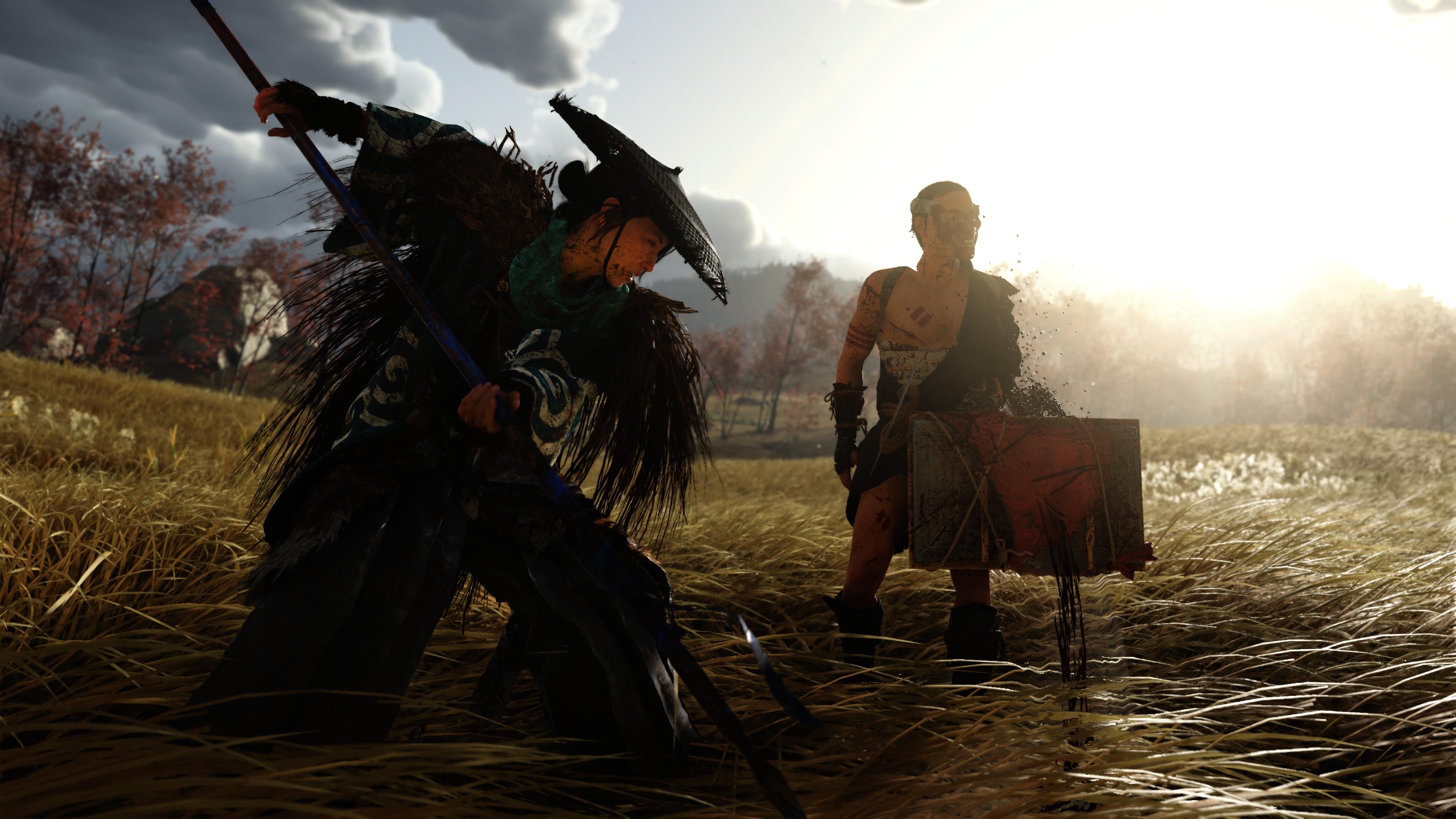
Atsu’s versatility in battle can also be seen in her expanded arsenal of weapons. Not limited to just a single sword, Atsu can use dual katanas, a yari, the kusarigama, and an odachi. As replacements for the different weapon stances behind Ghost of Tsushima’s rock-paper-scissors-esque combat, the variation in weapon types makes fights more exciting than they were in the last game. Each one feels great to use and is distinct from the others.
My go-to weapon of choice was the dual katanas, as I used them to slice and dice enemies with an unrelenting barrage of attacks and overpower any yari wielders I encountered. The flashy kusarigama was another favorite of mine, with its emphasis on crowd control and destroying enemy shields. It’s immensely satisfying to embody Scorpion from Mortal Kombat and use the kusarigama to pull distant enemies toward me for an instant kill. Even more thrilling is lighting it on fire and swinging it around a wide area, setting nearby enemies ablaze.
Complementing these weapons are the smaller tools that can be deployed in fights, and I had a lot of fun making good use of them. I might use some throwing sand to disrupt approaching enemies so I could regroup or focus on another set of more pressing targets. The quick-firing pistol was also handy for dropping enemies like flies. In the moments when Atsu is accompanied by a friendly wolf in combat, you can open up enemies to a brutal attack from the beast by throwing a pot to stun them. It’s never not satisfying to see the wolf pounce on them, but I especially got a kick out of it when the wolf would randomly join late-game fights after I built up my bond with it.
Just like in Tsushima, Atsu has multiple sets of armor and dozens of charms that are geared toward different playstyles. What Yōtei adds is the much-appreciated option of creating multiple loadouts for your gear. As someone who leans towards being aggressive, with a hint of stealth thrown in, I didn’t take much advantage of this since I typically stuck with a single loadout until I got a better piece of armor that worked with my playstyle. Nevertheless, it’s a great addition to have on day one and not have to wait for a post-release update.
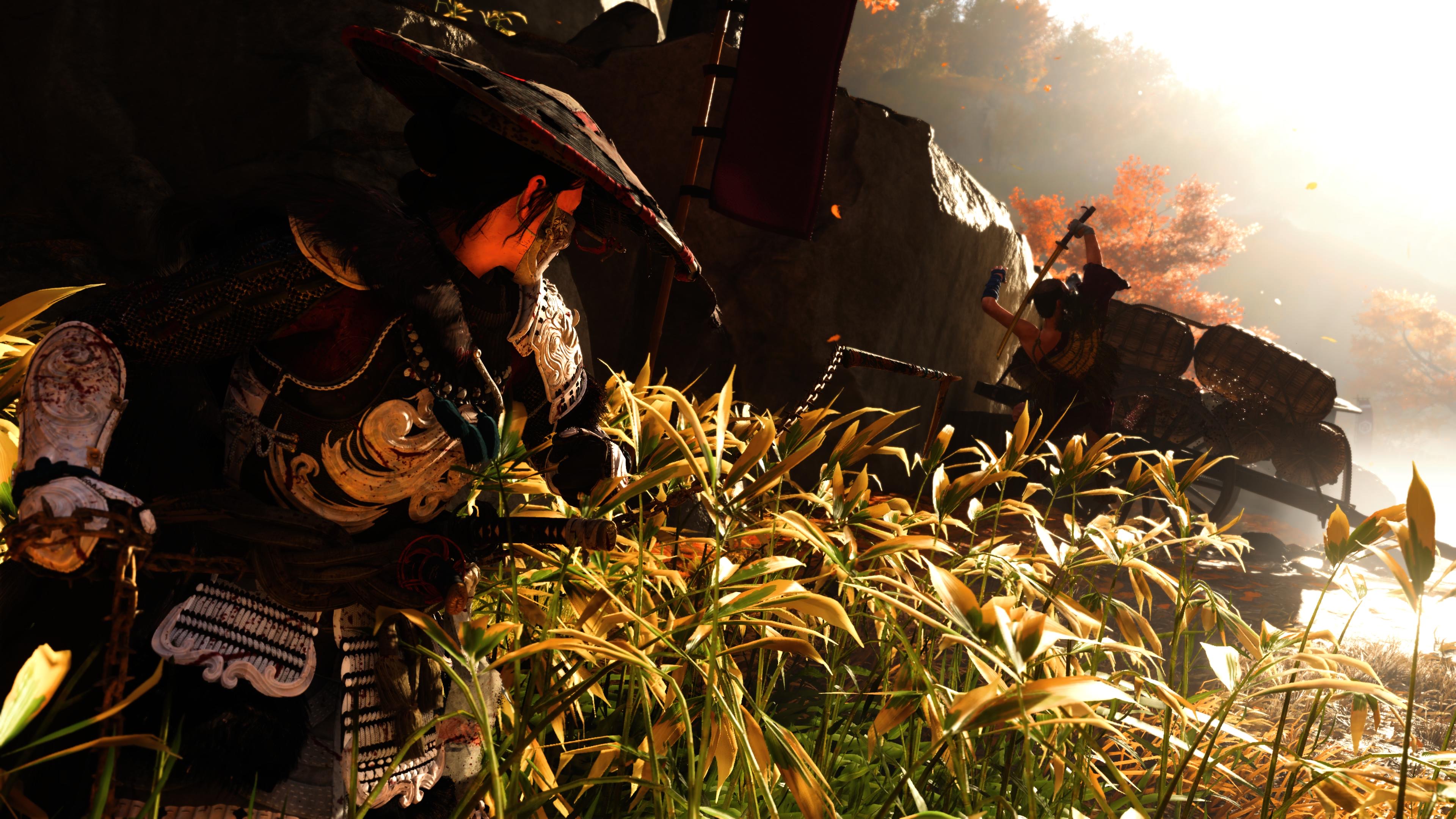
Speaking of playstyles, stealth was a major pillar of Ghost of Tsushima, and although it’s still present, I feel like Yōtei doesn’t emphasize it as much outside of very specific scenarios. You still have a bow and arrow for quiet ranged kills, smoke grenades for concealed kills or evasion, and your standard assassination abilities. Outside of these options, all you have are stray bowls that can be thrown to make noise, craftable blinding bombs, and the kusarigama, which can be used for distant stealth kills. They’re effective tools, but it’s a bit disappointing seeing stealth take such a backseat in Yōtei. This is very much a game about facing your enemies head-on, and honestly, I’m not too fussed about it since the loud and proud battles have always been where I had the most fun in the series.
I love tossing explosive bombs to preemptively whittle down enemy numbers while charging into a fight with my dual katanas. I love the thrill of parrying enemy attacks from all directions and swapping weapons to adapt to my next target. I love the rush that comes from being disarmed and hustling to get my weapon just in time to avoid the next attack. I love stunning an enemy and having my wolf Kiba land the finishing blow while I turn my attention to other adversaries. I just love unleashing the fury of the Onryō on anyone who stands in my way in one bloody, dynamic, exhilarating battle after another.
Overall
All in all, I spent 55 hours with Ghost of Yōtei and had a lot of fun with it. The structure of its narrative doesn’t completely live up to its free-form promise, but the story is engrossing and anchored by a fantastic lead performance from Erika Ishii. Combat is a cut above what came before, with its diverse set of weapons and tools making fights exciting affairs that I always looked forward to. The Ezo region does look lovely and comes with a suite of activities that are both engaging and memorable, plus subtle refinements that build on the existing exploration systems. But there’s a creative spark missing that keeps exploration from being as consistently wondrous as it was in the original game, leading to an open world experience that, while enjoyable, isn’t as fresh or impressive the second time around. This lack of innovation is a big part of why Ghost of Yōtei isn’t able to reach the amazing heights of its predecessor, but the overwhelming sum of its parts still makes it a great game overall.
 TheComfySpot